
Key Points
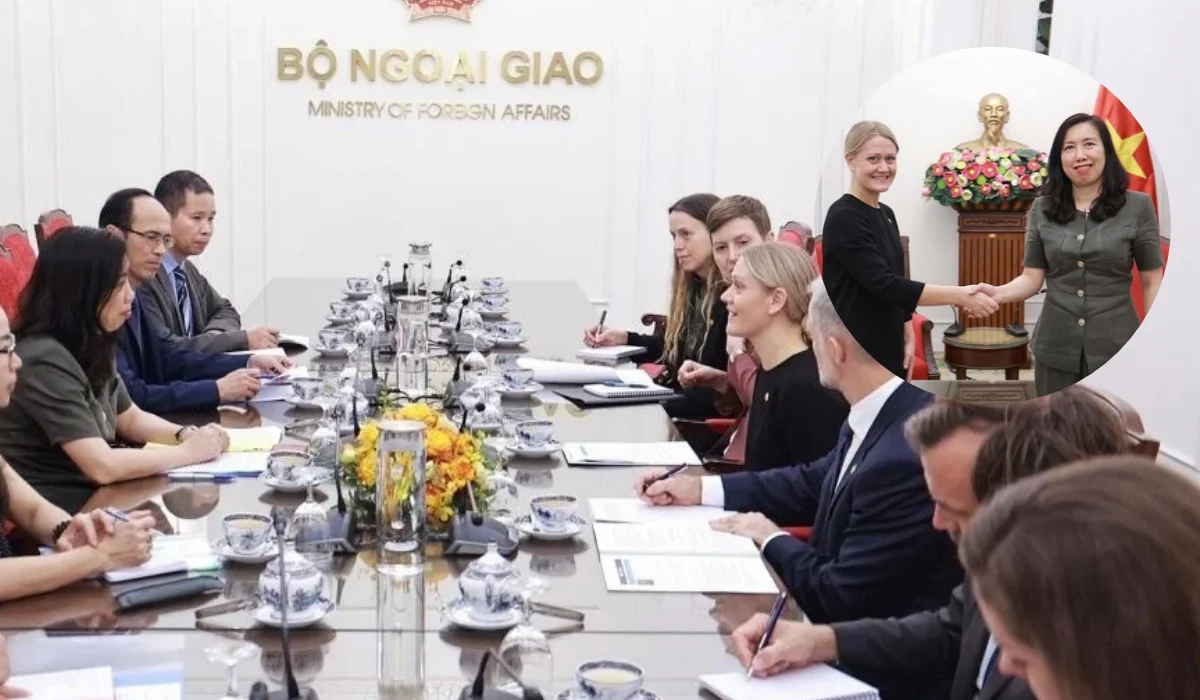
- High-Level Bilateral Meeting:Vietnamese Deputy Minister of Foreign Affairs Le Thi Thu Hang hosted State Secretary at the Norwegian Ministry of Foreign Affairs Astrid Bergmål in Hanoi on October 16, 2026, to discuss expanding bilateral cooperation.
- Milestone Diplomatic Anniversary:The working session coincides with the 55th anniversary of diplomatic relations between Vietnam and Norway, established in 1971.
- EFTA Free Trade Agreement:State Secretary Bergmål’s visit precedes the signing ceremony of the landmark Free Trade Agreement between Vietnam and the European Free Trade Association (EFTA) member states, concluded after 14 years and 21 formal negotiation rounds.
- Green Strategic Partnership Advancement: Both governments highlighted the Memorandum of Understanding on the Green Strategic Partnership signed in April 2026 as a crucial driver for cooperation in renewable energy, circular economy, and green shipping.
- Marine Economy and Energy Transition: Vietnam encouraged Norwegian firms and investment funds to back sustainable aquaculture, marine spatial planning, port development, and the Just Energy Transition Partnership (JETP).
- Multilateral and Regional Cooperation:Both sides committed to enhancing the ASEAN–Norway Sectoral Dialogue Partnership (2026–2030), supporting international law, and upholding free trade alongside the 1982 United Nations Convention on the Law of the Sea (UNCLOS).
Norway (Norway Post Magazine) October 17, 2026 – Executive Summary: Vietnam and Norway have pledged to accelerate bilateral cooperation across trade, renewable energy, the marine economy, and the green transition during high-level diplomatic talks in Hanoi. Vietnamese Deputy Minister of Foreign Affairs Le Thi Thu Hang and Norwegian State Secretary Astrid Bergmål met on October 16 ahead of the signing of the Vietnam–EFTA Free Trade Agreement.The discussions, marking the 55th anniversary of diplomatic ties, emphasized rapid ratification of the trade pact, effective execution of the Green Strategic Partnership, and collaborative efforts within ASEAN and international bodies.
- Key Points
- How Will the Vietnam–EFTA Free Trade Agreement Impact Bilateral Trade Relations?
- How Are Vietnam and Norway Advancing Their Green Strategic Partnership?
- What Strategy Was Agreed for Regional and Multilateral Cooperation?
- Background of Vietnam-Norway Relations and EFTA Trade Framework
- How This Development May Affect Key Stakeholders
How Will the Vietnam–EFTA Free Trade Agreement Impact Bilateral Trade Relations?
During the bilateral talks, both representatives underscored the strategic importance of the Vietnam–EFTA Free Trade Agreement (FTA) in establishing a predictable and stable framework for international commerce. The agreement—encompassing EFTA member states Iceland, Liechtenstein, Norway, and Switzerland—was finalized following 14 years of negotiations spanning 21 formal rounds.
As reported by Vietnamese State Media (VOV.VN), Deputy Minister of Foreign Affairs Le Thi Thu Hang commendation was recorded as follows: Hang praised Norway and fellow EFTA members for their contributions to concluding negotiations after 14 years and 21 formal rounds. She called upon all participating nations to “complete ratification procedures promptly following the signing and prepare for effective implementation, helping businesses expand cooperation and access each other’s markets”.
In response, as reported by VOV.VN, State Secretary Astrid Bergmål stated that the trade deal would significantly facilitate market access for both goods and services while ensuring heightened stability for cross-border investments. Bergmål emphasized that the FTA creates a durable platform for commercial entities in Vietnam, Norway, and across the broader EFTA block to build long-term economic partnerships. To sustain this momentum, Hang urged continuous exchange at all governance levels, specifically emphasizing regular high-level visits and structured political consultations between deputy foreign ministers.
How Are Vietnam and Norway Advancing Their Green Strategic Partnership?
A central focus of the Hanoi working session was the concrete implementation of the Memorandum of Understanding on the Green Strategic Partnership, which was formally signed by Vietnam and Norway in April 2026. Both officials affirmed that the green framework, alongside the newly completed EFTA agreement, serves as a dual engine propelling economic and environmental collaboration.
As reported by VOV.VN, Le Thi Thu Hang requested that Norway share its institutional expertise in critical maritime sectors, encouraging Oslo to assist Vietnam in “marine spatial planning, maritime transport, shipbuilding, port development, logistics infrastructure and high-tech aquaculture”. Hang further called on Norwegian financial institutions, investment funds, and industrial firms to expand their footprint in Vietnam, specifically to support renewable energy projects and advance Vietnam’s commitments under the Just Energy Transition Partnership (JETP).
Detailing Norway’s perspective, as reported by VOV.VN, Astrid Bergmål noted that the Green Strategic Partnership provides ample scope to connect government ministries, corporate entities, and research institutes. Bergmål stated that Norway aims to intensify the sharing of “knowledge, technology and experience in marine management, sustainable aquaculture, green shipping and the circular economy, linking economic cooperation with environmental protection”. Addressing energy transition specifically, Bergmål called for existing Vietnamese mechanisms and projects to be executed efficiently to reduce dependence on fossil fuels, support carbon neutrality goals, and deliver mutual economic benefit.
What Strategy Was Agreed for Regional and Multilateral Cooperation?
Beyond bilateral economic affairs, the two diplomats evaluated broader multilateral coordination, regional integration, and the status of the Vietnamese diaspora in Norway. Hang praised Norway’s active engagement with the Association of Southeast Asian Nations (ASEAN) and affirmed Hanoi’s willingness to serve as a diplomatic bridge strengthening the ASEAN–Norway Sectoral Dialogue Partnership.
As reported by VOV.VN, Astrid Bergmål concurred on the importance of executing practical cooperation areas under the ASEAN–Norway roadmap for 2026–2030, prioritizing the blue economy, energy transition, innovation, regional connectivity, and sustainable development.
Deputy Minister Hang expressed gratitude to the Norwegian government for assisting the Vietnamese expatriate community in settling and integrating into Norwegian society. She expressed hope that Oslo would maintain its support, enabling the community to continue acting as an active bridge of friendship between the two peoples.
Closing the session, both sides committed to maintaining tight coordination between their respective foreign ministries, supporting each other at regional and global bodies such as the United Nations, and upholding key principles of international law.Both delegations explicitly reaffirmed their commitment to defending free trade and adhering strictly to the 1982 United Nations Convention on the Law of the Sea (UNCLOS).
Background of Vietnam-Norway Relations and EFTA Trade Framework
The bilateral relationship between Vietnam and Norway was formally established in November 1971, making Norway one of the early Northern European nations to open diplomatic channels with Vietnam. Over the past five decades, cooperation has evolved from traditional development assistance to commercial partnerships, maritime development, and environmental governance.
A major pillar of this relationship is the European Free Trade Association (EFTA) trade initiative. Negotiations between Vietnam and the EFTA block (comprising Norway, Switzerland, Iceland, and Liechtenstein) officially commenced in May 2012. Over 14 years and 21 formal negotiation rounds, discussions navigated complex regulatory frameworks surrounding intellectual property, public procurement, competition policy, tariffs, and sustainable development standards. The finalization of negotiations in 2026 and subsequent signing in Hanoi mark a milestone, creating a dedicated trade gateway between Vietnam and non-EU European economies.
Simultaneously, the Green Strategic Partnership established in April 2026 reflects Vietnam’s national strategy to achieve net-zero carbon emissions by 2050, as declared at COP26. Norway, possessing extensive experience in offshore wind energy, electric maritime transport, and advanced sustainable aquaculture, has positioned itself as a primary technical and capital partner assisting Vietnam’s transition under the Just Energy Transition Partnership (JETP) framework.
How This Development May Affect Key Stakeholders
The formalization of the EFTA Free Trade Agreement and the advancement of the Green Strategic Partnership are expected to produce tangible impacts across specific sectors:
- For Vietnamese Exporters and Agricultural Producers: The reduction of tariff barriers across EFTA nations will offer expanded access to high-value Scandinavian and European markets for Vietnamese electronics, textiles, footwear, and agricultural products. However, domestic producers will need to adhere strictly to European environmental, traceability, and sustainability standards.
- For Norwegian Renewable Energy and Maritime Enterprises: Norwegian firms specializing in offshore wind generation, port logistics, green shipbuilding, and automated aquaculture gain enhanced legal certainty and market access in Southeast Asia. The bilateral framework facilitates direct investment opportunities within Vietnam’s expanding green economy.
- For the Vietnamese Energy Grid and Industrial Sector: Collaborative commitments under JETP and the Green Strategic Partnership will likely accelerate capital inflows into Vietnam’s renewable energy infrastructure. This transition aims to alleviate regional power constraints, lower industrial carbon footprints, and assist Vietnam in meeting its long-term climate targets while transitioning away from fossil fuel reliance.