Key Points
- Direct Warning from Oslo: Norwegian Prime Minister Jonas Gahr Støre warned Britain against attempting to emulate Norway’s European Union relationship as part of any post-Brexit Reset, citing severe economic and democratic mismatches.
- Democratic Deficit Highlighted:Støre emphasized that as a European Economic Area (EEA) member, Norway must accept and implement most EU decisions without holding any voting rights over the bloc’s commercial rules.
- Rejection of Structural Fit: Støre argued that while Norway’s open, 5.6-million-person economy has pragmatically adapted to the arrangement since 1995, a major economy like Britain or Canada would find the high level of regulatory compliance without representation unsuitable.
- Upcoming EU Summit: The intervention comes as leaders assemble proposals for closer trade, security, and agricultural alignment ahead of a key summit with European Union leaders in Brussels later this month.
- Alternative Strategic Channels: Rather than seeking single-market membership through an EEA framework, Støre urged Britain, Canada, and Norway to collaborate on targeted strategic issues such as space cooperation and rare earth mineral supply chains.
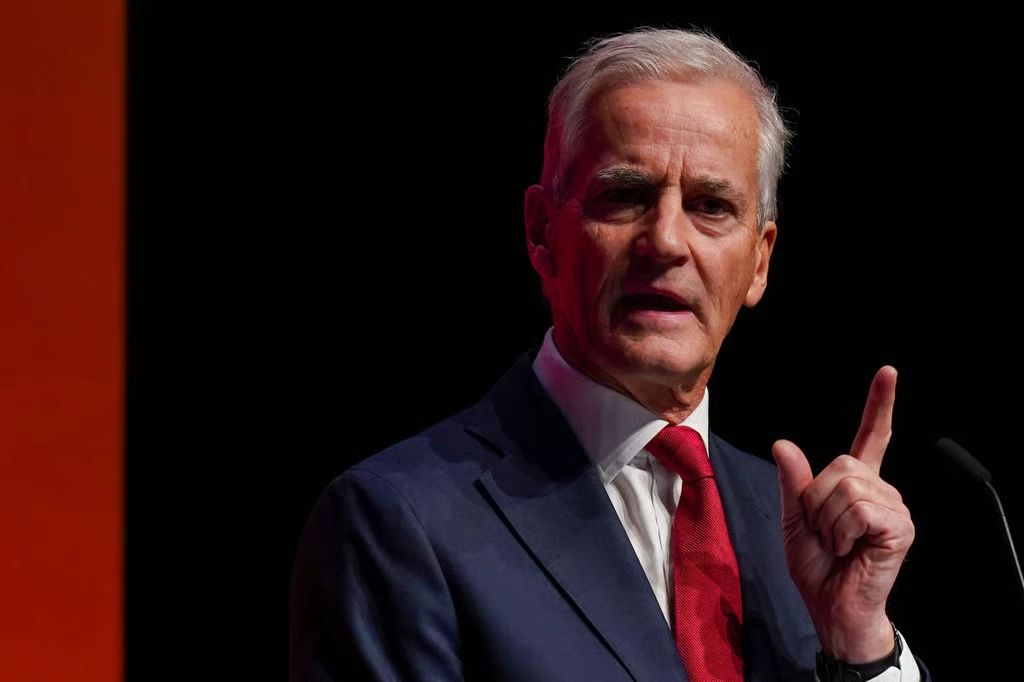
Norway (Norway Post Magazine) November 9, 2026 – Norwegian Prime Minister Jonas Gahr Støre has explicitly advised Britain against adopting Norway’s framework with the European Union, warning that attempting to copy the European Economic Area (EEA) model would force London to accept European rules without having any vote in formulating them. As reported by political correspondents for POLITICO, Støre stated during an interview in Oslo that the Norwegian approach is unsuited to the British economy. The warning arrives as political figures in Britain prepare for a key diplomatic summit with EU leaders later this month aimed at establishing closer post-Brexit trade, agricultural, and security arrangements.
- What Is the ‘Democratic Deficit’ at the Heart of Norway’s EU Relationship?
- Why Does Støre Believe Britain Cannot Simply Copy Norway’s Setup?
- What Alternative Areas of Cooperation Did the Norwegian Prime Minister Propose?
- How Does Støre’s Warning Impact Britain’s Upcoming EU Summit and Brexit Reset Debate?
- Background of the Particular Development After the News
- How This Development Can Affect British Policymakers, Trade Negotiators, and Business Leaders
What Is the ‘Democratic Deficit’ at the Heart of Norway’s EU Relationship?
According to reporting by political correspondents for POLITICO, Norwegian Prime Minister Jonas Gahr Støre highlighted the core structural drawback of the EEA framework, which grants access to the EU single market without full membership rights.
Norway, which has a population of 5.6 million, joined the single market via the EEA agreement, but remains outside the 27-member political bloc.
As reported by political correspondents for POLITICO, Jonas Gahr Støre stated: “There’s an obvious democratic deficit in it, but pragmatically, all [Norwegian] Parliaments since 1995 have said this is a reasonable way of doing it.”
However, Støre made clear that this trade-off is not an exportable solution for larger economies.
As reported by POLITICO, Støre further observed: “I don’t see Britain do that. I don’t see Canada do that.”
The Norwegian leader explained that while his nation can manage compliance because of its scale and economic traditions, major world powers would struggle with the lack of direct democratic oversight.
Why Does Støre Believe Britain Cannot Simply Copy Norway’s Setup?
According to reporting published by POLITICO, Prime Minister Støre detailed how post-Brexit discussions with British political figures revealed fundamental misunderstandings regarding what EEA participation actually entails.
Beyond the base EEA treaty, Norway has been forced to negotiate and sign more than 100 separate supplementary agreements with Brussels covering areas such as environmental policy, student exchange frameworks, and shared security protocols.
As reported by political correspondents for POLITICO, Støre recalled his post-referendum conversations with UK contacts: “I can tell you after Brexit, British friends called me and said, tell us about the Norwegian way of doing it. And I said, if you left the EU because there was too much Brussels, don’t take the Norwegian version.”
Explaining why Norway tolerates the arrangement, Støre added: “Because here, you know, basically we are taking most of their decisions, we implement them. But a country of 5 million people that has been a completely open economy, always adapting to standards, to be part of the global economy, very open economy, we can live with that.”
As reported by POLITICO, Støre confirmed he would not recommend the Norway model to Britain “because I think it’s very different, you know, and they have to find their solution.”
What Alternative Areas of Cooperation Did the Norwegian Prime Minister Propose?
According to coverage by POLITICO, while Støre ruled out EEA-style market integration as a viable path for Britain, he outlined specific sectors where non-EU middle powers can successfully partner with Brussels.
The Norwegian leader proposed structured trilateral and multilateral partnerships focused on shared industrial and geopolitical priorities:
- Critical Raw Materials: Building strategic supply chains for rare earth minerals necessary for green technology manufacturing and advanced electronics.
- Aerospace and Space Programs: Expanding cross-border space cooperation initiatives alongside EU programs.
- Trilateral Strategic Ties: Aligning practical interests between the United Kingdom, Canada, and Norway on global trade and defense supply security.
Støre, who has served as leader of Norway’s Labour Party since 2014 and prime minister since 2021, argued that targeted sector agreements offer a more realistic path than full single-market participation.
How Does Støre’s Warning Impact Britain’s Upcoming EU Summit and Brexit Reset Debate?
According to reporting by Daily Express senior political correspondent Katie Harris, Støre’s comments coincide with intense domestic debate over how Britain should structure its long-term relationship with the European Union ahead of an upcoming bilateral summit in Brussels.
Prominent regional leaders, such as Greater Manchester Mayor Andy Burnham, have advocated exploring all options to lower trade friction and improve economic ties, noting long-term desires for maximum European alignment.
However, the political and legal constraints of any EU reset remain strictly defined:
- EU Position on Single Market Access:As reported by Katie Harris of the Daily Express, former EU chief Brexit negotiator Michel Barnier reiterated that no “cherry-picking” of single market benefits is permissible.
- The Four Freedoms:As quoted by Katie Harris of the Daily Express, Michel Barnier stated regarding access to the single market: “There will be no possibility to have one freedom and not the other. The four freedoms are clearly the four conditions to be inside the single market.”
- Targeted Trade Goals: Advocates for a closer relationship contend that negotiating specific agreements on sanitary and phytosanitary (SPS) standards could ease border inspections, reduce supermarket food prices, and support agricultural exporters without requiring formal EEA accession.
As reported by Daily Express political correspondents, Støre’s public warning serves as a reality check for British politicians seeking off-the-shelf templates for EU re-engagement.
Background of the Particular Development After the News
The “Norway Model”—formally known as membership in the European Economic Area (EEA) through the European Free Trade Association (EFTA)—was frequently cited during and after the 2016 UK European Union membership referendum as a potential “soft Brexit” option. Under the EEA agreement signed in 1992 and operational since 1994, non-EU members Norway, Iceland, and Liechtenstein participate in the single market, allowing for the free movement of goods, services, capital, and people. In exchange, these nations must adopt thousands of EU legal acts and directives into domestic law without having voting seats in the European Parliament or Council of Ministers. Furthermore, EEA nations make financial contributions to EU social and economic cohesion funds.
Norway voters rejected full EU membership twice in national referendums held in 1972 and 1994. Since then, Norwegian political consensus has relied on the EEA framework as a pragmatic compromise that preserves sovereignty over domestic fisheries and agriculture while securing open trade access for Norwegian exports, particularly oil, gas, and seafood. When the United Kingdom formally exited the European Union and left the single market and customs union under the EU–UK Trade and Cooperation Agreement (TCA), it opted against the EEA framework specifically to avoid accepting EU free movement rules, ongoing financial payments, and rule-taking without voting representation.
How This Development Can Affect British Policymakers, Trade Negotiators, and Business Leaders
Prime Minister Støre’s public rejection of the Norway model for Britain will shape political strategy, trade talks, and commercial expectations across several key sectors.
Impact on British Cabinet Ministers and Policy Advisors
For British policymakers and political strategists attempting to execute a post-Brexit “reset,” Støre’s explicit warning effectively closes off the EEA template as a viable political narrative. Advisers will abandon references to “Norway-style” transitional models in favor of bespoke, sector-specific proposals. British ministers will be forced to focus their negotiating capital on narrow, targeted agreements—such as veterinary standards, mutual recognition of professional qualifications, and security pacts—that do not trigger the EU’s requirement to adopt full single-market rules or free movement.
Impact on European and U.K. Trade Negotiators
For U.K. and EU negotiating teams preparing for upcoming summits, Støre’s comments reinforce the rigid structural boundaries of third-country relations with Brussels. European negotiators will use Støre’s statements to remind U.K. officials that single-market access requires strict adherence to all four core freedoms. Consequently, negotiators will shift focus toward pragmatic bilateral agreements, such as joint supply chain initiatives for critical minerals and defense technology, where mutual geopolitical benefits outweigh regulatory disputes.
Impact on British Business Leaders and Industry Exporters
For U.K. business executives, agricultural producers, and supply-chain managers seeking relief from post-Brexit border checks, the confirmation that Britain will not seek EEA-style single-market access means border administration and customs requirements will remain a permanent baseline. Industry leaders will pivot their lobbying efforts away from sweeping structural re-integration and toward micro-level technical fixes, pressing government ministers to prioritize practical trade facilitation measures during upcoming diplomatic summits.