

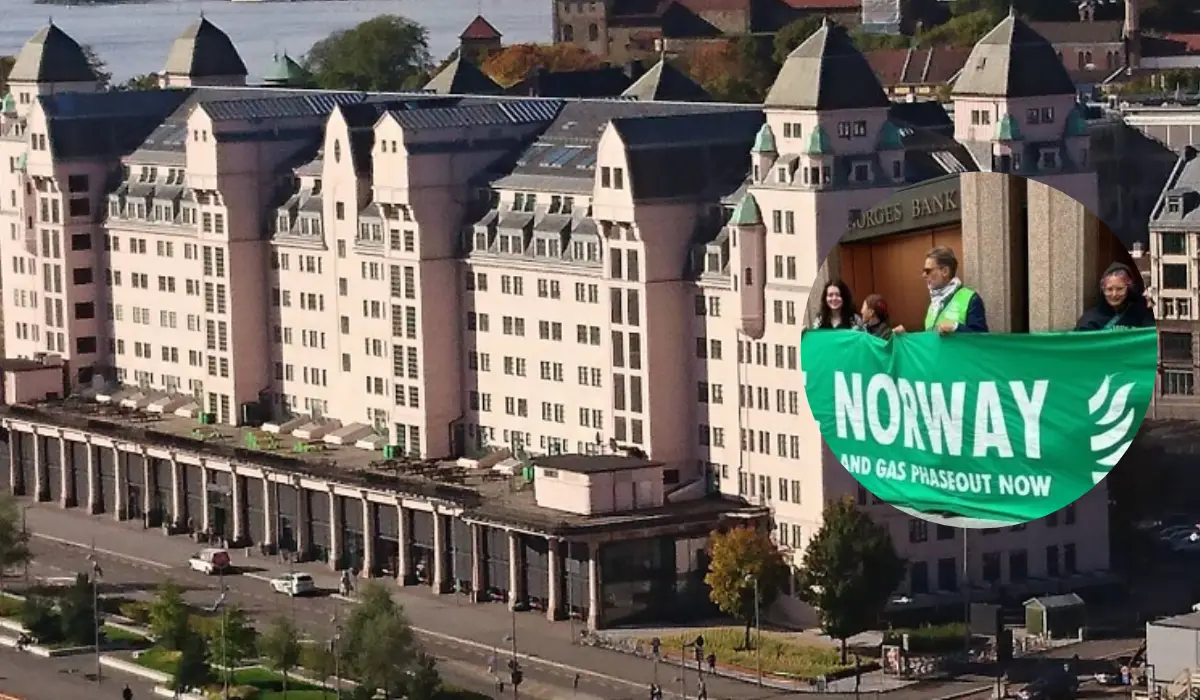
- A Norwegian government-appointed committee, chaired by former Central Bank Governor Svein Gjedrem, has submitted recommendations to the Ministry of Finance proposing to ease ethical investment rules for the country’s $2.3 trillion sovereign wealth fund.
- The review suggests reconsidering the long-standing ban on investing in nuclear weapons manufacturers, citing a deteriorating global security landscape and Norway’s reliance on NATO’s nuclear umbrella.
- Under the proposed changes, investments would be permitted in nuclear arms producers based in allied NATO countries, specifically the United States, the United Kingdom, and France.
- The committee also recommended giving Norges Bank, the central bank that manages the fund, greater discretion over ethical risks while reducing the fund’s independent Ethics Council’s role in matters involving foreign states’ conduct.
- The review was partly triggered by international pressure—particularly from Washington—following the fund’s divestment from US construction giant Caterpillar due to concerns over Israeli human rights violations and operations in Gaza and the West Bank.
- Experts and opposition politicians have raised significant concerns, warning that altering the ethical posture of one of the world’s largest institutional investors could set a global precedent and “open Pandora’s box” for ESG investing.
Norway (Norway Post Magazine) October 16, 2026 – A high-level government-appointed committee in Norway has formally recommended a major overhaul of the ethical guidelines governing the nation’s $2.3 trillion sovereign wealth fund. The proposals include lifting the prohibition on investments in nuclear weapons manufacturers, shifting geopolitical oversight to diplomatic channels, and expanding Norges Bank’s managerial discretion following fallout over Israeli military action in Gaza.
- What has the Norwegian government-appointed committee recommended regarding the sovereign wealth fund?
- How did the controversy over Gaza and Caterpillar influence this policy review?
- Why is Norway considering lifting its ban on nuclear weapons investments?
- How are international experts and commentators reacting to the proposed changes?
- Background
What has the Norwegian government-appointed committee recommended regarding the sovereign wealth fund?
As reported by Tasnim News Agency, a government-appointed review committee submitted formal recommendations to the Norwegian Ministry of Finance on Thursday, proposing to ease ethical restrictions on Norges Bank Investment Management (NBIM), which manages the country’s $2.3 trillion sovereign wealth fund.
The committee, led by former Central Bank Governor Svein Gjedrem, was established to re-examine the fund’s ethical framework and governance structure. Beyond administrative adjustments, the panel unanimously recommended lifting the ethical exclusion that currently prevents the fund from investing in commercial entities involved in the production of nuclear weapons.
The proposed framework would permit investments in nuclear arms manufacturers, provided those companies are headquartered in NATO member states that hold recognized nuclear capabilities—namely the United States, the United Kingdom, and France.
Furthermore, the committee advocated for structural reforms regarding how ethical risk is evaluated within the fund. The panel proposed granting Norges Bank greater autonomy in assessing corporate risks, modifying the role of the independent Ethics Council, and allowing certain internal ethical evaluations to remain strictly confidential.
How did the controversy over Gaza and Caterpillar influence this policy review?
As reported by Tasnim News Agency, the review panel explicitly acknowledged that international tensions arising from the fund’s ethical exclusions were a primary catalyst for its appointment. In its formal report, the committee stated, “Parts of the rationale for the appointment of the Committee was the Fund’s management related to the war in Gaza.”
The controversy stems from the sovereign wealth fund’s decision last year to divest from US construction equipment manufacturer Caterpillar. The divestment was executed based on findings regarding Caterpillar’s role in human rights violations and military activities conducted by Israel in Gaza and the occupied West Bank.
That decision sparked significant pushback and political pressure from Washington. Addressing the friction caused by using a financial vehicle to express international positions, the committee argued that decisions touching upon foreign state actions should not be arbitrated by investment board ethics panels. The committee argued that decisions concerning “another state’s conduct” should be handled through Norway’s diplomatic channels rather than by the fund itself.
Why is Norway considering lifting its ban on nuclear weapons investments?
As reported by Tasnim News Agency, the committee justified its stance on nuclear weapons producers by citing profound shifts in global geopolitics and European military strategy. The panel emphasized that Norway’s national security relies heavily on NATO’s collective security architecture and its nuclear deterrent capability.
In its official submission to the Ministry of Finance, the report argued: “The global security situation has changed. Norway is building up its defense capabilities, and the protection provided by NATO’s nuclear umbrella has become increasingly important. The companies that would be reincluded produce weapons that Norway needs for its own defense.”
The report highlights a broader European re-evaluation of defense posture and security arrangements. Tensions have mounted across Europe amidst ongoing uncertainties regarding US President Donald Trump’s commitment to NATO obligations, prompting European states to explore expanded defense capabilities and stronger ties to France’s independent nuclear deterrent.
In a related diplomatic development noted in the reporting, US President Donald Trump stated on Thursday that Washington was holding talks with Russia and China aimed at broader denuclearization efforts. Despite these diplomatic statements, European security strategy continues to lean heavily on existing deterrent hardware.
How are international experts and commentators reacting to the proposed changes?
As reported by Tasnim News Agency, the committee’s findings have sparked strong debate among global governance experts, international diplomats, and Norwegian opposition politicians.
Analysing the systemic impact of the recommendation, Lawrence Loh, director of the Centre for Governance and Sustainability at the National University of Singapore Business School, told Al Jazeera that changing Norway’s benchmark standard could alter international finance dynamics:
“If the Norwegian sovereign wealth fund – often considered a global gold standard – changes its posture towards nuclear weapons, it will open Pandora’s box for many global investors to follow suit.”
Lawrence Loh further warned that relaxing Norway’s framework could lead to broader slippage in the global financial sector, potentially encouraging capital allocation into nuclear armaments manufacturers beyond the specific framework of NATO-aligned states proposed by the committee.
Conversely, former Australian Foreign Minister Gareth Evans viewed the review as a reflection of eroding global arms control structures, describing the report as:
“an encouraging initiative in a world that has become alarmingly complacent about the risks of nuclear war, with every major nuclear arms control agreement dead, dying or on life support, and the longstanding taboo against threat or use eroding.”
Background
Norway’s sovereign wealth fund, officially known as the Government Pension Fund Global, was established in the 1990s to invest the revenues generated from the country’s petroleum sector for future generations. Holding assets in excess of $2.3 trillion—representing approximately 1.5% of all publicly traded equities worldwide—it is universally regarded as a bellwether for institutional investment standards and Environmental, Social, and Governance (ESG) investing.
Historically, Norway established an independent Ethics Council to advise the Ministry of Finance and Norges Bank on excluding companies involved in serious ethical breaches. These exclusions encompass human rights violations, environmental degradation, severe corruption, and the production of specific weapon types—including cluster munitions, anti-personnel landmines, and nuclear weapons.
The exclusion of nuclear arms manufacturers has long been a cornerstone of the fund’s ethical mandate. However, the intersection of political pressure from international partners regarding divestments in Israel and the escalating security crisis in Europe following regional military conflicts has forced a re-examination of whether strict ethical exclusions align with Norway’s national security interests and diplomatic goals.
If the Ministry of Finance and the Norwegian Parliament (Storting) approve the committee’s recommendations, this development will significantly alter the landscape for global institutional investors, corporate ESG benchmarks, and defense sector financing.
Impact on Global Financial Markets and Institutional Investors
As the world’s largest single sovereign wealth fund, Norway’s investment decisions carry immense symbolic and financial weight. If NBIM normalizes investment in NATO-based nuclear defense contractors, major pension funds, sovereign wealth managers, and asset management firms globally are likely to follow suit. This shift could redefine ESG parameters, moving defense capabilities from an “excluded sector” to an “acceptable sovereign security asset” within mainstream funds.
Impact on Defense Contractors in NATO Countries
Major aerospace and defense contractors based in the United States, United Kingdom, and France stand to gain direct access to significant equity capital injections from Norwegian state capital. This capital inflow would bolster defense supply chains across allied nations while strengthening military-industrial integration within NATO.
Impact on Diplomatic and Corporate Governance Protocols
By shifting ethical decisions regarding foreign state behavior away from the Ethics Council and into diplomatic channels, Norway will effectively insulate its fund manager from direct foreign political backlash, such as that experienced following the Caterpillar divestment. However, this change may invite domestic political criticism from civil rights organizations and opposition parties, who argue that softening ethical exclusions weakens Norway’s global standing as a champion for international law and nuclear non-proliferation.