

Key Points
- Sensors Record Military Activity:Connected rental vehicles used by the Norwegian Home Guard automatically recorded video footage of military personnel, troop transport routes, and security access codes entered at restricted facilities.
- Chinese-Manufactured Fleet:The incidents involved at least two Deepal-brand electric vehicles produced by state-controlled Chinese automaker Changan Automobile and rented through Hertz Norge, which is linked to China’s Geely group.
- Oslo Airport Security Exercise:The footage was captured between 14 and 18 September 2026 during a major Norwegian Home Guard security exercise conducted in and around Oslo Airport.
- Uncertain Data Transmission: While Norwegian military personnel manually deleted saved video files from internal vehicle hard drives, defense authorities confirmed they cannot rule out whether data was transmitted to external third-party servers or Chinese entities.
- Operational Resource Shortages:Despite identifying the security breach during the drill, Norwegian troops continued using the vehicles until the conclusion of the exercise due to an acute lack of alternative transport options.
- Parliamentary Scrutiny:Opposition politicians have formally questioned Defence Minister Tore Onshuus Sandvik regarding procurement security assessments, while national security agencies warn against mounting strategic reliance on connected foreign technologies.
Norway (Norway Post Magazine) October 17, 2026 – Norwegian military authorities are evaluating security protocols after discovering that Chinese-manufactured rental cars filmed sensitive troop movements and restricted access codes during a national defense exercise. The incident occurred during a September exercise near Oslo Airport involving vehicles supplied by Hertz Norge, including Deepal models manufactured by state-owned Changan Automobile.Although soldiers deleted local video files, military officials acknowledged they cannot verify if data was transmitted remotely to external third parties. The case has triggered parliamentary inquiries in Oslo over military procurement standards and foreign technological dependencies.
- Key Points
- How Did Norwegian Soldiers Discover the Vehicle Data Recordings?
- Was the Recorded Military Intelligence Transmitted to Third Parties?
- How Are Norwegian Authorities and Politicians Responding to the Breach?
- Background of Norwegian Defense Technological Vulnerabilities
- How This Development May Affect Key Stakeholders
Armed forces in Norway are confronting growing intelligence and cyber-security concerns after Chinese-manufactured rental cars automatically filmed sensitive military procedures, troop movements, and facility access codes during a major defense exercise. The security vulnerability was uncovered during a Norwegian Home Guard exercise conducted between 14 and 18 September 2026 in the vicinity of Oslo Airport. The discovery has reignited debate across European defense establishments regarding the strategic risks associated with deploying smart, camera-equipped connected vehicles within secure defense zones.
How Did Norwegian Soldiers Discover the Vehicle Data Recordings?
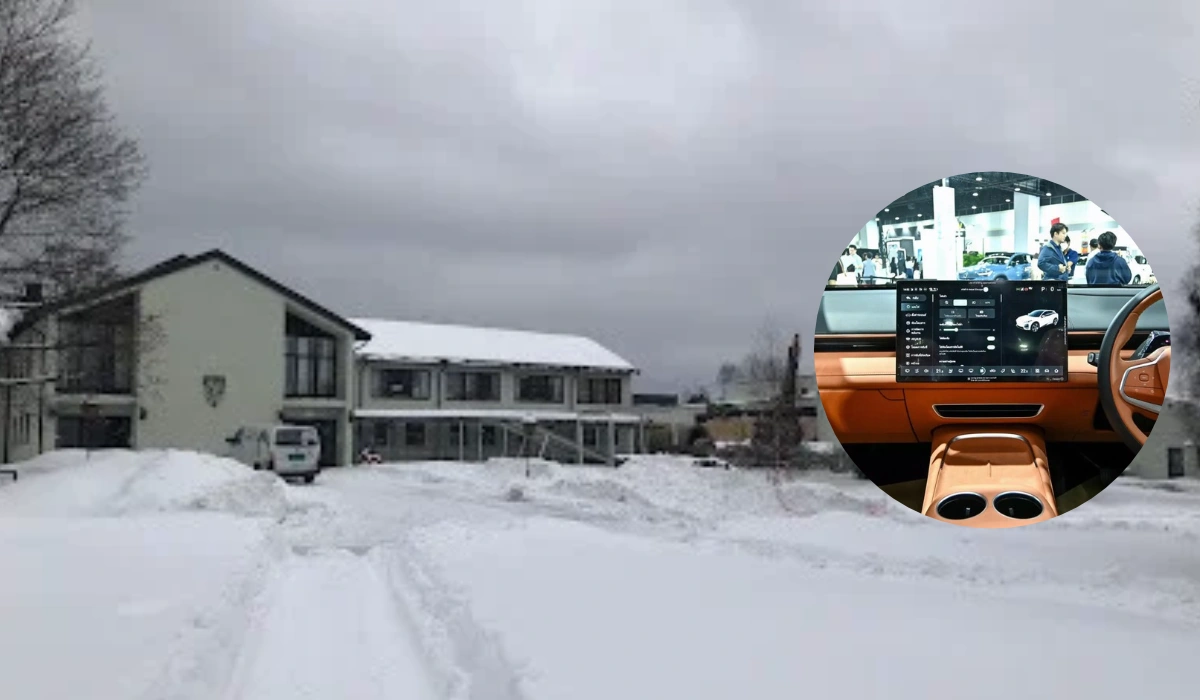
The security breach was identified inadvertently by military personnel participating in the Oslo drill. As reported by Norwegian daily Dagens Næringsliv (DN), soldiers waiting inside their assigned transport vehicles tapped on onboard digital displays and discovered stored video files generated automatically by internal and external vehicle sensors.
The recorded footage provided clear visual data detailing soldiers entering and exiting vehicles, precise geographic routes taken across secure zones, and video captures of personnel entering security codes at electronic gates and doors to military installations. As reported by Dagens Næringsliv, at least two of the affected vehicles were Deepal-brand electric models produced by Changan Automobile, a state-controlled Chinese manufacturer. The vehicles were supplied to the military under a broader framework rental contract through Hertz Norge, an entity linked through corporate ownership structures to China’s Geely group.
Confirming the incident to Agence France-Presse (AFP), Lieutenant Colonel Per Gunnar Grosberghaugen, spokesperson for the Norwegian Home Guard, stated: “Yes, soldiers from the Home Guard found videos from the vehicles’ sensors stored in their systems”.
Was the Recorded Military Intelligence Transmitted to Third Parties?
The primary operational concern for defense analysts centers on whether the captured sensor data remained isolated on internal vehicle hard drives or was transmitted externally via wireless networks.
As reported by AFP, Lieutenant Colonel Per Gunnar Grosberghaugen clarified that while it remains unknown if the recordings were shared with external entities—notably in China—military authorities could not rule out the possibility. Dagens Næringsliv reported that military personnel manually deleted the stored video files from the onboard systems. However, due to a severe shortage of alternative fleet options, the Home Guard unit continued utilizing the rental cars until the conclusion of the exercise.
In response to inquiries regarding data handling, Hallvard Nerbovik, Marketing and Communications Director at Hertz Norge, told AFP: “Our customers’ data is safe with us”. Nerbovik added: “No personal data related to our rentals is shared with car manufacturers, our owners or other third parties without explicit legal grounds”. However, he did not specify whether automated technical video telemetry had been transmitted to manufacturer servers during vehicle operation. Changan Automobile did not respond to requests for comment.
How Are Norwegian Authorities and Politicians Responding to the Breach?
The incident has drawn swift scrutiny within the Norwegian Parliament.As reported by Norwegian defense publication Forsvarets forum and ScandAsia, opposition Member of Parliament Himanshu Gulati formally submitted questions to Defence Minister Tore Onshuus Sandvik, requesting clarification on whether sufficient risk assessments were conducted prior to authorizing commercial rental vehicles for military drills.
Rather than enforcing a blanket ban on Chinese-made vehicles—which defense officials judged to be disproportionate—the Norwegian Armed Forces stated they prefer site-specific security protocols, including localized bans on camera-equipped vehicles regardless of their country of origin.
The incident highlights a broader debate regarding digital infrastructure. As reported by AFP, Andreas Skjold-Lorange, an official at the Norwegian National Security Authority (NSM), observed: “We don’t know for sure where the information is sent or what it’s used for”. Skjold-Lorange warned against over-reliance on foreign technology vendors, stating: “If we become too dependent on services or products from a given country, that makes us vulnerable, whatever that country may be”.
Background of Norwegian Defense Technological Vulnerabilities
The security exposure involving connected rental cars reflects a growing pattern of technological vulnerabilities facing Western defense organizations. Modern electric and autonomous vehicles operate effectively as mobile data centers equipped with high-definition optical cameras, radar sensors, global positioning systems (GPS), and continuous over-the-air (OTA) cellular telemetry connections.
Norway has previously encountered similar technological friction involving commercial foreign hardware. Tests conducted for Oslo’s public transport authority, Ruter, revealed that electric buses manufactured by Chinese firm Yutong possessed over-the-air update mechanisms that could theoretically allow remote vehicle immobilization during emergencies. Consequently, municipal authorities established monitoring protocols to regulate incoming digital signals.
Furthermore, consumer fitness applications and smartwatches have routinely presented operational security challenges for military command structures. Global GPS data published by fitness tracking platform Strava previously exposed the coordinates and patrol routes of military personnel in active deployment zones. Similarly, reporting by French daily Le Monde demonstrated that exercise tracking applications used by sailors enabled real-time tracking of the French aircraft carrier Charles de Gaulle in the Mediterranean.
How This Development May Affect Key Stakeholders
The exposure of military data through connected civilian vehicles is expected to yield specific structural changes across defense, automotive, and commercial rental sectors:
- For Armed Forces and Defense Procurement Agencies: European defense ministries will likely revise procurement frameworks for civilian rental contracts. Armed forces are expected to enforce strict technical standards requiring the disabling or physical masking of optical sensors, cameras, and telemetry hardware on all commercial vehicles operating near secure military installations.
- For Commercial Fleet Operators and Rental Agencies: Rental suppliers serving government and defense clients will face stricter compliance audits. Rental agencies will be required to guarantee data isolation and provide certified hardware options that prevent automatic local or cloud storage of user video recordings.
- For Foreign Automotive Manufacturers: Chinese and international electric vehicle manufacturers seeking to expand across European markets will face heightened regulatory scrutiny and potential restrictions within public sector fleets. Mounting cyber-security concerns may accelerate European Union and national legislative efforts to regulate automotive data transmission and cloud-storage architecture.