Key Points
- Direct Financial Support: Norway will provide approximately $50 million (500 million Norwegian kroner) to Ukraine’s state budget to cover core public-sector needs.
- Earmarked Efficacy: The capital is specifically allocated for early 2027 to cover public-sector employee salaries, state pensions, and social assistance payments for vulnerable households.
- Monitored Disbursement: Channeled through a World Bank trust fund, the allocation will operate under strict oversight mechanisms to ensure transparent financial management.
- Maintaining Civilian Resilience: Norwegian Foreign Minister Espen Barth Eide emphasized that keeping public institutions operational is crucial to national resilience amid war.
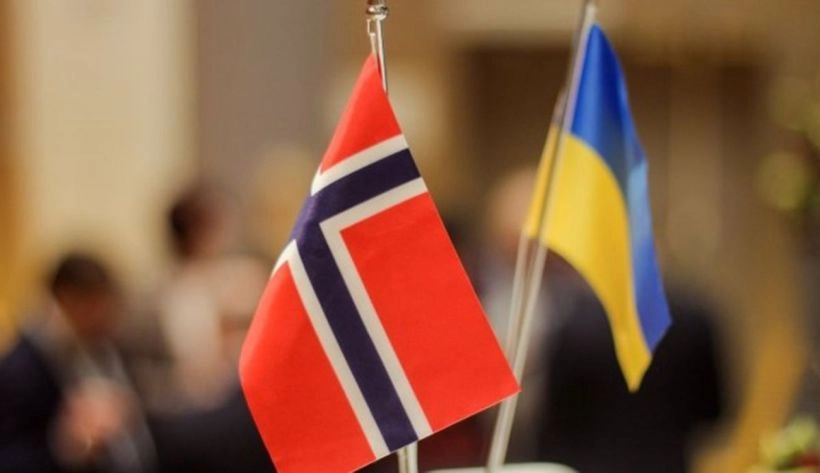
- High-Level Bilateral Talks: The allocation was formally announced during a bilateral meeting in Warsaw between Ukrainian Foreign Minister Andrii Sybiha and Norwegian Foreign Minister Espen Barth Eide.
Norway (Norway Post Magazine) November 8, 2026 – The Norwegian government has formally announced an allocation of 500 million Norwegian kroner (approximately $50 million) to Ukraine’s state budget to meet urgent civilian sector needs heading into early 2027. As reported by UATV English, Kyiv Post, and Ukrainska Pravda, the direct financial injection—channeled through the World Bank—will fund essential civil service operations, including salaries for healthcare workers and teachers, monthly state pension obligations, and targeted social assistance payments. Norwegian Foreign Minister Espen Barth Eide confirmed that the funds are backed by rigorous international oversight mechanisms to guarantee transparency, noting that maintaining everyday civilian infrastructure remains vital to Ukraine’s broader national resilience.
- How Will the $50 Million Allocation Be Distributed Across Ukraine’s Public Sector?
- What Safeguards and Monitoring Mechanisms Will Oversee Norway’s Financial Contribution?
- Why Is International Non-Military Aid Essential for Ukraine’s War Effort?
- Background of the Particular Development After the News
- How This Development Can Affect Ukrainian Public Servants, International Donors, and Fiscal Stability
How Will the $50 Million Allocation Be Distributed Across Ukraine’s Public Sector?
As reported by UATV English and Kyiv Post, the financial package of nearly $50 million will enter Ukraine’s sovereign state budget to address immediate macro-fiscal deficits.
The funding is specifically assigned to cover civilian state payrolls, critical healthcare services, educational institutions, and emergency civil response units.
Under the framework agreed between Oslo and Kyiv, the financial resources will safeguard:
- Public Sector Wages: Regular salary payments for civil servants, school teachers, and healthcare staff.
- Pension Commitments: Timely disbursement of state pensions to millions of Ukrainian retirees.
- Social Aid Infrastructure: Direct financial assistance for vulnerable households, internally displaced persons, and war-affected families.
As reported by UATV English, Norwegian Foreign Minister Espen Barth Eide highlighted the importance of keeping domestic infrastructure operational, stating: “Ukraine’s resilience also depends on its ability to maintain everyday life amid the ongoing war. Norway is helping ensure that children can go to school, hospitals can treat patients, and pensioners can receive their pensions”.
What Safeguards and Monitoring Mechanisms Will Oversee Norway’s Financial Contribution?
According to reporting by Komersant Ukrainian and European Pravda, the allocation was officially finalized during bilateral discussions held in Warsaw between Ukrainian Foreign Minister Andrii Sybiha and Norwegian Foreign Minister Espen Barth Eide.
To ensure the funds directly reach targeted recipients without administrative diversion, the Norwegian government has mandated that the disbursement operate through the World Bank’s Public Expenditures for Administrative Capacity Endurance (PEACE) trust fund framework.
As reported by UATV English, Espen Barth Eide emphasized that the use of the funds would be monitored by the World Bank and independent oversight mechanisms.
This multi-layered audit protocol includes third-party verification, regular fiscal reporting, and strict tracking of direct transfers to Ukrainian state beneficiaries.
The bilateral agreement represents Norway’s initial financial contribution earmarked for Ukraine’s 2027 state budget cycle, ensuring advanced fiscal planning for Ukrainian treasury officials.
Why Is International Non-Military Aid Essential for Ukraine’s War Effort?
As reported by Kyiv Post and LB.ua, while international attention frequently centers on military hardware, civilian budget support remains a cornerstone of Ukraine’s defense strategy.
With domestic tax revenues heavily directed toward military spending and national defense procurement, the Ukrainian government relies on international bilateral grants to sustain civilian governance and essential social services.
Without continuous foreign budget support, domestic treasury shortfalls could force drastic reductions in public sector payrolls, risking administrative disruption across municipal governments, hospitals, and social welfare departments.
Norway’s commitment forms part of its multi-year Nansen Support Programme for Ukraine, a comprehensive framework designed to provide both military aid and direct humanitarian and civilian financial relief.
Background of the Particular Development After the News
Since the onset of the full-scale invasion, Norway has established itself as one of Ukraine’s primary non-military and military financial contributors through its multi-year Nansen Support Programme, which allocates tens of billions of Norwegian kroner over several fiscal cycles. A substantial portion of non-military aid has been routed via multi-donor trust funds administered by the World Bank, particularly the PEACE in Ukraine project. The PEACE program allows donor governments to pool resources to reimburse the Ukrainian government for verified expenditures on public services, such as healthcare worker wages, teacher salaries, and social security payments.
The timing of Norway’s $50 million allocation is strategically structured to bridge financial requirements ahead of the 2027 fiscal year. International economic assessments have repeatedly cautioned that structural deficits in Ukraine’s state budget will persist as long as defense expenditures absorb domestic revenue streams. By committing funds in advance via international financial institutions, donor nations aim to stabilize Ukraine’s macroeconomic environment, prevent inflationary currency printing by the National Bank of Ukraine, and assure international markets of the nation’s sovereign solvency.
How This Development Can Affect Ukrainian Public Servants, International Donors, and Fiscal Stability
Norway’s $50 million budget contribution will produce immediate administrative, economic, and geopolitical effects for Ukraine and its international support coalition.
Impact on Ukrainian Public Sector Workers and Retirees
For millions of Ukrainian civil servants, educators, healthcare professionals, and retirees, this targeted funding guarantees wage and pension stability moving into early 2027. The direct guarantee of salaries and social safety net payments helps maintain domestic purchasing power, reduces household economic anxiety, and ensures that essential public services—including emergency medical care and public education—continue operating without interruption.
Impact on International Donor Coordination and Budget Commitments
For donor partners across Europe and North America, Norway’s early commitment to Ukraine’s 2027 budget cycle sets an important operational benchmark. By utilizing established World Bank audit channels, Oslo offers a proven operational model that other allied nations can replicate to deliver direct budget assistance safely, encouraging continued multi-lateral civil support alongside military commitments.
Impact on Ukraine’s Macroeconomic and Treasury Operations
For the Ukrainian Ministry of Finance, receiving earmarked grant funding lowers the necessity to rely on domestic debt issuance or foreign commercial borrowing. This guaranteed inflow helps maintain currency stability, assists in meeting criteria set by the International Monetary Fund (IMF), and provides predictable fiscal runway for state treasury officials managing wartime expenditure.