Key Points
- Ambitious Long-Term Export Target: Norway has announced an official seafood export strategy at the China International Import Expo (CIIE), aiming to elevate its seafood sales to China to 2.9 billion US dollars by the year 2035.
- Near-Term Milestones: The Norwegian Seafood Council confirmed it is on track to achieve a seafood export target of 10 billion yuan (approximately 1.4 billion US dollars) within the current year.
- New Trade Regulatory Agreement: A newly signed bilateral trade agreement between Norway and China has come into force, allowing an expanded range of live and fresh wild-caught produce to enter Chinese ports under streamlined regulatory frameworks.
- Robust Bilateral Growth: Official trade figures reveal that bilateral trade between China and Norway expanded by 27.6 percent during the first half of 2026, driven by logistics efficiencies and burgeoning e-commerce distribution.
- Diversified Commercial Presence: Major Norwegian corporate entities, including health manufacturer Orkla Health International, are leveraging the CIIE platform in Shanghai to scale consumer health exports, including omega-3 and refined fish oil products.
Norway (Norway Post Magazine) November 9, 2026 – Norway has formally launched a major commercial export expansion strategy at the China International Import Expo (CIIE) in Shanghai, targeting a long-term seafood export valuation to China of 2.9 billion US dollars by 2035. As reported by news anchor and reporter Guo Linjie of CGTN, Norwegian state officials and corporate executives gathered at the national-level import trade fair to celebrate a 27.6 percent surge in bilateral trade recorded between China and Norway during the first half of 2026. Supported by a newly ratified regulatory agreement facilitating the clearance of live and fresh wild-caught marine products into Chinese distribution hubs, Norwegian exporters are rapidly expanding air-freight supply chains to meet accelerating Chinese consumer demand for premium salmon, cold-water marine produce, and health supplements.
- What Are Norway’s Strategic Export Goals for the Chinese Seafood Market?
- How Are Norwegian Health and Nutritional Brands Expanding Their Footprint in China?
- How Does Government Cooperation Support Bilateral Trade Growth Between Norway and China?
- Background of the Particular Development After the News
- How This Development Can Affect Exporters, Logistics Operators, and Consumer Markets
What Are Norway’s Strategic Export Goals for the Chinese Seafood Market?
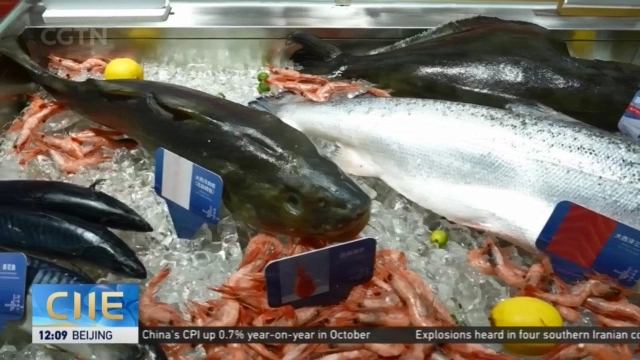
As reported by reporter Guo Linjie of CGTN, the Norwegian delegation at the CIIE in Shanghai presented a detailed roadmap aimed at securing a dominant share of China’s expanding import market for high-grade marine protein.
The Norwegian Seafood Council outlined both immediate performance milestones and decade-long market targets, anchored by an efficient cold-chain logistics network that delivers fresh produce from Norwegian waters to Chinese urban markets within four to five days.
Detailing the current operational momentum and long-term targets of the Norwegian seafood industry, Christian Chramer, Chief Executive Officer of the Norwegian Seafood Council, highlighted China’s status as a top-tier destination for European exports.
As reported by Guo Linjie of CGTN, Christian Chramer stated: “At the moment, the biggest and most important product for Norway in seafood is the salmon. It is predominantly fresh, brought from Norway to China within four to five days. Very efficient logistics come by air to logistics hubs in China, also going out to professional buyers and then to the end consumers.”
Addressing the broader strategic value of the Shanghai trade platform, Christian Chramer emphasized the scale of the bilateral commercial relationship.
As reported by CGTN, Christian Chramer added: “You can see that for Norway, this is a very big event. It is important to show that we mean serious business in China. You are our number one trading partner in Asia. For seafood, you are now the second largest importer of our Norwegian seafood. An agreement was signed last week between Norway and China. So now even more live and fresh produce from wild catch can enter China under a new regulation in this country.”
Industry forecasts released by the Norwegian Seafood Council at the expo indicate that Norwegian seafood exports to China are projected to hit 10 billion yuan during the 2026 calendar year, establishing a solid baseline toward the 2035 target of 2.9 billion US dollars.
How Are Norwegian Health and Nutritional Brands Expanding Their Footprint in China?
According to coverage published by CGTN, the expansion of Norwegian exports extends beyond fresh fish to high-value-added nutritional products, notably refined fish oil and omega-3 supplements.
Established manufacturing conglomerates are utilizing the import expo as a strategic entry portal and distribution builder to tap into China’s rapidly growing health and wellness retail sector.
Outlining the vertical integration and historical quality controls underpinning Norwegian health exports, Pasi Hautakorpi, Managing Director of Orkla Health International, detailed the company’s long-term commercial perspective on Chinese market engagement.
As reported by reporter Guo Linjie of CGTN, Pasi Hautakorpi stated: “We have been in this business for 170 years, and we are basically controlling the whole process from the catch, when it has been brought to the ports, then when the oil is extracted from the liver as well as the whole refinement process.”
Evaluating the functional role of the CIIE trade event in corporate growth, Pasi Hautakorpi emphasized that the Shanghai expo serves as a critical strategic bridge rather than a conventional promotional fair.
As reported by CGTN, Pasi Hautakorpi stated: “This has been a great opportunity for us to strengthen the partnership that we have with our distributors as well as to learn about the market and the consumers. So it is not just a trade fair for us; it is really being a gateway to China.”
How Does Government Cooperation Support Bilateral Trade Growth Between Norway and China?
As reported by CGTN, the diplomatic framework supporting expanded commercial ties has been reinforced by active participation from senior cabinet officials from Oslo.
The 27.6 percent growth in bilateral trade recorded in the first half of 2026 reflects sustained institutional engagement designed to help Norwegian firms navigate Chinese consumer preferences, regulatory protocols, and modern retail ecosystems such as cross-border e-commerce platforms.
Underlining the necessity for direct market engagement and institutional learning, Cecilie Myrseth, Norwegian Minister of Industry and Commerce, outlined the government’s approach to supporting domestic enterprises on the global stage.
As reported by reporter Guo Linjie of CGTN, Cecilie Myrseth stated: “If you want to get into a new market, as for some, the Chinese market is new, then you have to know the market. You have to know the people, you have to know the industry, you have to spend time to also understand what the Chinese want. So this is a great opportunity for Norwegian companies, and there are more and more companies coming to actually be able to promote their products.”
Summarizing the broader economic mechanics showcased at the Shanghai exhibition, reporter Guo Linjie of CGTN observed that “from the seas of Norway to the tables of Chinese consumers, the journey takes producers and businesses working across borders, and that is what the CIIE is about. It brings markets closer and builds connections between countries.”
Background of the Particular Development After the News
The China International Import Expo (CIIE), inaugurated in 2018 in Shanghai, represents China’s flagship national-level trade exposition dedicated exclusively to foreign imports. Designed to demonstrate market openness and facilitate direct purchasing agreements between international suppliers and Chinese buyers, the annual event has become a primary trade mechanism for sovereign nations seeking to expand export volumes into the world’s second-largest economy.
Sino-Norwegian commercial relations have undergone steady expansion over the past decade, culminating in enhanced bilateral cooperation across maritime transport, green technology, and agri-food industries. Norway, as one of the world’s leading aquaculture producers, has prioritized the Chinese consumer market to absorb expanding salmon and wild-catch yields. The newly signed bilateral regulatory protocols referenced at the 2026 expo build upon previous sanitary and phytosanitary agreements, cutting customs processing times and allowing direct air-freight delivery of live aquatic species to major Chinese metropolitan airports including Shanghai Pudong, Beijing Capital, and Guangzhou Baiyun.
How This Development Can Affect Exporters, Logistics Operators, and Consumer Markets
The strategic export targets announced by Norway at the CIIE will produce distinct operational, financial, and structural impacts across international trade channels.
Impact on Norwegian Seafood Producers and Aquaculture Investors
For Norwegian salmon farmers, commercial fisheries, and nutritional manufacturers, achieving a $2.9 billion target by 2035 will drive increased capital investment in cold-chain infrastructure, offshore aquaculture technology, and sustainable harvesting practices. Companies will increasingly tailor processing and packaging capabilities specifically to meet Chinese consumer preferences, shifting product mix allocations toward high-margin fresh and live segments.
Impact on Air Cargo Freight Operators and Supply Chain Networks
For international air freight carriers, logistics integrators, and cold-chain distributors operating between Scandinavia and East Asia, the planned doubling of seafood volumes will generate sustained demand for dedicated cargo capacity. Air cargo operators will likely expand direct charter routes connecting Oslo Airport (ENGM) with major Chinese logistics hubs, driving long-term freight revenue while placing premium requirements on temperature-controlled transit management.
Impact on Chinese Retail Platforms and Domestic Consumers
For Chinese retail chains, premium supermarkets, and e-commerce platforms, streamlined import clearance protocols will ensure a more stable, year-round supply of fresh European marine protein and health products. Increased availability combined with competitive logistics will likely stabilize consumer prices for imported Atlantic salmon and premium omega-3 products, further integrating high-grade Norwegian products into everyday Chinese consumer dining and dietary habits.