
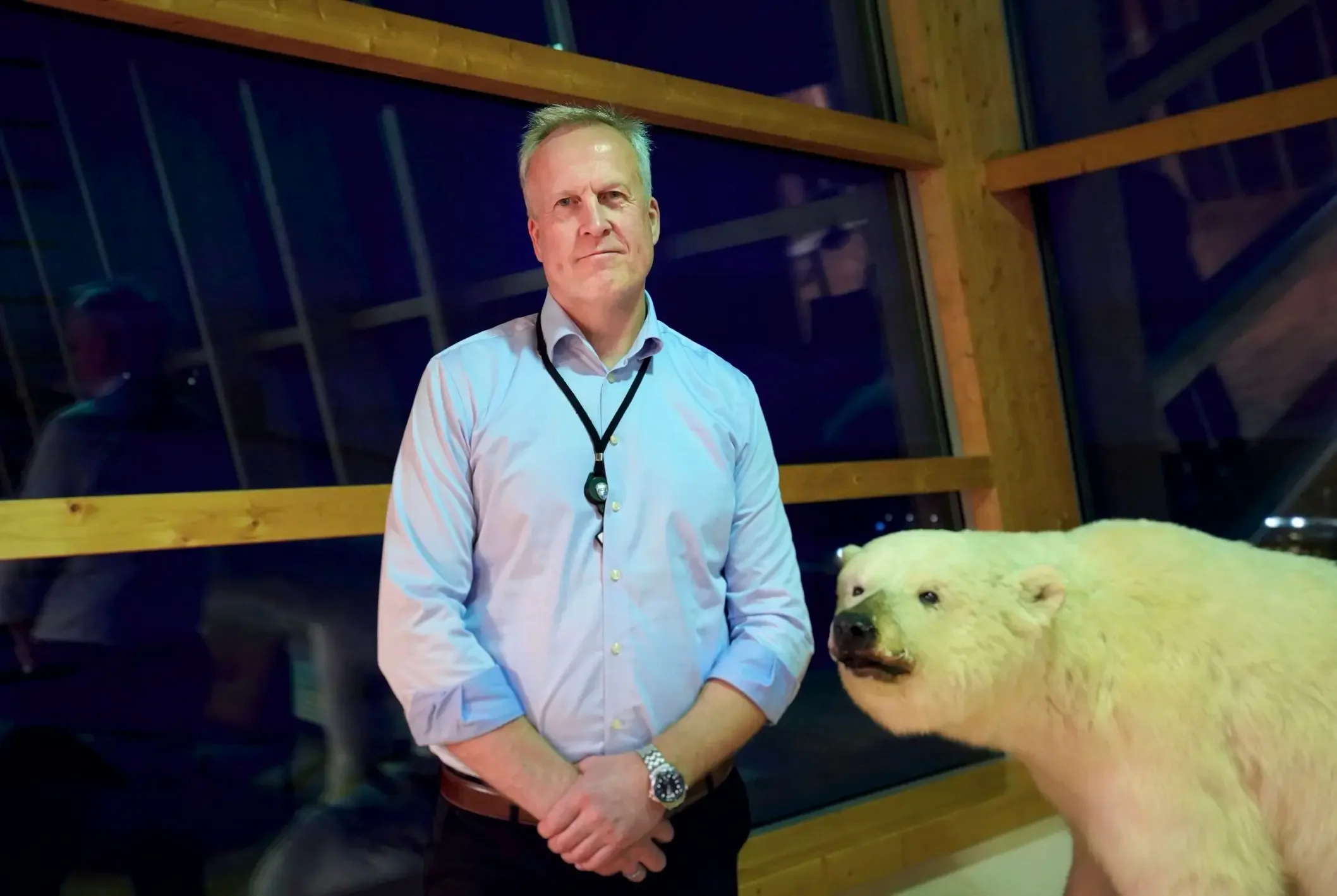
- Preparedness and Security Defined Term: Outgoing Governor of Svalbard Lars Fause—who took office in 2021 and will hand over to Jens Olav Vestgøte Sæther after the New Year—said public security and preparedness became central to his nearly six-year term following Russia’s full-scale invasion of Ukraine, the autumn 2023 shift from coal to diesel in Longyearbyen, and a near-collapse of energy supply in March 2024 that required Norwegian Armed Forces generator transport from mainland Norway.
- Emergency Stockpile and Supply Vulnerability: Fause noted that Svalbard has never been self-sufficient over long periods without mainland resupplies—flights take roughly one and a half hours and sea crossings two and a half days weather permitting—and confirmed the office received government funding this year for a classified emergency stockpile available to both civilian preparedness actors and the Armed Forces, alongside hope for Store Norske to begin building a new diesel power plant at Hotellneset next year with larger fuel reserve tanks.
- Police, Armed Forces, and Total Defence Coordination: Fause highlighted joint police and national emergency response training in Svalbard—the first of its kind in nearly 30 years as reported by Svalbardposten, including helicopter hoisting onto MS Polarsyssel—as well as annual training with 330 and 335 Squadron aircraft, Coast Guard patrols, Navy frigate visits, a September mass rescue exercise in Longyearbyen, and the “Norway exercises” tabletop exercise across the preparedness council he chairs as both county governor and chief of police.
- Russian Settlements and Professor Molchanov Arrest: Fause stated that his office increased its presence in Barentsburg and Pyramiden (home to 419 residents) with visits to Barentsburg averaging every other week, monthly office days, identity checks since May 2022, Customs monitoring, at least twelve types of inspections over two to three years, and five annual contact meetings with Trust Arktikugol and the Russian Consul General—while also executing the Nord-Troms and Senja District Court order in early September to arrest the Russian vessel Professor Molchanov for Ukrainian company Naftogaz, a seizure upheld at the end of October and slated for appeal according to NRK.
- Climate Change Ahead: While security and preparedness took top priority during his tenure, Fause emphasised that warming in north-eastern Svalbard has reached five to seven times the global average—causing permafrost thaw, runway and building damage, landslides, erosion, and long-term pressure on ice-dependent species such as polar bears—while increased Arctic shipping and seabed and fishery resources keep Svalbard at the centre of strategic attention.
Norway (Norway Post Magazine) November 24, 2026 – Outgoing Governor of Svalbard Lars Fause, who became governor in 2021 and will hand over to Jens Olav Vestgøte Sæther after the New Year, says public security and preparedness became his top priority amid Russia’s invasion of Ukraine and a near-failure of Longyearbyen’s energy supply in March 2024. Speaking ahead of his departure, Fause highlighted a new classified emergency stockpile, joint police exercises after nearly 30 years, ongoing contact meetings in Barentsburg, the September arrest of the vessel Professor Molchanov, and accelerating climate impacts across the archipelago.
- How Does Distance From Mainland Norway Shape Supply Security and Emergency Stockpiles?
- How Have Police Exercises, Armed Forces Cooperation, and Dual Roles Functioned?
- How Did the Governor Handle Russian Settlements, the Professor Molchanov Arrest, and Sovereignty?
- How Do Key Pillars of Lars Fause’s Tenure in Svalbard Compare?
- Background of the Particular Development After the News
- How This Development Can Affect Incoming Leadership, Svalbard Residents, and Arctic Policymakers
As reported by High North News, Lars Fause had not imagined that public security and preparedness would be at the centre of his work as Governor of Svalbard, yet as he prepares to step down after almost six years in the post, those responsibilities defined his tenure.
Lars Fause became Governor of Svalbard in 2021 and will pass on the baton shortly after the New Year to Jens Olav Vestgøte Sæther before returning to his role as first public prosecutor at the Northern Public Prosecutor’s Offices. Reflecting on his term, Fause stated: “My period as Governor has been particularly marked by a focus on public security and preparedness”.
As reported by High North News, Lars Fause elaborated on the events that shaped his priorities: “An important backdrop is, of course, Russia’s full-scale invasion of Ukraine. At the same time, preparedness work gained momentum with the transition from coal to diesel in Longyearbyen in autumn 2023. We had an incident in March 2024 when the energy supply nearly collapsed, and we had to ask the Norwegian Armed Forces to transport additional generators here from mainland Norway.”
He added: “In the wake of this, it has been important to build up preparedness capabilities up here. At the same time, the focus has been on maintaining calm and stability in relation to the Russian settlements and security policy issues.” Pausing before continuing, Fause stated: “I had not envisaged this before I started the job. I thought climate change and cultural heritage would be the most important issues, but they have had to take second place.”
How Does Distance From Mainland Norway Shape Supply Security and Emergency Stockpiles?
Reporting from High North News details the logistical realities of governing an Arctic archipelago far from mainland Norway and the measures introduced to strengthen resilience:
- Risk Analysis and Mainland Transport Times: While the Governor of Svalbard has prepared a risk and vulnerability analysis since 2010 focusing on major accidents and natural hazards such as landslides and extreme winds, Fause noted that no equivalent analysis of security of supply existed when he started, requiring his office to establish one. Flying between mainland Norway and Svalbard takes around an hour and a half, while sea transport takes two and a half days weather permitting. Fause observed: “In Finnmark [the northernmost county in Norway, ed. note], people were able to support themselves until the 1970s with a cow and sheep in the barn and by fishing. Here in Svalbard, no one has ever managed on their own for a long period without resupplies from the mainland.”
- Classified Emergency Stockpile and New Reality: This year, the Governor of Svalbard received government funding to build an emergency stockpile available to both civilian preparedness actors and the Armed Forces. Pointing to equipment including the service vessel MS Polarsyssel, two large rescue helicopters, cars, snowmobiles, weapons, and ammunition, Fause stated: “Establishing this stockpile is about building up even more basic preparedness so that we can protect the civilian population in the event of a crisis or war. I cannot say anything about the location or contents of the stockpile; that is classified information.” He added: “There is now no doubt that Norway must prepare for war. The government says so clearly. This is a new reality that Svalbard must also contend with. However, what has always been, and will remain, the case is that we are on an island far up in the Arctic Ocean. This makes good preparedness extremely important, but also enormously demanding.”
- Diesel Transition, Power Cuts, and Hotellneset: Following the shift from coal to diesel in autumn 2023 and the near energy collapse in March 2024, Fause noted that power outages under the old worn-out coal plant had ranged from two minutes to four hours, whereas Svalbard Energi—owned by Store Norske—has since built redundancy with hardly any power cuts. Fause stated: “Eventually, the new diesel power plant at Hotellneset will be built, and I hope Store Norske [the owner of Svalbard Energi, ed. note] can begin construction as early as next year. The most important thing is to establish larger reserve tanks. We need increased reserve capacity in case tanker ships cannot get through”, while stressing that he and his staff must process any building permit application as correctly and swiftly as possible.
How Have Police Exercises, Armed Forces Cooperation, and Dual Roles Functioned?
Coverage in High North News, referencing Svalbardposten, outlines how training, military coordination, and governance structures operated during Fause’s term:
- Police Training and Initial Response Window: Police recently conducted training in Svalbard involving personnel from several police districts and national emergency response resources for the first time in nearly 30 years, as reported by Svalbardposten, including helicopter hoisting onto MS Polarsyssel and local briefings. Fause stated: “Achieving this kind of joint training was something we began working on as part of the strengthened preparedness efforts. Terrible things can happen in small places too”, adding: “For example, a situation could arise in which a Norwegian takes a hostage in a cabin, requiring a police operation to resolve it. It is therefore important for the police and their emergency preparedness resources to become familiar with Svalbard so that we can receive assistance if needed.” He welcomed regular return training and stated: “Should there be a need for a larger police operation here, I am absolutely certain that resources will be deployed from the mainland. But we also know that we must manage on our own for the first six to eight hours”.
- Air Force, Coast Guard, and Navy Coordination: SAR Queen helicopters from the Norwegian Air Force’s 330 Squadron conduct annual training flights to assist in rescue operations, 335 Squadron can assist with Hercules transport aircraft, the Norwegian Coast Guard operates almost continuously in the Fisheries Protection Zone and acts under the Governor’s instructions within territorial waters, and the Norwegian Navy sends a frigate annually on Svalbard patrol. Fause noted that meetings and information exchanges occur within rules governing military assistance to police.
- Total Defence Year and Dual County Governor / Police Chief Role: Throughout the Norwegian Total Defence Year, the office held exercises including a September mass rescue drill in Longyearbyen and the “Norway exercises” tabletop exercise in the Svalbard emergency preparedness council, which includes the Longyearbyen local council, Kings Bay, Store Norske, Longyearbyen Hospital, Coop Svalbard, Telenor Svalbard, and the Longyearbyen Red Cross. On serving as both county governor and chief of police, Fause stated: “The responsibility is substantial, but it is also an exceptionally effective way of governing, particularly in terms of preparedness and total defence. You have full control over all resources, powers and activities. When both the county governor and chief of police are gathered in one head, it is very easy to make things happen quickly when needed”.
How Did the Governor Handle Russian Settlements, the Professor Molchanov Arrest, and Sovereignty?
Reporting from High North News and NRK details oversight of Barentsburg and Pyramiden—where 419 people live—as well as maritime enforcement and threat assessments:
- Contact Meetings, Presence, and Inspections: Fause noted that his office holds formal contact meetings five times a year—with agendas, minutes, flags, and a Norwegian-Russian interpreter—with Trust Arktikugol and the Russian Consul General in Barentsburg, building on a tradition dating back to acting commissioner Helge Ingstad in the 1930s. Fause stated: “We have continued to hold contact meetings five times a year with Russia’s company on Svalbard, Trust Arktikugol, and the Russian Consul General in Barentsburg. The dialogue has been constructive and good throughout. On our part, we proceed on the basis that we must always act within the law, remain as objective as possible and emphasise proportionality in our decisions.” He added: “We have never had a greater presence in the Russian settlements. On average, we are in Barentsburg every other week”, alongside monthly office days, identity checks since May 2022 on everyone travelling to and from Svalbard, Norwegian Customs monitoring of goods, and at least twelve types of inspections over two to three years covering working conditions, schools, mining, electrical installations, and fire safety.
- Arrest of Professor Molchanov: In early September, the Governor—acting in the bailiff role—executed a Nord-Troms and Senja District Court order allowing Ukrainian company Naftogaz to seize the Russian vessel Professor Molchanov in Barentsburg in connection with efforts to recover assets expropriated by Russia in 2014. Fause explained: “The Governor has a role as bailiff in Svalbard and received the court order to arrest Professor Molchanov. I sent two police officers and the interpreter to Barentsburg. On the first day, they carried out a routine passport check when the vessel called at port, and the following day they read out the arrest order to the captain. I ordered the vessel to remain berthed in Barentsburg until another decision is issued by the District Court”, stressing that Norway is not a party to the dispute between Naftogaz and Russia. At the end of October, the District Court rejected Trust Arktikugol’s request to lift the arrest, and Russia announced an appeal, as reported by NRK.
- Hybrid Threats, Population Policy, and Climate Outlook: Regarding hybrid threats and Politico reporting on concerns that Russia might test NATO in Svalbard amid questions over U.S. commitment to European defence, Fause stated that threat assessments fall to the Norwegian Police Security Service while his mission is maintaining calm and stability, noting he agrees with Longyearbyen Local Council Chair Terje Aunevik on maintaining a Norwegian family community and noting limits on regulating population composition given free movement and Svalbard Treaty rights. Fause also received strong funding and frequent visits from ministers, parliamentary committees, and daily contact with the Polar Department at the Ministry of Justice and Public Security. Looking ahead, he highlighted warming in north-eastern Svalbard up to five to seven times the global average, permafrost thaw affecting the Longyearbyen Airport runway, new buildings, residential piles, erosion, and rock slides, long-term risks to polar bears, and growing Arctic shipping and seabed and fishery importance, stating: “A colleague put it well: Many people come to Svalbard because of the mountains, but stay because of the people. That applies to me too. I will miss both the people and the job.”
How Do Key Pillars of Lars Fause’s Tenure in Svalbard Compare?
A structured summary outlines the core areas of governance, operations, and long-term outlook covered in the report:
| Governance Pillar | Key Figures & Milestones | Reported Details & Statements |
|---|---|---|
| Tenure & Succession | Appointed 2021; stepping down after New Year to Jens Olav Vestgøte Sæther | Almost six years in office; returning to first public prosecutor role at Northern Public Prosecutor’s Offices. |
| Energy & Emergency Stockpile | Autumn 2023 coal-to-diesel shift; March 2024 near-collapse; 2026 stockpile funding | Classified emergency stockpile for civilian actors and Armed Forces; hope for Hotellneset plant construction from next year. |
| Security & Exercises | First multi-district/national police drill in ~30 years; Total Defence Year | Annual 330/335 Squadron, Coast Guard, and Navy patrols; September mass rescue drill; 6–8 hour initial local capacity. |
| Russian Settlements & Vessel | 419 residents in Barentsburg/Pyramiden; Professor Molchanov arrested early Sept | Five yearly contact meetings; visits to Barentsburg averaging every other week; arrest upheld late Oct, appeal noted by NRK. |
| Climate & Arctic Outlook | North-eastern Svalbard warming 5–7x global average | Permafrost thaw, runway/building/pile damage, slides, polar bear decline, and rising shipping and resource relevance. |
Background of the Particular Development After the News
Svalbard sits in the High North under the 1920 Svalbard Treaty, combining Norwegian sovereignty and administration with international access and residence provisions as well as active settlements such as Longyearbyen alongside Russian-operated communities in Barentsburg and Pyramiden. Over recent years, shifting geopolitical dynamics in Europe following Russia’s full-scale invasion of Ukraine, alongside Longyearbyen’s transition away from coal power toward diesel and heightened Arctic climate warming, have placed new operational demands on local authorities.
Within this framework, the Governor of Svalbard exercises dual responsibilities as county governor and chief of police, coordinating rescue operations, local preparedness councils, regulatory inspections, and dialogue with local actors and central ministries in Oslo as leadership transitions after the New Year.
How This Development Can Affect Incoming Leadership, Svalbard Residents, and Arctic Policymakers
Lars Fause’s departure and the operational priorities outlined at the end of his term carry practical implications for key stakeholders:
1. Incoming Governor Jens Olav Vestgøte Sæther and Svalbard Administration
For incoming Governor Jens Olav Vestgøte Sæther and the Governor’s staff, sustaining preparedness coordination, integrating the new emergency stockpile, handling any Hotellneset power plant permit application, and managing ongoing legal and diplomatic matters in the settlements will shape the early phase of the new term.
2. Residents, Businesses, and Institutions in Longyearbyen and the Settlements
For residents, businesses, emergency services, and institutions such as Longyearbyen Hospital, Store Norske, and local councils across the archipelago, continued focus on power redundancy, search and rescue readiness, and adaptation to permafrost thaw and coastal hazards directly affects daily life and infrastructure stability.
3. Norwegian Ministries, Security Agencies, and Arctic Observers
For the Ministry of Justice and Public Security’s Polar Department, the Norwegian Police Security Service, the Armed Forces, and international observers tracking Arctic affairs, developments around maritime enforcement, resupply logistics, and climate impacts will remain central reference points for Svalbard policy.