- Norway’s Supreme Court ruled on Friday, November 13, 2026, by a six-to-five majority among an expanded 11-judge panel, that government approvals for three North Sea oil and gas fields—Tyrving, Breidablikk, and Yggdrasil—were invalid due to procedural errors in their environmental impact assessments.
- The court agreed with climate campaigners Greenpeace Norway and Young Friends of the Earth Norway (Natur og Ungdom) that authorities failed to assess downstream “combustion emissions” generated when extracted petroleum is burned, including outside Norway, as well as cumulative emissions across the Norwegian continental shelf.
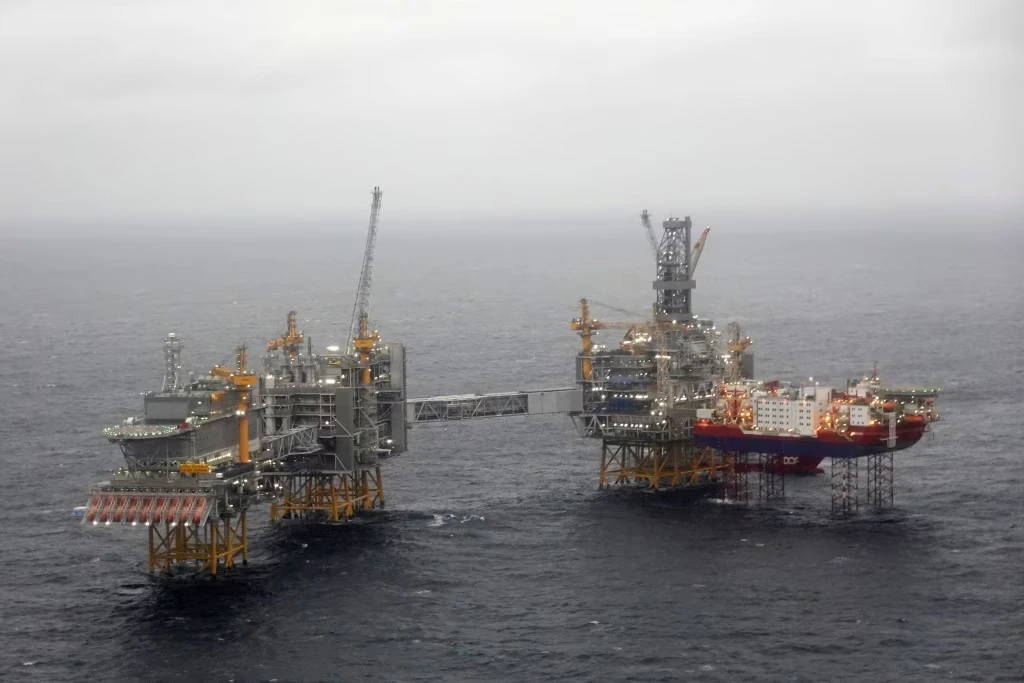
- While invalidating the approvals, the Supreme Court clarified that because the operating oil companies (Equinor and Aker BP) were not parties to the lawsuit, ongoing production at Breidablikk and Tyrving and development at Yggdrasil (scheduled to start in 2027) do not automatically stop, though the Ministry of Energy must reassess the permits under proper procedure.
- Greenpeace Norway head Haldis Tjeldflaat Helle described the judgment as a “historic victory for the climate and for Norwegian democracy,” whereas Norwegian Energy Minister Terje Aasland welcomed clarity on decision-making requirements and confirmed the ministry will follow the court’s rules while studying the ruling.
- The decision follows similar climate litigation victories across the globe, including rulings by the United Kingdom’s top court in 2024, a French court ruling against TotalEnergies in June, and an Australian high court decision blocking a New South Wales coal mine expansion in October.
Norway (Norway Post Magazine) November 13, 2026 – Norway’s Supreme Court ruled on Friday, November 13, 2026, that government approvals for three North Sea oil and gas licences—Breidablikk, Tyrving, and Yggdrasil—were invalid because environmental impact assessments omitted downstream combustion emissions. Handed down by a six-to-five majority of an expanded 11-judge panel following a legal challenge filed in 2023 by Greenpeace Norway and Young Friends of the Earth Norway, the ruling requires the Ministry of Energy to reassess the permits under proper legal procedures. While ongoing production and development at the three fields are not automatically suspended, campaigners and legal observers hailed the decision as a milestone in global climate litigation.
- What Are the Key Legal and Operational Details of Norway’s Supreme Court Ruling?
- How Does Norway’s Ruling Compare with Recent International Climate Litigation Decisions?
- Background of the Particular Development After the News
- How This Development Can Affect Norwegian Energy Regulators, Oil Producers, and Global Climate Litigants
As reported by Agence France-Presse (AFP) and Reuters correspondents Gwladys Fouche and Nerijus Adomaitis, Norway’s Supreme Court on Friday ruled that three oil licences granted by the Norwegian government in the North Sea were invalid because their climate and emissions impacts had not been adequately accounted for. The high court sided with climate campaigners who challenged the validity of the permits, arguing that official environmental impact assessments failed to evaluate the greenhouse gases released when extracted oil and gas are eventually burned.
An expanded panel of 11 Supreme Court judges participated in delivering the closely anticipated judgment—instead of the customary five-judge bench—a procedural format reserved for cases of major constitutional and legal significance. Ruling by a six-to-five majority, the court upheld two earlier lower-court victories secured by the campaigners and declared that the development and operational plans were “invalid due to procedural errors”.
In its written ruling, the Supreme Court noted that while environmental assessments had been conducted prior to approval, they accounted solely for domestic production emissions and omitted subsequent “combustion emissions,” including those released outside Norway. According to the court, “the combustion emissions resulting from petroleum production must be subject to an impact assessment” alongside cumulative emissions from other approved projects on the Norwegian continental shelf before a development plan can lawfully be approved. The court also ordered the Norwegian state to pay Greenpeace and Young Friends of the Earth Norway more than 5 million Norwegian kroner (approximately $500,000) in legal costs.
Reacting shortly after the judgment was announced, environmental leaders welcomed the verdict as a watershed moment for public transparency. As reported by AFP, Haldis Tjeldflaat Helle, head of Greenpeace’s Norwegian branch, stated: “This is a historic victory for the climate and for Norwegian democracy.” Haldis Tjeldflaat Helle further added: “Big polluters are now forced to admit exactly how much they will contribute to the climate crisis that we are in the middle of,” noting that “this will give Norwegian public and Norwegian decision makers a much clearer, better picture of how much the Norwegian oil and gas industry is actually contributing to the climate crisis.” Similarly, as reported by Norwegian broadcaster NRK, Young Friends of the Earth Norway (Natur og Ungdom) leader Sigrid Hoddevik Losnegård stated: “The state has made a mistake. We must take into account the consequences that the Norwegian oil industry and each individual project have for the global climate, which the government and the state have not previously done”.
Responding on behalf of the government, Norwegian Energy Minister Terje Aasland acknowledged the court’s legal guidance while emphasising operational continuity. As reported by AFP, Terje Aasland stated that the “ruling is important because it clarifies the requirements for the decision-making process in cases like these,” adding that his ministry will “of course, follow these requirements.” Norway’s Attorney General Fredrik Sejersted similarly told Reuters following the verdict that “the verdict means the state has a duty to reprocess the case and we will do so”.
The legal dispute began in 2023 when Young Friends of the Earth Norway and Greenpeace Norway filed suit challenging government approvals for the Tyrving, Breidablikk, and Yggdrasil fields in the North Sea. In January 2024, the Oslo District Court ruled in favour of the environmental groups, prompting the Ministry of Energy to lodge an appeal, which was subsequently rejected when the Borgarting Court of Appeal upheld the lower court’s decision in November 2025. Throughout the appeal process, petroleum operations were permitted to proceed. Equinor’s Breidablikk field and Aker BP’s Tyrving field are currently operational and producing hydrocarbons, while Aker BP’s Yggdrasil project—whose estimated reserves were recently revised upward—remains scheduled to commence production in 2027.
Because the operating oil companies were not named as parties in the lawsuit against the state, the Supreme Court clarified that declaring the administrative approvals invalid does not automatically revoke the licences or halt offshore extraction. “The ministry must, however, reassess the case on the basis of proper procedure,” the court stated. In his statement to AFP, Terje Aasland stressed that the court had “made it very clear that this does not mean that activities at the three fields must stop,” adding: “We need to study the ruling more closely before we can say more about how we will proceed.” Meanwhile, Jenny Sandvig, legal counsel representing the environmental organisations, told Reuters that the groups will evaluate whether to pursue direct legal action against the operating companies to seek a halt to ongoing output.
The verdict was monitored closely across Europe and internationally, given that Norway has overtaken Russia as Europe’s largest supplier of natural gas and oil following the sharp contraction of Russian energy deliveries during the conflict in Ukraine. The decision aligns with a broader wave of climate-related judicial rulings worldwide:
- Australia (October): Australia’s highest court blocked the expansion of a coal mine in New South Wales after finding planning authorities failed to properly assess the local impacts of planet-heating emissions from burning the coal, although the New South Wales state government subsequently introduced legislation aimed at allowing the expansion to proceed despite the court ruling.
- France (June): A French court ordered energy major TotalEnergies to incorporate emissions linked to all of its petroleum products into its corporate vigilance plan.
- United Kingdom (2024): The UK Supreme Court ruled in favour of campaigners opposing an onshore oil drilling project in England, holding that downstream environmental impacts had not been sufficiently evaluated.
Reacting to the Oslo judgment, Sarah Finch—who led the successful UK legal challenge—welcomed the international ripple effect of downstream emissions jurisprudence. As reported by AFP, Sarah Finch stated she was “absolutely delighted” to hear about the Norwegian ruling, adding: “I’m so proud that our fight against one oil field in England has set off a wave of climate- and future-friendly judgments around the world”.
What Are the Key Legal and Operational Details of Norway’s Supreme Court Ruling?
Official court summaries and reporting by AFP, Reuters, and NRK highlight the central parameters of the November 13, 2026, verdict:
- Court Composition and Vote: Decided by a six-to-five majority of an expanded 11-judge panel of Norway’s Supreme Court.
- Contested North Sea Fields: Breidablikk (operated by Equinor, currently producing), Tyrving (operated by Aker BP, currently producing), and Yggdrasil (operated by Aker BP, scheduled to start production in 2027).
- Core Legal Requirement: Environmental impact assessments must evaluate downstream “combustion emissions” generated when extracted oil and gas are burned—including emissions occurring outside Norway—as well as cumulative emissions across the Norwegian continental shelf prior to project approval.
- Immediate Production Status: Ongoing production and development activities are not automatically halted because the oil companies were not parties to the case, though the Ministry of Energy must conduct a full procedural reassessment.
- Legal Costs Awarded: The Norwegian state was ordered to pay more than 5 million Norwegian kroner (approximately $500,000) in legal expenses to Greenpeace Norway and Young Friends of the Earth Norway.
How Does Norway’s Ruling Compare with Recent International Climate Litigation Decisions?
The Norwegian Supreme Court’s requirement to assess downstream Scope 3 combustion emissions mirrors a growing body of international judicial precedents:
| Jurisdiction & Date | Court / Case Context | Core Judicial Finding | Immediate Operational Outcome |
| Norway (November 13, 2026) | Supreme Court (11-judge panel, 6–5 vote) on Breidablikk, Tyrving, and Yggdrasil fields. | Approvals declared invalid due to procedural failure to assess downstream combustion emissions. | Ministry of Energy must reassess permits; current offshore operations continue. |
| Australia (October) | High Court ruling on a New South Wales coal mine expansion. | Blocked expansion because planning bodies failed to assess local impacts of coal-burning emissions. | New South Wales state government introduced legislation seeking to permit expansion anyway. |
| France (June) | French court ruling concerning energy major TotalEnergies. | Ordered TotalEnergies to account for emissions linked to all products in its corporate vigilance plan. | Expanded mandatory corporate climate risk disclosure obligations. |
| United Kingdom (2024) | UK Supreme Court ruling on an English onshore oil project (led by Sarah Finch). | Planning permission unlawful because downstream combustion emissions were omitted from EIA. | Set binding precedent requiring Scope 3 emissions assessments for UK fossil fuel projects. |
Background of the Particular Development After the News
Norway is Western Europe’s largest producer of oil and natural gas, and its geopolitical importance as an energy supplier expanded substantially following Russia’s invasion of Ukraine in 2022, which curtailed Russian pipeline gas deliveries to European markets. To bolster European energy security and maintain domestic fiscal revenues, the Norwegian government introduced temporary petroleum tax incentives during the pandemic and subsequently approved a wave of offshore development plans—including Breidablikk, Tyrving, and the large-scale Yggdrasil hub—while maintaining that emissions from exported hydrocarbons are accounted for under international climate treaties in the countries where the fuels are consumed.
Environmental organisations, led by Greenpeace Norway and Young Friends of the Earth Norway, challenged that regulatory framework under Article 112 of the Norwegian Constitution (which guarantees the right to a healthy environment) and European Economic Area (EEA) environmental impact assessment directives. Following consecutive defeats for the state in the Oslo District Court in January 2024 and the Borgarting Court of Appeal in November 2025, the Supreme Court’s decision to convene an 11-judge plenary bench underscored the constitutional and economic stakes surrounding how Norway reconciles its role as Europe’s primary hydrocarbon supplier with its legal climate obligations.
How This Development Can Affect Norwegian Energy Regulators, Oil Producers, and Global Climate Litigants
The Supreme Court’s judgment is projected to reshape regulatory procedures and legal strategies across three primary stakeholder groups:
1. Stricter, More Comprehensive Permitting Reviews for the Ministry of Energy
For Norwegian civil servants and Energy Minister Terje Aasland’s department, the ruling mandates an immediate overhaul of administrative procedures for both retroactive reassessments of Breidablikk, Tyrving, and Yggdrasil and all future offshore licensing rounds, requiring detailed modelling of global combustion emissions and cumulative shelf-wide climate impacts prior to granting approvals.
2. Heightened Compliance Disclosure and Secondary Litigation Risk for Offshore Operators
For energy companies operating on the Norwegian continental shelf—such as Equinor and Aker BP—near-term production remains uninterrupted, yet operators face substantially more rigorous environmental disclosure requirements and potential follow-up civil lawsuits from environmental groups seeking injunctions against ongoing extraction.
3. Reinforced Legal Precedent for International Climate Campaigners and Courts
For environmental NGOs and constitutional lawyers worldwide, Norway’s Supreme Court ruling—coming alongside landmark decisions in the United Kingdom, France, and Australia—strengthens persuasive legal precedent that governments cannot exclude downstream end-use emissions when approving major fossil fuel infrastructure.