Key Points:
- Active Commercial Interest: Norwegian enterprises specializing in solar energy and clean technology are actively exploring strategic investment and technology deployment opportunities across India.
- Commercial Footprint Scale: Around 106 Norwegian companies currently operate in India, with approximately 70 per cent established within the maritime sector and the remaining 30 per cent dedicated to green energy verticals.
- Floating Solar Technology Collaboration: High-profile commercial partnerships are taking shape, including a floating solar technology collaboration between Indian power utility Tata Power and Norwegian clean-tech firm Ocean Sun.
- Institutional Trade Catalysts: Economic momentum has been significantly catalyzed by the implementation of the India-EFTA Trade and Economic Partnership Agreement (TEPA), alongside the Green Strategic Partnership established following high-level diplomatic visits.
- Bilateral Trade Growth: Commercial exchanges are expanding across both traditional and clean energy sectors, supported by rising Indian exports to Norway that reached $439 million USD in 2025 and services exports totaling $876 million USD in 2024.
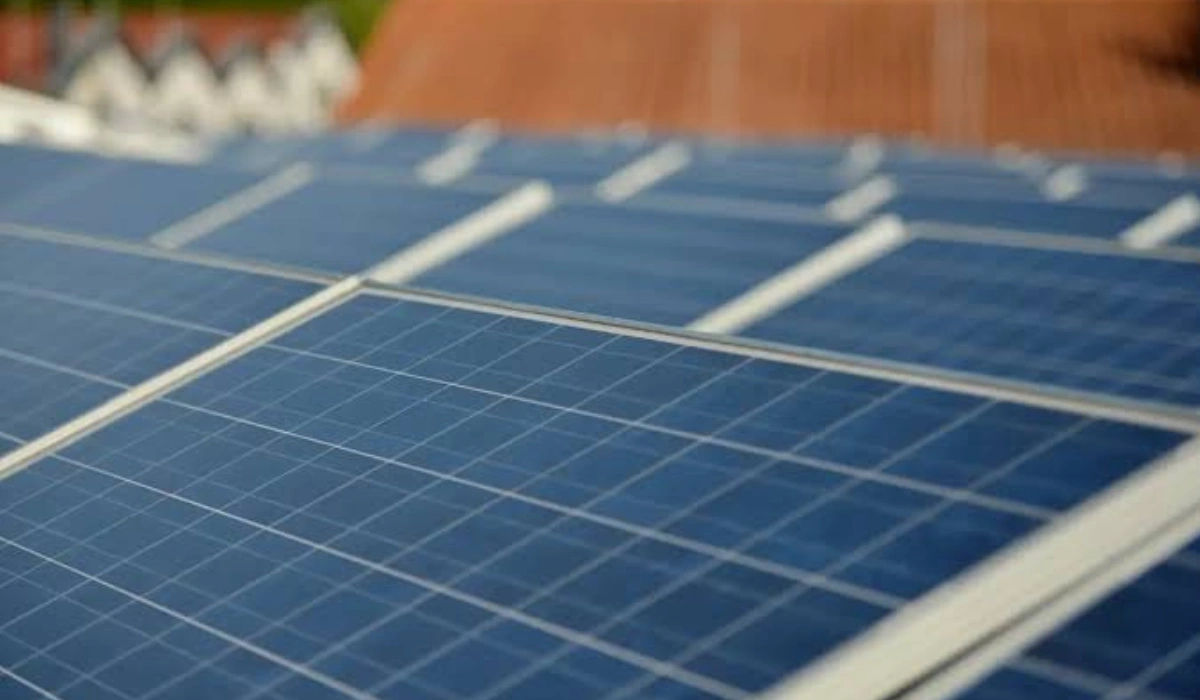
Norway (Norway Post Magazine) November 4, 2026 – Norwegian corporate entities operating within the solar power domain are accelerating their expansion strategies and commercial operations in India, driven by bilateral policy arrangements and growing domestic demand for clean energy infrastructure. As reported by senior diplomatic correspondent Asian News International (ANI), Norway’s Ambassador to India, May-Elin Stener, confirmed the development during an address on the sidelines of the Bharat RE Summit and Expo 2026 in New Delhi. Ambassador Stener highlighted that 106 Norwegian corporate entities maintain active operational presences in India, with approximately 30 per cent of these firms operating within the green energy sector and the remaining 70 per cent engaged in maritime industries. The envoy cited the implementation of the Trade and Economic Partnership Agreement (TEPA) between India and the European Free Trade Association (EFTA) member states, alongside the Green Strategic Partnership framework, as fundamental institutional catalysts driving cross-border investments and technological transfer.
- Key Points:
- How are Norwegian solar and clean-tech firms expanding their commercial presence in India?
- What institutional frameworks and trade agreements are driving Norway-India economic ties?
- How are traditional energy trades, carbon capture, and bilateral figures evolving?
- Background of Norway-India Bilateral Commerce and Renewable Transition Policy
- Foreign Direct Investment, Solar Capacity Expansion, and Industrial Partnerships
How are Norwegian solar and clean-tech firms expanding their commercial presence in India?
As reported by economic correspondents for ANI and Lokmat Times, Norwegian green energy enterprises are increasingly focusing on deploying specialized, high-efficiency technologies tailored to India’s geographical and industrial requirements.
Speaking directly at the country session of the Bharat RE Summit and Expo 2026, Ambassador May-Elin Stener outlined the strategic interest of Norwegian clean-tech firms:
“I just mentioned a very good example of floating solar energy and the technology that is brought from Norway. I think we will see more of that and we also have other Norwegian companies in this sector of solar energy looking to India and looking for opportunities here. So they are definitely interested.”
Highlighting concrete joint ventures operating on the ground, Ambassador Stener specifically pointed to the strategic alliance between Indian power major Tata Power and Norwegian specialized floating solar firm Ocean Sun. The partnership centers on deploying Ocean Sun’s proprietary hydro-elastic membrane-mounted photovoltaic systems, designed to optimize surface-area efficiency on water bodies while delivering enhanced cooling and energy yields.
According to statements from the Norwegian diplomatic mission, additional solar technology providers are currently conducting market assessments across several Indian states to establish local assembly, technical support hubs, and operational joint ventures.
What institutional frameworks and trade agreements are driving Norway-India economic ties?
As reported by international trade reporters for ANI, bilateral commercial momentum has been sustained through structured institutional mechanisms and high-level government engagements.
Ambassador Stener explained that the formal framework for green technology cooperation was established following diplomatic summitry earlier in the year:
“Since Prime Minister Modi’s visit to Norway in May this year, we have had a green strategic partnership between Norway and India. This is also a very good basis for cooperation between Norway and India on green energy. And Norway is very happy to be a partner here at the renewable energy summit this year. So in the country session, we have been discussing different areas of cooperation.”
Complementing the bilateral diplomatic framework, the Trade and Economic Partnership Agreement (TEPA) between India and the EFTA state bloc—comprising Norway, Iceland, Liechtenstein, and Switzerland—has completed its first full year of operational implementation.
Commenting on the structural impact of the trade pact, Ambassador Stener stated:
“The trade and economic partnership agreement between the EFTA countries and India has been in force for one year now. And we already see quite a lot of cooperation in the renewable energy sector. Besides the maritime sector, it’s the biggest one between Norway and India.”
The ambassador added that the legal certainty provided by the TEPA framework creates a predictable foundation for long-term corporate capital deployment, customs facilitation, and intellectual property protection.
How are traditional energy trades, carbon capture, and bilateral figures evolving?
As reported by energy correspondents for ANI and regional economic desks, economic exchanges between the two nations extend across traditional energy commodities and emerging industrial decarbonization initiatives.
Addressing the diversification of import portfolios, Ambassador Stener noted that liquefied natural gas (LNG) and natural gas shipments represent the fastest-growing import category from Norway into India:
“We have seen trade of natural gas coming into India from Norway. That is the sector that is increasing the most when it comes to import from Norway to India. And we also see a lot of Norwegian companies having a keen interest because the trade and economic partnership agreement makes it a very good framework for economic cooperation in the years to come.”
Beyond fuel supplies, industrial decarbonization technology has emerged as a major focus of bilateral exchange. Highlighting Norway’s industrial infrastructure in carbon capture and storage (CCS), Ambassador Stener revealed that Indian government leadership conducted high-level facility tours to examine commercial deployment:
“Well, one of the biggest, biggest installations in the world for carbon capture and storage is in Norway. We had the Indian Minister of Oil and Gas to see that place and the facility just when it opened last, last year. So we see interest from India on that and we are very happy to share the experiences that we have and happy to cooperate and Norwegian companies are also happy to provide some of the technologies.”
The underlying economic data reflects consistent long-term growth across commercial indicators:
- Merchandise Exports: India’s merchandise exports to Norway expanded from $270 million USD in 2014 to $439 million USD in 2025, representing a compound annual growth rate of approximately 5 per cent.
- Services Exports: India’s services exports to Norway reached $876 million USD in 2024, underlining the increasing role of information technology, engineering, and professional services in the economic partnership.
Background of Norway-India Bilateral Commerce and Renewable Transition Policy
Economic relations between Norway and India have historically centered on maritime industries, offshore oil and gas engineering, and deep-sea shipping logistics. For decades, maritime enterprises accounted for the overwhelming majority of Norwegian capital investment in the Indian subcontinent. However, as India initiated its ambitious National Green Hydrogen Mission and set target goals to achieve 500 gigawatts (GW) of non-fossil energy capacity by 2030, bilateral commercial focus shifted rapidly toward renewable energy verticals.
The bilateral relationship achieved structural momentum with the signing of the Green Strategic Partnership, designed to align Norway’s advanced technological capabilities in offshore wind, floating solar, zero-emission maritime propulsion, and carbon management with India’s manufacturing scale and clean energy market demands. The subsequent enactment of the landmark EFTA-India Trade and Economic Partnership Agreement (TEPA)—which includes binding commitments regarding long-term foreign direct investment—established targeted tariff reductions and simplified regulatory pathways, cementing green technology as the second-largest commercial sector between the two nations after maritime trade.
Foreign Direct Investment, Solar Capacity Expansion, and Industrial Partnerships
The continued expansion of Norwegian solar energy firms into India is predicted to generate measurable operational impacts across project development, cross-border investment flows, and clean energy supply chains through 2027 and beyond.
For Indian renewable energy project developers, utility providers, and engineering firms, the entry of specialized Norwegian companies is predicted to accelerate the adoption of floating solar technology on inland reservoirs, hydroelectric dams, and coastal water structures. By leveraging Ocean Sun’s hydro-elastic membrane technology and similar Norwegian engineering innovations, Indian developers are expected to achieve higher energy generation density while reducing land acquisition bottlenecks and water evaporation losses across utility-scale solar parks.
For domestic Indian manufacturing and service sectors, the EFTA-TEPA framework is predicted to spur a steady influx of Norwegian foreign direct investment (FDI) into localized joint ventures. As Norwegian firms seek to fulfill local content requirements and lower supply chain costs, corporate partnerships are expected to shift from direct technology imports toward domestic manufacturing plants and regional technical support centers, expanding specialized employment opportunities in high-tech solar engineering, carbon capture systems, and maritime green technology.