Key Points
- Norwegian mineral extraction group Nordic Mining has officially announced a temporary suspension of operations at its Engebø rutile and garnet mine in western Norway due to severe liquidity problems.
- Operating subsidiary Engebø Rutile and Garnet AS (ERG) suspended activities to cut costs and preserve capital while seeking at least $3 million in emergency bridge financing and attempting a financial restructuring.
- The project has faced long-standing opposition from environmental groups over its license to dispose of millions of tonnes of mining waste onto the seabed of the nearby Førde fjord.
- Norway’s Supreme Court ruled in June that original permits allowing 170 million tonnes of tailings to be dumped were invalid, forcing government authorities to re-examine environmental authorizations.
- In September, the Norwegian government granted temporary approval allowing 4.5 million tonnes of waste dumping over a three-year period pending a comprehensive case review.
- The Norwegian government has emphasized the strategic importance of the mine, as titanium-bearing rutile is a critical raw material vital for European aerospace, defense, and space industries.
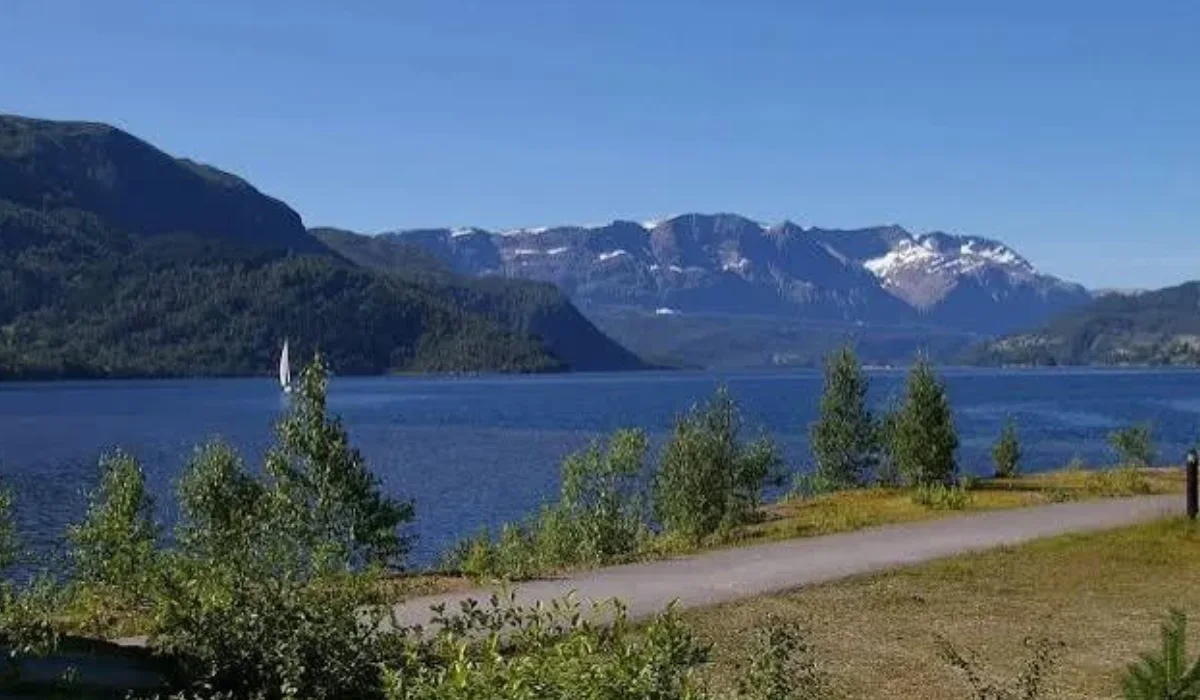
Norway (Norway Post Magazine) October 26, 2026 — Financially-beleaguered Norwegian extraction firm Nordic Mining announced on Monday, October 26, 2026, that it is temporarily suspending operational activities at its controversial Engebø mine in western Norway. The decision, enacted by operating subsidiary Engebø Rutile and Garnet AS (ERG), stems from acute funding shortfalls as the cash-strapped group attempts to secure at least $3 million in emergency financing and negotiate a complex debt restructuring. Located along the Førde fjord, the mine extracts rutile—a high-purity titanium ore crucial for defense and aerospace supply chains—and has been the epicenter of an intense legal battle over marine tailings disposal. Operations will remain halted indefinitely while discussions with bondholders and creditors continue.
- Key Points
- What Led to the Operational Suspension at Nordic Mining’s Engebø Mine?
- Why Has the Engebø Mining Project sparked Intense Environmental Controversy?
- Why Is the Norwegian Government Supporting Titanium Ore Production at Førde Fjord?
- Background of the Particular Development
- Prediction: How This Development Can Affect Creditors, Environmental Groups, and European Critical Mineral Supply
What Led to the Operational Suspension at Nordic Mining’s Engebø Mine?
As reported by financial journalists tracking Nordic Mining ASA stock updates, the decision to halt extraction was forced by severe liquidity constraints and ongoing delays in securing creditor agreements.
In an official corporate announcement released on Monday, October 26, 2026, Nordic Mining outlined the financial rationale behind the operational halt. According to the company’s regulatory filing, operating subsidiary Engebø Rutile and Garnet AS (ERG) is currently seeking at least $3 million in immediate emergency funding alongside a comprehensive restructuring of its debt obligations. The company has been negotiating with bondholders under ERG’s 12.5% Senior Secured Bonds and bond trustee Nordic Trustee AS regarding interest payment deferrals and waivers to permit the issuance of new super-senior debt.
Addressing the decision to halt field operations, Nordic Mining stated in an official company release: “In light of the continued uncertainty regarding the outcome of these negotiations and in order to reduce costs and preserve liquidity pending a resolution, ERG has decided to temporarily suspend its mining operations at the Engebø project”. Executive leadership noted that activities will remain paused “until further notice” while management works to stabilize its capital base.
Why Has the Engebø Mining Project sparked Intense Environmental Controversy?
As reported by environmental correspondents and legal analysts, the Engebø development has been at the center of a high-profile showdown between environmental conservationists and Norwegian state authorities for several years.
The core of the conflict centers on government permissions allowing the facility to dump industrial mining waste directly onto the seabed of the adjacent Førde fjord via underwater pipelines. Opponents of the project argue that discharging seabed tailings releases fine mineral particles and potentially toxic heavy metals into marine ecosystems. Environmental organizations have warned that these micro-particles can accumulate within small marine organisms, disrupting biodiversity and harming local fish stocks.
Norway remains one of only four nations worldwide that still permits underwater marine disposal of mining tailings, alongside Turkey, Indonesia, and Papua New Guinea.
In a major legal landmark in June, Norway’s Supreme Court ruled invalid the initial administrative permits that authorized the mine to dump up to 170 million tonnes of mining waste onto the Førde fjord seabed. Environmental groups hailed the Supreme Court verdict as a historic “victory for nature”, forcing state regulators to reassess the legal framework governing the site. Following the ruling, the Norwegian government issued a temporary approval in September allowing Nordic Mining to deposit up to 4.5 million tonnes of waste over a three-year period, pending a comprehensive formal case review.
Why Is the Norwegian Government Supporting Titanium Ore Production at Førde Fjord?
As reported by international trade and industrial journalists, the Norwegian government’s willingness to re-examine permits and grant temporary waste discharge authorizations stems from broader geopolitical concerns regarding critical mineral independence.
The Engebø deposit represents one of the largest known global reserves of rutile, a naturally occurring mineral composed primarily of titanium dioxide. Titanium metal produced from rutile features an exceptional strength-to-weight ratio and corrosion resistance, making it an irreplaceable raw material across defense manufacturing, naval architecture, commercial aeronautics, and space exploration industries.
Government officials in Oslo have repeatedly stressed the importance of securing domestic European supplies of critical raw materials, pointing out that Europe faces structural supply deficits in titanium feedstock. With Norway and Ukraine holding Europe’s primary titanium deposits, state regulators view the Engebø project as a vital asset for European industrial autonomy amid global supply chain shifts.
Background of the Particular Development
The Engebø rutile and garnet deposit was first evaluated for commercial development in the late 1990s, with Nordic Mining acquiring project rights to build an open-pit and underground mining complex along the West Coast of Norway. Over two decades, the project became a flashpoint in European environmental politics, representing the friction between green marine conservation and the demand for industrial transition minerals.
Despite intense local protests and legal challenges from environmental NGOs, the Norwegian Ministry of Climate and Environment initially granted operating licenses and marine tailings permits, asserting that deep-sea deposition was safer than land-based storage in mountainous terrain prone to landslides. However, years of litigation culminated in the June Supreme Court ruling, which invalidated the original long-term environmental licenses due to procedural defects and insufficient environmental risk assessments under EU and Norwegian water regulations.
Compounding regulatory friction, Nordic Mining struggled with operational ramp-up delays and cost overruns during mid-2026. Although processing plant throughput improved, mineral recovery rates for rutile lagged behind target capacities, severely straining working capital and causing the company’s debt servicing costs to outpace revenues. The convergence of stringent legal reviews and operational delays ultimately exhausted corporate liquidity, forcing the emergency halt announced on October 26, 2026.
Prediction: How This Development Can Affect Creditors, Environmental Groups, and European Critical Mineral Supply
The operational shutdown at the Engebø mine introduces significant economic, environmental, and policy consequences for investors, local communities, and international raw material supply chains.
Impact on Financial Stakeholders and Shareholders
For bondholders, corporate creditors, and equity investors in Nordic Mining, the operational pause heightens immediate insolvency risks. If ERG fails to secure the minimum $3 million emergency bridge loan or reach an agreement with bondholders to restructure its 12.5% Senior Secured Bonds, the operating subsidiary could be forced into formal judicial restructuring or bankruptcy proceedings. Such an outcome would likely dilute equity holders significantly or transfer project ownership directly to secured debt holders, while delaying commercial production even further.
Influence on Environmental Campaigns and Fjord Preservation
For environmental activists and marine conservation bodies, the mine’s shutdown provides a temporary operational reprieve for the Førde fjord ecosystem. Campaigners are likely to leverage Nordic Mining’s financial instability and the Supreme Court’s precedent to push for a permanent ban on marine tailings disposal across Norway, seeking to bring national environmental legislation into complete alignment with international standards prohibiting ocean dumping.
Consequences for European Aerospace and Defense Supply Chains
For European aerospace manufacturers, defense contractors, and raw material buyers, the disruption at Engebø highlights the challenges facing European mineral self-sufficiency. Prolonged downtime or project abandonment will force European manufacturers to remain heavily reliant on imported titanium feedstocks from Australia, Africa, or North America. This delay complicates European Union ambitions to build resilient, localized supply networks for defense and high-tech manufacturing.