Key Points
- Origin of the 2019 Global Campaign: In 2019, headlines worldwide proclaimed that Sommarøy, a remote fishing village in northern Norway, was campaigning to become the world’s first “time-free zone” during its 69 days of continuous summer daylight.
- Exposing the Tourism Stunt: The international media phenomenon was subsequently exposed as a state-sponsored PR stunt orchestrated by Innovation Norway, leading to a public apology from the agency’s director.
- Authentic Arctic Environmental Reality: Despite the manufactured publicity, Sommarøy experiences genuine 24-hour summer daylight from May 18 to July 26, prompting locals to routinely abandon rigid daily routines.
- On-the-Ground Traveler Perspectives: Seven years after the campaign, international visitors and residents confirm that while formal commercial schedules remain necessary, the natural environment inspires a relaxed approach to daily time tracking.
- Enduring Legacy for Local Tourism: Local business operators report that while the initial media frenzy caused confusion, the lasting legacy of the campaign successfully positioned Sommarøy on the global travel map.
Norway (Norway Post Magazine) October 24, 2026 — Executive Summary: Seven years after an international publicity campaign claimed the remote Arctic village of Sommarøy was abolishing time, a retrospective investigation highlights the reality of life high above the Arctic Circle. While the 2019 initiative was revealed as a staged marketing effort by government tourism agency Innovation Norway, the unique environmental conditions of the region remain authentic. Experiencing 69 days of continuous daylight each summer, the island’s 300 residents and visiting tourists naturally operate outside conventional scheduling constraints, demonstrating how Arctic light reshapes human perception of time.
As reported by international travel feature correspondents visiting the region, the Arctic island of Sommarøy—located 56 kilometres west of Tromsø, Norway—continues to captivate global travelers seven years after a viral campaign falsely claimed the village was petitioning parliament to officially abolish time. In June 2019, reports published across major global news outlets detailed how residents had allegedly hung watches on the local bridge and presented a signed petition to a Norwegian parliamentarian to establish the world’s first time-free zone during the summer midnight sun period.
As reported by European media critics and local investigative journalists, the widely covered campaign was quickly exposed as a commercial marketing stunt orchestrated by Innovation Norway, the state-funded tourism promotion board. Although public backlash forced the agency’s head to issue a formal public apology and remove the symbolic watches from the island’s bridge, the underlying natural phenomenon driving the story—69 days of continuous summer daylight—continues to foster a lifestyle decoupled from traditional daily schedules.
How Did the 2019 Time-Free Campaign Unfold and Why Did It Collapse?
As reported by Jon Henley of The Guardian, the 2019 proposal gained immediate traction across global news organizations. The narrative claimed that 350 local residents wanted to abandon traditional school and work hours between May 18 and July 26, when the sun does not drop below the horizon.
As reported by travel industry analysts, the operational realities of running a modern community quickly exposed the flaws in the proposal. Local residents expressed confusion regarding basic public services, questioning how hotel check-ins, school transport, or retail business hours could function in a society operating entirely without clocks.
When investigative reports revealed that Innovation Norway had coordinated the campaign alongside PR firms in London and Oslo to boost regional tourism, the agency faced heavy public criticism. The head of Innovation Norway subsequently issued an official apology, and the public campaign was quietly dismantled.
How Do Tourists and Locals Experience Time on Sommarøy Today?
As reported by feature writer and travel reporter on site in Sommarøy, visitors arriving on the island describe a distinct psychological shift driven by perpetual daylight.
Polish tourist Ewa Kaczyński stated that she was directly attracted to the island by the lingering publicity from the 2019 campaign: “I always wanted to see the midnight Sun. I lead a very busy life back home, and the idea of not having to worry about time for a few days was really appealing.”
Reflecting on her visit, Ewa Kaczyński added: “I’m not sure. The first day I was a little bit disappointed because, of course, time is necessary for the world to function. Restaurants and shops closed when they said they would. And reception at the hotel wasn’t open overnight. But then I took a deep breath, turned off my phone and found myself relaxing more. I can do that here. And maybe just having the conversation about time was enough – it does seem to matter less here than it does back home.”
Dutch traveler Wouter De Wit emphasized how uninterrupted sunlight alters human behavior, stating: “It’s wild. I went for a midnight swim yesterday. The Sun was out and I wouldn’t have been able to guess what time it was if I didn’t have a watch. It was a bit cold, though…”
As reported by local hospitality correspondents, residents remain cautious when discussing the 2019 marketing push. An anonymous employee at the Sommarøy Arctic Hotel stated: “Look, it was a fun idea that we used to talk about every now and then. In summer, we sort of live outside time anyway. If no-one is around, sometimes a shop will close so that the owner can go fishing. The kids stay up late because there’s no school the next day. And lots of people are on holidays, so life is more relaxed. But then it became a thing.”
Evaluating the long-term impact on the village, the hotel employee concluded: “Not at the beginning. It was all visitors wanted to talk about. But now, a few years later, it’s OK. It’s kind of back to how it was like before… and it brings people here. Now the world knows about Sommarøy.”
Background of Sommarøy and Arctic Midnight Sun Geography
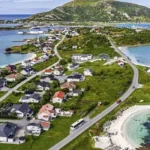
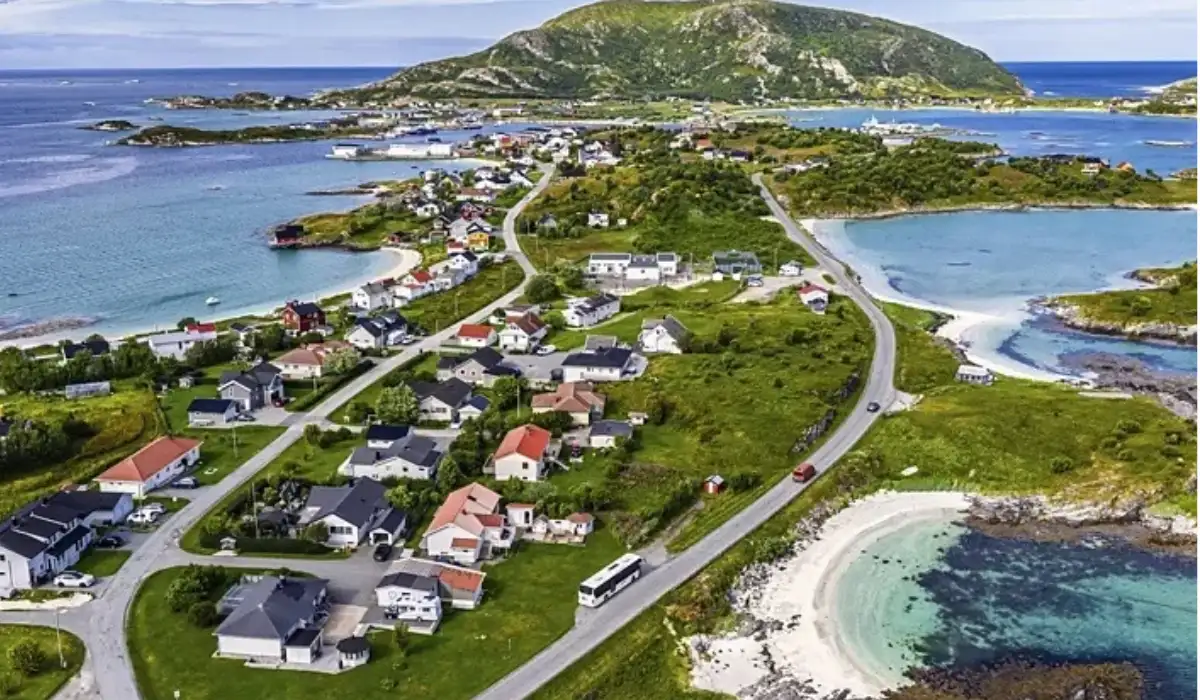
Sommarøy, which translates to “Summer Island,” is a historic fishing village situated on a group of small islands connected by bridges in the Troms og Finnmark region of northern Norway. Historically, the community’s primary economic base relied exclusively on commercial fishing and fish processing, with marine workers operating according to weather patterns and fish migrations rather than standard clock hours.
Located well north of the Arctic Circle at approximately 69 degrees latitude, Sommarøy experiences extreme seasonal polar variations. For more than two months during midsummer, the sun remains above the horizon around the clock. Conversely, during the deep winter period from late November to mid-January, the region enters the polar night, where the sun never rises above the horizon, leaving the landscape illuminated only by twilight and the northern lights.
Prediction: How This Ongoing Reality Will Affect Arctic Tourism and Local Communities
The lasting relationship between Sommarøy’s environmental realities and global public interest carries several long-term implications for stakeholders across the Arctic region:
1. International Travelers and Wellness Tourism
As global awareness of burnout and digital fatigue increases, destination marketing will increasingly focus on places offering “time-decoupled” experiences. While travelers accept that commercial businesses must maintain fixed hours, remote Arctic destinations like Sommarøy will attract wellness tourists seeking natural environments that encourage disconnection from rigid digital schedules.
2. Local Infrastructure and Sustainable Tourism Management
For small island communities of 300 residents, sustained tourist interest requires careful management of physical infrastructure. Local government authorities in the Tromsø region will need to balance seasonal tourist traffic with ecological preservation, ensuring that island roads, waste management systems, and small local hotels are not overwhelmed during the peak summer months