Key Points
- New Policy Framework: On 20 October 2026, the European Commission and the High Representative released a Joint Communication titled Europe’s Northern Neighbourhood: A New Strategy for the Arctic, marking a shift towards a functional “neighbourhood” approach.
- Conceptual Redefinition: The policy redefines the Arctic through a structured framework aimed at cooperation with like-minded partners—including Norway, the United Kingdom, Iceland, Greenland, Canada, and the United States—defined by shared values rather than geography alone.
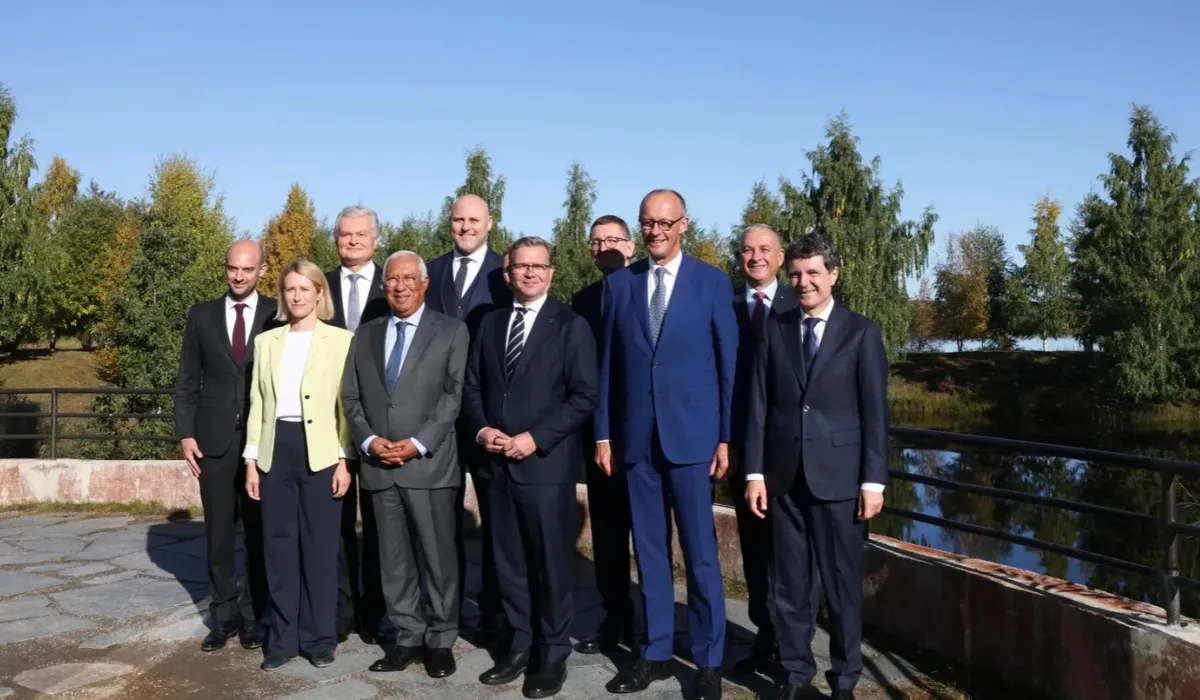
- High-Level Political Backing: The release follows a summit of fourteen Member States in Rovaniemi in September and conclusions by the European Council on 15–16 October underlining the strategic imperative of the region.
- Direct Mechanisms for Norway: The strategy details opportunities for Norwegian engagement, including bilateral Arctic Dialogues, inclusion in European Defence Fund Arctic projects, and participation in the IRIS² satellite constellation and the ESA Arctic Space Centre in Tromsø.
- Institutional Ownership Dilemma: While Nordic EU members (Finland, Sweden, Denmark) have historically hesitated to transfer regional ownership to Brussels, the current geopolitical context offers Norway leverage to shape the policy despite remaining outside the EU.
Norway (Norway Post Magazine) October 23, 2026 – The European Commission and the High Representative for Foreign Affairs and Security Policy launched their updated Joint Communication on Arctic matters on October 20, 2026, introducing a strategic framework titled Europe’s Northern Neighbourhood: A New Strategy for the Arctic. The document explicitly seeks to redefine the Arctic for Europe by establishing a functional political architecture that prioritises structured cooperation with northern non-EU partners, such as Norway and the United Kingdom. While the strategy offers tangible entry points across security, defence, and space infrastructure, it raises critical questions regarding political ownership, legal frameworks, and how much influence non-member state Norway can exercise over its execution.
- What Does the EU’s “Northern Neighbourhood” Classification Mean for Regional Cooperation?
- How Does the 2026 Arctic Strategy Differ From Previous European Union Documents?
- Who Exercises Ownership Over the EU’s High North Policy?
- Background of the Particular Development
- How Will This Strategy Affect Norwegian Policymakers and Regional Stakeholders?
What Does the EU’s “Northern Neighbourhood” Classification Mean for Regional Cooperation?
By deliberately positioning “Northern Neighbourhood” ahead of “Arctic” in the official title of the new strategy, European policymakers have signaled a functional shift in how Brussels approaches its northern flank. As reported in an analysis by High North News, calling the Arctic a “neighbourhood” is not merely a cartographic endeavor; it is a functional one designed to introduce a structured political architecture for cooperation with like-minded partners based on shared values and strategic security interests.
This conceptual framework encompasses a broad network of northern allies, including Norway, the United Kingdom, Iceland, Greenland, Canada, and the United States. However, the application of “neighbourhood” terminology brings institutional complexities. The Arctic Ocean covers a vast maritime domain—six times larger than the Mediterranean—where boundaries between a backyard, a neighbourhood, and a frontier have historically remained fluid within European Union policymaking.
For Norway, this redefinition carries significant institutional implications. Although the European Economic Area (EEA) Agreement ties Oslo closely to the EU internal market, it affords Norwegian officials no formal seat at the table where internal EU strategies are drafted, approved, and funded.
While the Joint Communication explicitly highlights the recently established bilateral EU-Norway Arctic Dialogue as a key forum for addressing specific operational challenges—such as domain awareness, protection of critical subsea infrastructure, and territorial integrity—Norway holds no direct voting mechanism to determine how the “Northern Neighbourhood” concept will be operationalised or financed. Furthermore, the document leaves the exact legal, institutional, and financial structures governing these partnerships open for future negotiation.
How Does the 2026 Arctic Strategy Differ From Previous European Union Documents?
Since launching its formal Arctic policy in 2008, the European Union has published updated policy documents in 2012, 2016, and 2021. While each successive iteration expressed increasing ambition, earlier documents frequently lacked the sustained political consensus and dedicated multi-year funding necessary to execute a comprehensive security strategy.
The 2026 strategy arrives amidst heightened momentum and institutional support across European capitals. In September 2026, representatives from fourteen EU Member States convened in Rovaniemi, Finland, issuing a collective call for a more proactive and strategic European role in the High North. This was followed by the European Council summit on 15–16 October 2026, where heads of state and government formally affirmed the strategic priority of the Arctic region.
Rather than acting merely as a static policy report, the 2026 Joint Communication outlines a dynamic operational process framed around a central mandate: progressing “from vigilance via preparedness to responsiveness”. For non-EU member Norway, the document outlines several concrete initiatives for practical integration:
- Formal participation as an external partner in European Defence Fund (EDF) projects focused on Arctic-ready military capabilities.
- Direct access and integration into the EU’s IRIS² multi-orbital secure satellite constellation.
- Strategic involvement in the planned European Space Agency (ESA) Arctic Space Centre based in Tromsø.
As highlighted by High North News, the policy frames the “Northern Neighbourhood” as a space the Union is actively “moving towards” rather than a fully established regime. This evolving status presents entry points for Oslo, which maintains a track record of shaping European Arctic initiatives through its position as a primary energy supplier, its space surveillance infrastructure, and its research capabilities in places like Svalbard and Narvik.
Who Exercises Ownership Over the EU’s High North Policy?
A central challenge facing every EU Arctic initiative since 2008 has been the internal division of political ownership within the bloc. Historically, the three Nordic Member States—Finland, Sweden, and Denmark—have guarded their regional authority and exhibited hesitation toward transferring policy oversight to central institutions in Brussels. Conversely, Member States without direct geographic ties to the High North have occasionally hesitated to allocate substantial EU budget resources to the region.
Geopolitical shifts following Russia’s ongoing invasion of Ukraine, coupled with heightened interest in Greenland’s strategic positioning, have reshaped this internal balance. Despite operating outside the EU, Norway remains the most geographic and historical “Arctic state” among European nations, with its High North policy serving as the cornerstone of its national foreign and security agenda.
Consequently, Norway possesses operational leverage to influence the development of the “Northern Neighbourhood”. Key elements of the EU’s 2026 strategy align with core Norwegian national objectives, notably:
- Deeper intelligence-sharing and maritime security cooperation.
- Joint protection of energy networks and subsea digital cables as critical components of economic security.
- Establishing formalised, resilient supply chains for critical raw materials and green energy transitions.
Whether Oslo translates this alignment into structural influence depends on how Norwegian policymakers navigate their dual status as an essential partner that lacks voting rights within the European Council.
Background of the Particular Development
The launch of the EU’s 2026 Arctic Strategy reflects a broader transformation of security dynamics in the High North. Historically viewed as a zone of low tension and environmental cooperation, the Arctic has increasingly become an arena of strategic competition due to climate change opening new maritime transport routes and accessible natural resources.
Following the full-scale invasion of Ukraine, security cooperation within the Arctic Council involving Russia was suspended, altering the traditional governance architecture of the region. Concurrently, the accession of Finland and Sweden to NATO consolidated the Nordic region’s security alignment with Western allies. The EU’s decision to launch a renewed, security-conscious Arctic strategy on 20 October 2026 represents a effort to coordinate non-military, industrial, space, and critical infrastructure resilience alongside NATO’s military posture.
How Will This Strategy Affect Norwegian Policymakers and Regional Stakeholders?
The implementation of Europe’s Northern Neighbourhood policy will directly impact several key sectors across Norway and the broader Arctic region over the coming years:
For Norwegian Policymakers and Diplomats
Norwegian officials will face a delicate balancing act. While the strategy offers clear mechanisms to deepen ties in defence research and satellite infrastructure, Oslo must navigate these frameworks without sacrificing its sovereign decision-making or regional dominance in High North affairs. Norwegian diplomats will need to actively utilise bilateral formats, such as the EU-Norway Arctic Dialogue, to ensure EU initiatives do not inadvertently bypass Norwegian regulatory frameworks in energy and maritime management.
For Security, Defence, and Space Industries in Northern Norway
Industrial entities in locations like Tromsø and Narvik stand to secure increased investment and operational integration. The planned ESA Arctic Space Centre in Tromsø and Norwegian participation in IRIS² will position northern defense and technology clusters as critical hubs for European domain awareness, subsea surveillance, and satellite communications.
For Energy Providers and Industrial Exporters
As European Member States rely heavily on Norwegian natural gas and emerging green hydrogen value chains, Norway’s standing as an anchor of European energy security is reinforced. The EU’s focus on economic security within its northern neighbourhood provides Norwegian exporters with long-term guarantees, provided cross-border regulatory standards under the EEA framework remain synchronized.