Key Points
- Nordic Peace Initiative: Finnish President Alexander Stubb and Norwegian Prime Minister Jonas Gahr Støre held a joint 90-minute telephone discussion with Russian President Vladimir Putin to advocate for an end to the war in Ukraine.
- Ukrainian Endorsement: Ukrainian President Volodymyr Zelenskyy defended the Nordic leaders, characterising his view of them as “positive” and praising their transparency and advance consultation.
- Precedent of Contact: Zelenskyy noted that Putin’s diplomatic isolation ended last year following a meeting with U.S. President Donald Trump in Alaska, adding that European national security advisers and intelligence agencies have maintained covert channels since.
- De-escalation Demands: Stubb and Støre pressed Putin to halt strikes against Ukraine’s energy grid and critical infrastructure ahead of scheduled trilateral peace negotiations in Abu Dhabi.
- European Division: The direct outreach sparked severe pushback across several European capitals, with Denmark, Sweden, and Italy warning against fracturing European unity and acting without a shared mandate.
Norway (Norway Post Magazine) October 28, 2026 – Ukrainian President Volodymyr Zelenskyy has publicly defended the leaders of Finland and Norway after their direct joint phone call with Russian President Vladimir Putin sparked sharp criticism and exposed deep diplomatic fault lines across European capitals. Finnish President Alexander Stubb and Norwegian Prime Minister Jonas Gahr Støre conducted a 90-minute discussion with Putin on Tuesday, urging an immediate end to the war and demanding de-escalation against Ukraine’s energy grid ahead of upcoming peace talks. Despite accusations from several EU member states that the move undermined European unity, Zelenskyy praised Helsinki and Oslo for maintaining full transparency, holding advance discussions with Kyiv, and attempting to open an explicit, direct European communication channel with Moscow.
- Key Points
- Why Has Volodymyr Zelenskyy Defended the Nordic Leaders’ Direct Outreach to Vladimir Putin?
- What Prompted the Joint Telephone Call Between Alexander Stubb, Jonas Gahr Støre, and Vladimir Putin?
- How Have European Capitals and EU Officials Reacted to the Nordic Diplomatic Initiative?
- Background of the Nordic-Russian Diplomatic Engagement
- How This Diplomatic Division Affects European Union Security and Strategic Alignment
Why Has Volodymyr Zelenskyy Defended the Nordic Leaders’ Direct Outreach to Vladimir Putin?
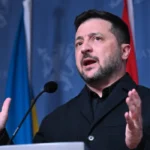
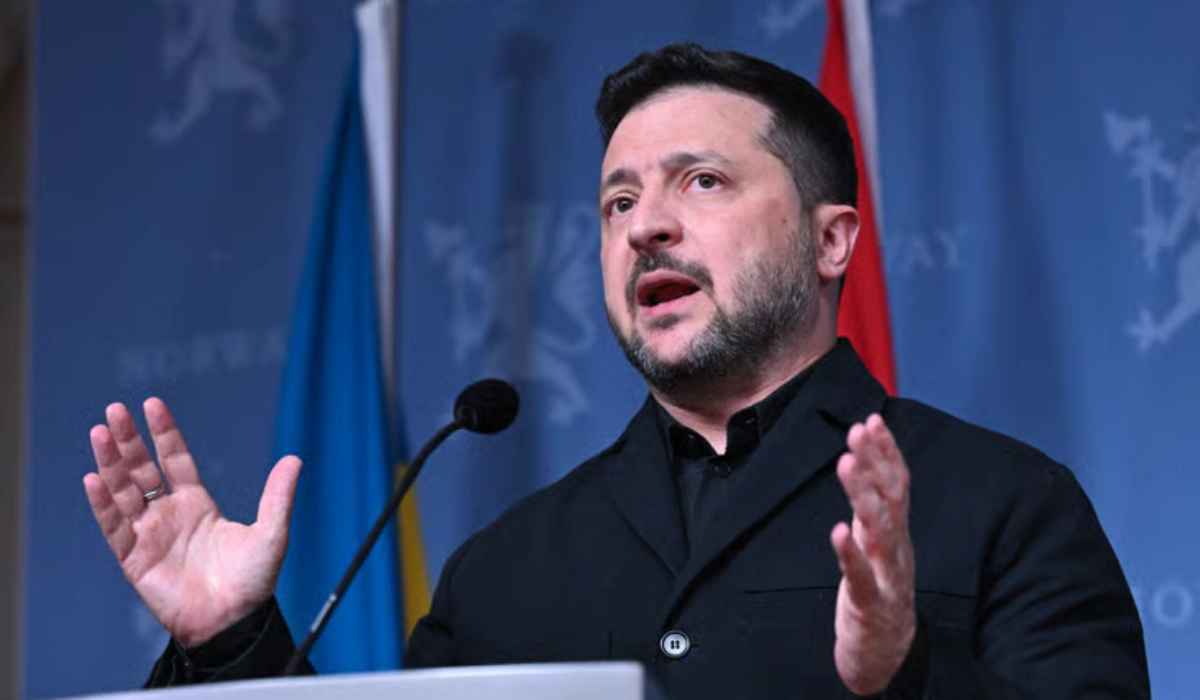
Speaking to journalists on Tuesday, President Volodymyr Zelenskyy offered a firm defence of Finnish President Alexander Stubb and Norwegian Prime Minister Jonas Gahr Støre following their high-level direct engagement with the Kremlin. Addresssing concerns raised by other allied nations, Zelenskyy stated that Ukraine maintains exceptionally strong relations with both Nordic states and described his view of their diplomatic efforts as thoroughly “positive.”
Zelenskyy emphasised that the direct contact by Stubb and Støre did not break new ground regarding Putin’s standing on the international stage. According to Zelenskyy, the Russian president had already been brought out of diplomatic isolation during the previous year, when U.S. President Donald Trump held a summit with him in Alaska.
“Since Alaska, Europeans have also been in contact with Russia,” Zelenskyy observed, pointing out that European capitals have routinely communicated with Moscow behind closed doors. “They just haven’t done so as openly as the leaders of Norway and Finland.”
Zelenskyy further highlighted that backchannel communications have continuously taken place at sensitive administrative levels across Europe. He noted that all major allied governments understand that contacts have been maintained “at the national security adviser level and between intelligence agencies,” as well as through quiet bilateral exchanges that only became public long after their conclusion.
In contrast to secret dialogue, Zelenskyy commended the explicit methodology adopted by Helsinki and Oslo. “Here, though, everything is completely out in the open: discussions in advance, a full briefing, and transparent objectives,” Zelenskyy explained. He added that “Finland and Norway are showing that they want to open another channel of communication, so that Europe can receive information not only through the United States and Russia can hear certain things directly.”
According to official briefings released by the Ukrainian presidency following a debriefing call with the two leaders, Stubb and Støre delivered explicit demands to Moscow regarding military de-escalation. As reported by Ukrainian news agencies, Zelenskyy confirmed that “Alex and Jonas made it clear to the Russian leader that real de-escalatory steps are needed regarding our energy and infrastructure” ahead of planned trilateral discussions involving Ukrainian, American, and Russian delegations in November.
What Prompted the Joint Telephone Call Between Alexander Stubb, Jonas Gahr Støre, and Vladimir Putin?
The 90-minute joint telephone call on Tuesday was initiated directly by Alexander Stubb and Jonas Gahr Støre following prior coordination with Kyiv and Western partners. Positioned as direct neighbours to Russia, both Nordic nations contend that they possess a distinct national security interest in establishing firm, stable, and transparent diplomatic parameters along Europe’s northern flank.
In an official statement released by the Finnish presidency, the office outlined that “the aim of the call was to convey messages directly regarding future negotiations to help to end the war to President Putin”. The Finnish administration added that the dialogue was explicitly tied to preparations for upcoming multi-party peace meetings scheduled to take place in Abu Dhabi.
As reported by The National, President Stubb characterised the conversation with the Russian leader as “frank and substantive,” maintaining that “ending the war requires direct discussions”. Stubb and Støre conveyed to Putin that the continuation of hostilities carries unsustainable human and material costs and stressed the imperative of resuming formal diplomatic negotiations.
However, initial assessments regarding the immediate practical impact of the dialogue remained mixed. According to details reported by the Financial Times, Putin used a substantial portion of the 90-minute engagement to deliver a lengthy monologue reiterating his historical interpretations of Slavic history.
Concurrently, a statement issued by the Kremlin confirmed the three-way contact, noting that the leaders acknowledged plans to resume trilateral negotiating formats in early November. However, the Kremlin counter-stated that Putin reiterated his stance that a “just and lasting” resolution remains contingent upon the “full and unconditional consideration” of Russian security interests. The Russian readout further criticized European and NATO policy, claiming that “attention was drawn to the confrontational policies of EU and NATO countries, which are leading to a prolongation of hostilities”.
How Have European Capitals and EU Officials Reacted to the Nordic Diplomatic Initiative?
The decision by Finland and Norway to contact the Kremlin directly has reignited intense friction among European Union member states over how Western powers should engage with Moscow. For many EU governments, the issue of direct communication with Putin remains a deeply contentious topic that threatens to fragment the bloc’s collective posture.
Criticism was expressed swiftly by northern neighbours. Danish Prime Minister Mette Frederiksen stated publicly on Tuesday that she was “very skeptical” regarding the necessity and timing of the joint call. Similarly, Swedish Prime Minister Ulf Kristersson rejected the initiative, emphasizing that lasting peace must be achieved through “strength” rather than through what he warned could be construed as the “appeasement” of Russia.
Concerns regarding the breakdown of a unified European front were echoed by diplomats across member capitals. Speaking on the condition of anonymity to discuss sensitive diplomatic matters candidly, a senior official from a national capital argued that established diplomatic mechanisms—such as the E3 format comprising Germany, France, and the United Kingdom—have proven effective. The official warned that fracturing Europe’s collective voice by permitting individual nations to launch uncoordinated national initiatives with Moscow represents a dangerous precedent.
Strong dissatisfaction also emerged from Southern Europe. Officials within the Italian government expressed sharp annoyance over the call, viewing the unilateral step by Stubb and Støre as evidence of Europe’s persistent inability to agree on a single representative authority for peace negotiations.
A senior government official in Rome warned that independent national diplomacy risks systematically diminishing European leverage. The Italian official stated that Europe “cannot continue to act randomly and in formats that change from week to week.” Calling for an immediate overhaul of European diplomatic coordination, the Italian administration urged the rapid appointment of designated representatives backed by a clear, shared European mandate to safeguard the continent’s long-term security interests. “The negotiations will not wait,” the Italian official warned.
In contrast to the sharp reactions from national capitals, the response from EU institutional bodies in Brussels remained cautious and understated. During a press briefing, European Commission spokesperson Paula Pinho acknowledged the development while emphasizing its strictly bilateral nature. “We take note of the call, which took place solely on a bilateral basis,” Pinho stated. She noted that “these negotiations are happening in different formats, different places and different levels involving heads of states and government, ministers, senior diplomats and officials,” adding that “the EU is involved”.
Background of the Nordic-Russian Diplomatic Engagement
Prior to the full-scale invasion of Ukraine in February 2022, both Finland and Norway maintained pragmatically specialized operational relationships with Russian authorities. Sharing a 1,340-kilometre land border with Russia, Finland long adhered to a policy of military non-alignment, utilizing direct presidential diplomacy—often termed “active neutrality”—to manage border stability, regional forestry trade, and Baltic Sea security. Similarly, Norway, a founding member of NATO sharing a northern Arctic border with Russia, maintained strict bilateral protocols with Moscow regarding maritime boundaries, cod fishing quotas in the Barents Sea, and search-and-rescue operations.
The onset of the 2022 invasion fundamentally altered northern European security architecture. Finland abandoned its decades-long policy of neutrality and formally joined NATO in April 2023, followed by Sweden in 2024. This historic shift led to the complete suspension of high-level ministerial dialogues between Helsinki and Moscow, the formal closure of border checkpoints due to security concerns, and the freezing of energy interconnections. Norway similarly restricted diplomatic engagements, aligning fully with European Union sanction regimes while maintaining only bare-minimum operational channels for Arctic border management.
Concurrently, European efforts to maintain a single diplomatic representative format have faced continuous structural challenges. Historically, direct engagements with Moscow were led by the Normandy Format (France, Germany, Ukraine, and Russia) or the broader E3 framework. However, as the conflict expanded, Western powers largely adopted a policy of international isolation toward Vladimir Putin, conditioning high-level contact on significant military withdrawals.
The political landscape began shifting following high-level U.S.-Russia engagements held in Alaska during 2025, which disrupted the formal isolation policy. Since then, European nations have operated in an increasingly fragmented diplomatic environment, balancing secret intelligence-level exchanges against growing pressure from Washington to establish concrete frameworks for peace talks.
How This Diplomatic Division Affects European Union Security and Strategic Alignment
The public disagreement surrounding the Finnish-Norwegian telephone initiative is likely to have immediate operational and strategic consequences for European Union member states, key diplomatic allies, and the broader architecture of Western security.
1. Fragmentation of European Diplomatic Leverage
The emergence of uncoordinated national channels threatens to dilute the European Union’s collective bargaining power ahead of critical multi-party peace negotiations. As individual capitals attempt to institute direct lines to the Kremlin, Moscow gains an opportunity to exploit internal divisions within the EU. By engaging selectively with specific European nations—particularly those bordering Russia—the Kremlin can play national security interests against broader EU consensus, weakening the impact of unified European sanctions and conditional diplomatic demands.
2. Accelerated Push for a Centralized EU Foreign Policy Mandate
The frustration voiced by member states such as Italy, Denmark, and Sweden is expected to catalyze formal debates within the European Council regarding diplomatic representation. To prevent fragmented “format-hopping,” Brussels and major member capitals will likely push for the formal designation of a dedicated European special envoy or a standardized E3/EU diplomatic team. This structural shift will aim to ensure that any direct dialogue with Moscow is backed by an explicit, collective mandate rather than independent national initiatives.
3. Creation of a Two-Tier European Diplomatic Framework
The explicit defense offered by Volodymyr Zelenskyy may establish a functional divide between “frontline” European nations and those geographically insulated from the immediate border. Border states like Finland, Norway, and Baltic nations may increasingly claim a specialized prerogative to maintain direct operational contact with Moscow on energy security, border stability, and infrastructure protection. Conversely, non-border states may insist on strict adherence to institutional isolation, creating persistent political friction within NATO and EU summit meetings.
4. Normalization of Direct European Engagement Ahead of U.S.-Led Talks
By breaking the diplomatic taboo surrounding direct presidential calls, Stubb and Støre have lowered the barrier for other European leaders to initiate direct contact with Vladimir Putin. As scheduled trilateral discussions between American, Ukrainian, and Russian teams approach in Abu Dhabi, additional European capitals—motivated by a desire to ensure European interests are represented alongside Washington—are likely to establish their own direct or semi-open communication channels with the Kremlin.