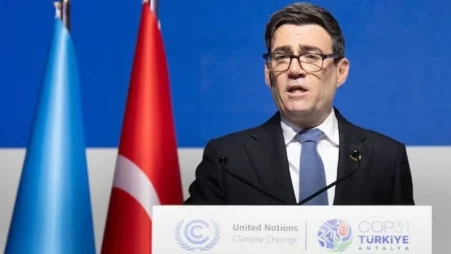
- Development finance institutions from the United Kingdom, Norway, and Canada officially launched a joint initiative on Friday, November 13, 2026, aiming to channel $10 billion into climate projects in emerging markets by 2030.
- The collaborative framework—signed via a memorandum of understanding under the banner of the “10by30” initiative at the COP31 climate summit in Antalya, Türkiye—involves three state-backed lenders: British International Investment (BII), Norway’s Norfund, and FinDev Canada.
- Under the agreement, the participating institutions will share investment pipelines, coordinate due diligence procedures, and cooperate closely on climate reporting to accelerate funding decisions and reduce administrative duplication.
- The $10 billion target incorporates private capital that the partner lenders expect to mobilise alongside public commitments, targeting core sectors such as renewable energy, electricity transmission and distribution grids, energy storage, sustainable fuels, and industrial decarbonisation.
- The announcement comes as developing nations most vulnerable to climate-related disasters issue urgent demands for financial backing, even as Western governments navigate competing domestic pressures including rising living costs and national security priorities.
Norway (Norway Post Magazine) November 14, 2026 – State-backed development finance institutions from Britain, Norway, and Canada have launched a joint $10 billion climate finance initiative targeting emerging markets by 2030. Unveiled on November 13 at the COP31 climate summit in Antalya, Türkiye, the pact unites British International Investment, Norway’s Norfund, and FinDev Canada under a shared memorandum of understanding. The framework seeks to streamline green investments across renewable energy grids, storage, and industrial decarbonisation by sharing investment pipelines and co-investing private capital, addressing urgent demands from developing nations facing climate vulnerabilities amid tightening Western fiscal priorities.
- What Are the Core Objectives and Structural Mechanisms of the “10by30” Climate Initiative?
- How Do the Participating Development Finance Institutions Compare in Strategy and Mandate?
- Background of the Particular Development After the News
- How This Development Can Affect Emerging Market Project Developers, Western Taxpayers, and Global Climate Finance Architecture
As reported by international news agencies including Reuters and specialized sustainability platforms such as Impakter and Thursday Times, development finance institutions representing the governments of the United Kingdom, Norway, and Canada launched a major collaborative initiative on Friday, November 13, 2026, committing to channel $10 billion into climate projects across emerging markets by the year 2030. The pact was formally unveiled during the ongoing COP31 United Nations climate conference convened in Antalya, Türkiye, under a memorandum of understanding executed by three premier state-backed lenders: British International Investment (BII), Norway’s Norfund, and FinDev Canada.
According to official joint announcements released by the participating lenders, the new partnership—designated as the “10by30” collaboration—is designed to overcome systemic inefficiencies in international green financing. Under the terms of the agreement, the three institutions will systematically share investment pipelines, coordinate rigorous due diligence assessments, and harmonise climate reporting standards. By aligning their institutional machinery, the lenders intend to eliminate duplicated administrative work and significantly accelerate decision-making timelines for co-financed transactions.
The $10 billion target figure is structured to include significant private capital that the three Western development finance institutions expect to attract and mobilise alongside their own institutional commitments. As detailed in operational disclosures by BII, Norfund, and FinDev Canada, the deployed capital will directly support high-impact infrastructure projects spanning renewable energy generation, electricity transmission and distribution networks, advanced energy storage facilities, sustainable alternative fuels, and industrial decarbonisation initiatives. Each participating lender brings dedicated institutional vehicles to the arrangement, including the UK’s British Climate Partners, Norway’s Climate Investment Fund, and Canada’s Climate Mobilization Strategy.
Highlighting the strategic rationale behind the joint venture, Norfund Chief Executive Erik Sandersen stated that international climate finance requires “both scale and speed” to make a meaningful difference in developing economies. Echoing this perspective, FinDev Canada Chief Executive Lori Kerr emphasised that the collaborative deployment will focus heavily on higher-emitting emerging markets where targeted greenhouse gas reductions can achieve maximum impact.
The launch of the initiative coincides with a critical juncture in global climate diplomacy at COP31. Developing nations—particularly those highly exposed to extreme weather events, prolonged droughts, and severe flooding—have intensified urgent calls for predictable financial assistance to fund their sustainable energy transitions. However, multilateral observers note that Western donor governments face severe fiscal constraints and competing policy priorities at home, ranging from escalating national security expenditures to persistent cost-of-living pressures affecting domestic populations. By pooling resources and leveraging private-sector co-investments, the UK, Norwegian, and Canadian development finance institutions aim to bridge this widening climate investment gap without placing exclusive reliance on constrained national treasuries.
What Are the Core Objectives and Structural Mechanisms of the “10by30” Climate Initiative?
Policy documents and institutional releases from British International Investment, Norfund, and FinDev Canada outline how the $10 billion framework will operate operationally:
- Target Volume and Timeline: Mobilisation and deployment of $10 billion in climate finance across emerging markets by 2030.
- Participating Lenders: British International Investment (United Kingdom), Norfund (Norway), and FinDev Canada (Canada).
- Operational Integration: Memorandum of understanding (MOU) establishing shared investment pipelines, coordinated due diligence, and unified climate reporting.
- Priority Sectors: Renewable energy generation, electrical transmission and distribution grids, advanced energy storage, sustainable alternative fuels, and industrial decarbonisation.
- Capital Composition: Combines direct institutional commitments with private capital mobilised through co-investments and specialized climate strategies (British Climate Partners, Norwegian Climate Investment Fund, and Canada’s Climate Mobilization Strategy).
How Do the Participating Development Finance Institutions Compare in Strategy and Mandate?
A comparative review of the three state-backed lenders illustrates their complementary roles within the newly established COP31 framework:
| Development Finance Institution | Sponsoring Country | Dedicated Climate Vehicle | Strategic Focus & Operational Mandate |
| British International Investment (BII) | United Kingdom | British Climate Partners | Mobilising private and public capital to support sustainable private sector growth across developing economies. |
| Norfund | Norway | Climate Investment Fund | Creating jobs, improving living standards, and driving the net-zero transition through targeted investments in developing nations. |
| FinDev Canada | Canada | Climate Mobilization Strategy | Investing in private-sector enterprises within developing economies to deliver high greenhouse gas reductions and economic partnerships. |
Background of the Particular Development After the News
Development finance institutions (DFIs) operate as bilateral or multilateral investment banks backed by sovereign governments to foster private-sector growth in developing and emerging economies where commercial lenders perceive excessive risk. Over the past decade, as international climate negotiations under the United Nations Framework Convention on Climate Change (UNFCCC) repeatedly underscored multi-billion-dollar annual shortfalls in global climate adaptation and mitigation funding, Western governments increasingly turned to DFIs to stretch public funds by leveraging private capital markets.
Prior to the COP31 summit in Antalya, individual lenders such as BII, Norfund, and FinDev Canada managed separate climate portfolios—such as Norway’s Climate Investment Fund—frequently resulting in duplicated administrative overhead, fragmented project evaluation standards, and slower capital disbursement times. The formalisation of the “10by30” pact represents a concerted effort by middle-power economies to coordinate multilateral development assistance, pool risk-mitigation instruments, and direct capital toward high-emitting sectors in emerging markets that require immediate technological and financial intervention to curb rising emissions trajectories.
How This Development Can Affect Emerging Market Project Developers, Western Taxpayers, and Global Climate Finance Architecture
The launch of the $10 billion joint initiative by the UK, Norway, and Canada is projected to influence several key stakeholder groups across the international development and energy sectors:
1. Streamlined Access to Capital for Renewable Energy and Industrial Decarbonisation Developers in Emerging Markets
For project developers and clean-energy enterprises operating across developing regions, the harmonisation of due diligence standards and shared deal pipelines between BII, Norfund, and FinDev Canada is expected to reduce administrative bottlenecks, shorten project appraisal timelines, and accelerate the disbursement of co-invested capital for grids, storage, and industrial green transitions.
2. Enhanced Efficiency and Risk Mitigation for Western Sovereign Lenders Facing Fiscal Constraints
For public finance ministries in London, Oslo, and Ottawa, the collaborative framework offers a mechanism to maximize the impact of state-backed development budgets by crowding in private institutional investors, thereby fulfilling international climate commitments without requiring unconstrained increases in direct taxpayer-funded aid allocations.
3. A Potential Blueprint for Wider Multilateral DFI Coordination Ahead of Future Climate Summits
For the broader international climate finance architecture, the structured trilateral partnership serves as an operational model for how bilateral lenders can overcome institutional silos, potentially encouraging other developed nations to integrate their development finance portfolios ahead of subsequent global stocktakes.