Key Points
- Strategic Pressure on Brussels: Norway is actively lobbying the European Union to remove its 2021 moratorium on new oil and gas exploration in the Arctic, a region holding nearly two-thirds of Norway’s undiscovered petroleum resources.
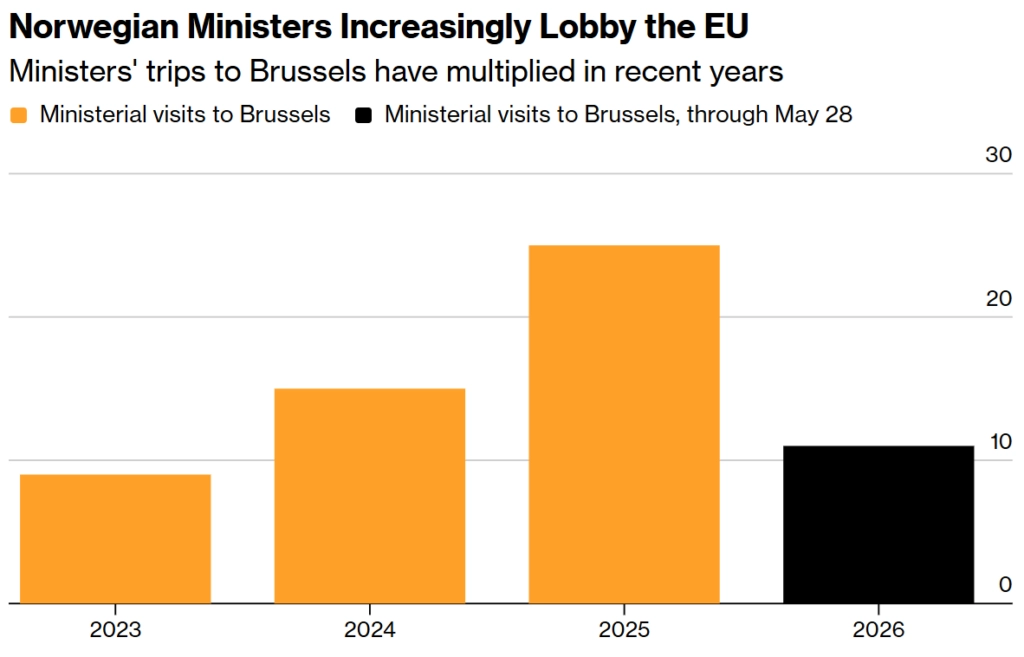
- High-Level Diplomatic Push: Eleven Norwegian cabinet ministers, alongside civil servants, industry representatives, and environmental lobbyists, have conducted visits to Brussels to influence the EU’s forthcoming Arctic policy framework.
- Energy Security Arguments: Norwegian officials are leveraging global supply disruptions, including risks stemming from the blockade of the Strait of Hormuz, to highlight the EU’s heavy reliance on Norwegian natural gas, which currently supplies roughly 30% of EU and UK gas demand.
- Geographical and Environmental Debate: Foreign Minister Espen Barth Eide argued that oil and gas extracted north or south of the Arctic Circle should not face differing climate criteria, maintaining that Barents Sea operations benefit from Gulf Stream conditions.
- Investor and NGO Opposition: A coalition of major European financial institutions, academics, and climate organizations—including Nordea Asset Management and KLP—has formally petitioned the European Commission to preserve and strengthen the Arctic drilling moratorium.
Norway (Norway Post Magazine) November 8, 2026 – The Norwegian government has intensified its diplomatic campaign in Brussels to pressure the European Union into lifting its 2021 moratorium on new oil and gas drilling in the Arctic. According to reporting published by energy correspondents at Bloomberg and industry journals including Ocean Energy Resources, Norwegian politicians, senior civil servants, and energy lobbyists have scaled up targeted engagements with European Commission officials as the bloc prepares to publish an updated Arctic policy framework. Norway—which is Western Europe’s largest petroleum exporter and accounts for approximately 30 per cent of total gas consumption across the EU and United Kingdom—argues that security of supply concerns following international maritime chokepoint disruptions make Arctic resource development indispensable for European energy stability. However, the diplomatic offensive faces firm opposition from European climate groups and institutional investors managing hundreds of billions in assets, who insist that opening high-latitude basins threatens global net-zero targets and fragile polar ecosystems.
- Why Is Norway Lobbying the EU Over Arctic Oil and Gas Exploration?
- How Is Norway Framing the Energy Security and Environmental Arguments?
- Why Are Investors and Climate Coalitions Opposing New Arctic Licences?
- Background of the Particular Development After the News
- How This Development Can Affect European Energy Markets, Climate Policy, and Offshore Exploration
Why Is Norway Lobbying the EU Over Arctic Oil and Gas Exploration?
As reported by energy reporters at Bloomberg and relayed by Ocean Energy Resources, Norway’s diplomatic effort is driven by the fact that nearly two-thirds of the nation’s remaining undiscovered petroleum resources lie within its northern maritime zones.
Although Norway is not a member of the European Union, its economic integration through the European Economic Area (EEA) makes European energy legislation and policy stances highly influential over regional investment sentiment.
The European Union introduced a policy ban on new Arctic hydrocarbon extraction in 2021 to align with its European Green Deal and Paris Agreement obligations.
However, with the European Commission preparing to unveil an updated regional policy stance, Norwegian authorities have moved to ensure that European strategic directives do not discourage capital investment in northern Norwegian continental shelf blocks.
As reported by Bloomberg, the EU’s Special Envoy for the Arctic, Claude Véron-Réville, addressed Oslo’s diplomatic presence during an interview in Brussels.
As reported by Bloomberg, Claude Véron-Réville stated that: “Norway is very active and good at making its voice heard. Norway knows very well how to intervene, they are very well organized and very present”.
According to EU diplomatic records highlighted in the report, 11 Norwegian government ministers have traveled to Brussels so far this year to conduct talks spanning energy security, trade, industrial strategy, and space infrastructure.
How Is Norway Framing the Energy Security and Environmental Arguments?
According to statements obtained by Bloomberg and reported across industry outlets, Norwegian officials are utilizing recent global energy disruptions—including shipping risks around the Strait of Hormuz—to demonstrate the necessity of domestic European energy sourcing.
Norwegian representatives contend that pipeline gas delivered from the Barents Sea provides a secure, geographically proximate alternative to volatile international liquefied natural gas (LNG) maritime routes.
Addressing the environmental criteria used by European regulators, Norwegian Foreign Minister Espen Barth Eide directly challenged the rationale behind classifying northern fields under a blanket moratorium.
As reported by Bloomberg, Espen Barth Eide stated that: “There are no climate arguments for treating oil and gas produced north and south of a certain line differently”.
Foreign Minister Eide clarified that while Norwegian national policy prohibits drilling “up in the icy wasteland” of the high polar pack ice due to environmental sensitivities, Norway maintains established, populated industrial infrastructure in its Arctic territories.
Oslo emphasizes that its primary Arctic production occurs in the Barents Sea off Norway’s northern coast, where warm North Atlantic Gulf Stream currents prevent sea-ice formation, creating operational conditions comparable to the Norwegian Sea further south.
Why Are Investors and Climate Coalitions Opposing New Arctic Licences?
As reported by Bloomberg and environmental news monitoring services, climate scientists, non-governmental organizations, and major European asset managers strongly dispute Oslo’s rationale for expanding high-latitude drilling.
Opponents point out that the Arctic region is warming between three and four times faster than the global average, making its marine environment exceptionally sensitive to industrial disturbance, seismic surveys, and potential operational spills.
Environmental groups argue that short-term geopolitical energy shocks should not be used to justify multi-decade fossil fuel projects.
According to analytical estimates published by the World Wide Fund for Nature (WWF), the timeline from initial commercial discovery to first petroleum production in the Barents Sea averages approximately 18 years.
Consequently, fields discovered in 2026 would not begin contributing to European energy supplies until the 2040s, directly conflicting with the European Union’s statutory target to achieve net-zero greenhouse gas emissions by 2050.
In response to Oslo’s lobby, a coalition of prominent institutional investors joined academics in sending an open letter to the European Commission.
The signatories urged European regulators to “maintain and reinforce” strict prohibitions against new hydrocarbon infrastructure north of the Arctic Circle.
The investor coalition stated that expanding Arctic extraction risks causing “irreversible environmental damage,” exposing European economies to stranded asset liabilities, and locking in fossil fuel consumption past climate deadlines.
Key financial entities backing the letter include:
- Nordea Asset Management: One of the Nordic region’s largest investment managers.
- KLP: Norway’s largest pension company, which has increasingly scrutinized domestic petroleum expansion.
- Danish Pension Providers: Institutional funds including Sampension, AkademikerPension, and Velliv.
- Specialized Lenders: European ethical banking institutions such as Triodos Bank and Cultura Bank.
Despite opposition, Norway’s Ministry of Petroleum and Energy recently opened 70 new exploration blocks distributed across the North Sea, Norwegian Sea, and Barents Sea to sustain long-term output as mature southern fields decline.
Background of the Particular Development After the News
The friction between Norway and the European Union over Arctic resource exploitation reflects a long-standing structural tension between energy security and environmental policy in Northern Europe. In October 2021, the European Commission adopted an updated Arctic strategy that explicitly called for a multilateral legal moratorium on exploiting new oil, coal, and gas deposits in the Arctic and contiguous regions. The EU’s stance was designed to position the bloc as a global leader in climate action ahead of international COP summits.
However, the geopolitical landscape shifted dramatically following Russia’s invasion of Ukraine in 2022, which disrupted Russian pipeline gas deliveries to Western Europe. Norway rapidly stepped in to increase its natural gas output, supplying record volumes to Germany, France, and the United Kingdom via its underwater pipeline network. While European member states welcomed Norwegian gas supplies to avoid acute winter shortages, the EU’s formal policy framework regarding new Arctic exploration remained legally tied to its 2021 moratorium. As the European Commission prepares to revise its regional policy documents, Oslo is seeking to align EU policy directives with Norway’s ongoing licensing rounds in the Barents Sea.
How This Development Can Affect European Energy Markets, Climate Policy, and Offshore Exploration
The outcome of Norway’s lobbying efforts in Brussels will generate distinct operational, financial, and regulatory effects across European energy sectors.
Impact on European Energy Security and Gas Import Planning
If the European Union softens its opposition to Arctic drilling, European utility operators and energy importers will gain long-term structural clarity regarding pipeline gas supplies from the Barents Sea. A policy alignment would encourage long-term off-take agreements between European energy majors and Norwegian producers, reducing Europe’s prospective reliance on imported sea-borne LNG from North America and the Middle East during the 2030s and 2040s.
Impact on Institutional Investors and ESG Mandates
For European pension funds and financial institutions, a decision by the EU to lift or modify the Arctic moratorium would create regulatory complexity around Environmental, Social, and Governance (ESG) criteria. Institutional investors committed to strict net-zero portfolios will face heightened friction when deciding whether to finance energy companies operating in northern Norwegian blocks, potentially leading to divestment trends or specialized capital exclusions for Barents Sea projects.
Impact on Offshore Upstream Energy Operations in the Barents Sea
For international offshore exploration companies operating on the Norwegian Continental Shelf—such as Equinor, Aker BP, and Vår Energi—an EU policy shift would lower regulatory risk premiums associated with high-latitude development. Increased legal certainty would likely accelerate capital deployment into deepwater drilling, subsea infrastructure, and pipeline extension projects aimed at connecting northern Barents Sea gas discoveries directly into the European trunkline grid.