Key Points:
- Fiery Campaign Speech: US President Donald Trump launched an extended verbal attack against Norway during a campaign rally in Port Huron, Michigan, explicitly citing his frustration at not receiving the Nobel Peace Prize.
- Derogatory Characterisation: Trump used explicit, derogatory language to describe Norway, stating “Norway sucks” and referring to it as a “shithouse country” while addressing crowd supporters and federal officials.
- Immigration Policy Rhetoric: Trump declared that he does not want immigrants from Norway coming to the United States, adding the nation to a list of previously disparaged countries.
- Criticism of Nobel Committee: The President characterized the Norwegian Nobel Committee as “radical ideologues”, asserting that his failure to receive the award constitutes an “indelible stain” on Norway.
- 2026 Laureate Selection: The 2026 Nobel Peace Prize was officially awarded to former International Criminal Court judge Navi Pillay for her work advancing international law, a choice Trump publicly condemned.
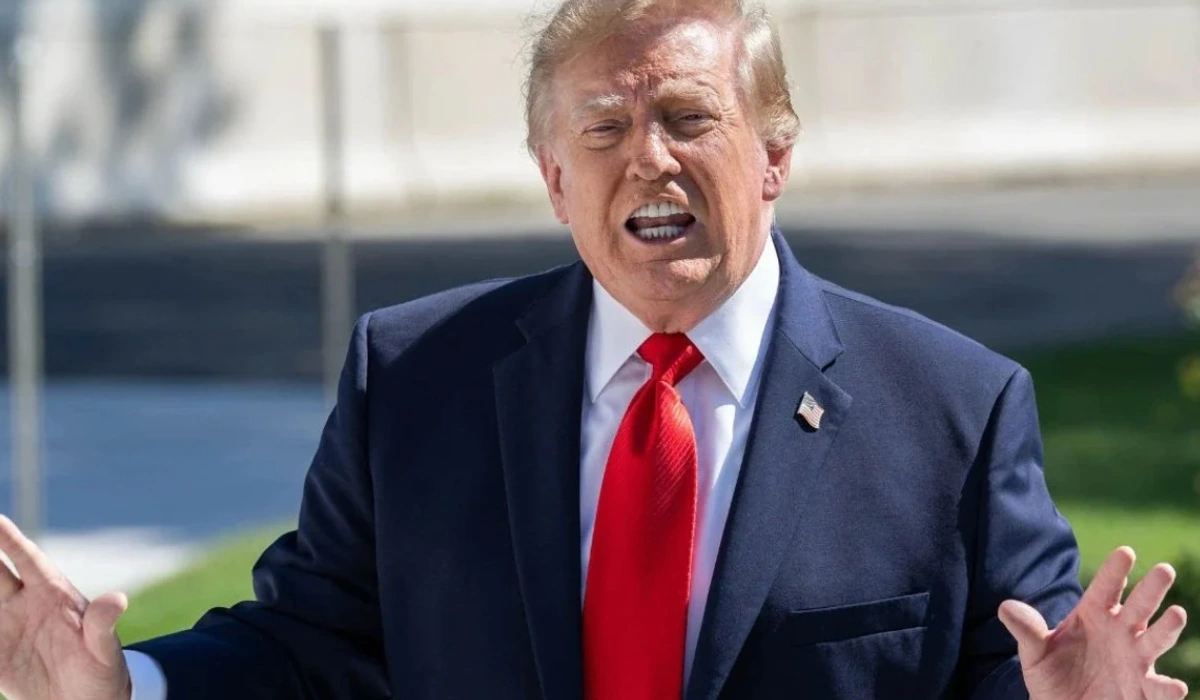
Norway (Norway Post Magazine) October 31, 2026 – United States President Donald Trump launched a sharp public attack against the nation of Norway during a campaign rally in Port Huron, Michigan, expressing intense frustration over the Norwegian Nobel Committee’s decision not to award him the Nobel Peace Prize. According to event broadcasts and political correspondents for The Independent and AFP, Trump used explicit language during his speech on 25 October 2026, describing Norway as a “shithouse country” and declaring that he had no desire to accept immigrants from the Scandinavian nation into the United States. The remarks follow weeks of heightened criticism from the US President after the 2026 Nobel Peace Prize was officially bestowed upon South African jurist and former UN High Commissioner for Human Rights Navi Pillay.
- Key Points:
- What specific statements did Donald Trump make regarding Norway during the Michigan rally?
- Why has Donald Trump criticized the Norwegian Nobel Committee and the Nobel Peace Prize?
- Who was awarded the 2026 Nobel Peace Prize instead of Donald Trump?
- Background of Trump’s Relationship with Norway and the Nobel Selection Process
- Transatlantic Relations, Diplomatic Protocols, and Political Messaging
What specific statements did Donald Trump make regarding Norway during the Michigan rally?
As reported by political correspondents for The Independent and WION, President Donald Trump addressed a large audience of supporters in Port Huron, Michigan, where he explicitly connected his political grievances to the Scandinavian country.
Addressing the crowd from the stage, Donald Trump stated:
“I’m not in love with Norway. Frankly, Norway sucks.”
Continuing his remarks, Donald Trump added Norway to a broader list of nations he has previously targeted with derogatory terminology, stating:
“Norway has become a shithouse country, actually.”
As reported by AFP, Trump turned during his speech toward Dr. Mehmet Oz, Administrator for the Centers for Medicare & Medicaid Services, who was positioned near the podium, and remarked:
“I just speak the truth, Oz.”
Elaborating on US border policy and international travel, Donald Trump told the assembled crowd that his dissatisfaction extended to immigration from the nation:
“I don’t want anybody from Norway. I don’t want anything to do with Norway.”
Despite Trump’s statements to rally attendees, national security reporters noted that there has been no official alteration to United States border protocols or immigration entry rules concerning Norwegian citizens.
Why has Donald Trump criticized the Norwegian Nobel Committee and the Nobel Peace Prize?
As reported by foreign affairs reporters for Arab News and The New Indian Express, Donald Trump’s rally commentary represents a continuation of public statements targeting the Oslo-based institution.
In the weeks preceding the Michigan event, Trump characterized the committee’s failure to recognize his diplomatic record as a severe institutional error, asserting that the omission represented “an indelible stain on the country of Norway” and warning that “we will not forget”.
Furthermore, Donald Trump criticized the composition of the selection panel, describing the Nobel Peace Prize as:
“Forever discredited by a handful of radical ideologues who are anti-democracy and really enemies of civilization.”
Throughout his public appearances, Donald Trump has asserted that his administration successfully resolved eight international military conflicts and was actively preparing to settle two additional conflicts. Trump cited these foreign policy assertions as primary evidence justifying his candidacy for the global peace accolade.
However, diplomatic reporters for NRK noted that during a 2025 meeting, Norwegian Prime Minister Jonas Gahr Støre directly explained the administrative separation of powers to Donald Trump, emphasizing that the Norwegian Nobel Committee operates as a fully independent body separate from the Norwegian government. Following Trump’s latest remarks, Norwegian Foreign Minister Espen Barth Eide reiterated this structural independence, confirming that the Norwegian state plays no role in selecting prize recipients.
Who was awarded the 2026 Nobel Peace Prize instead of Donald Trump?
As reported by international legal correspondents for Reuters and Hindustan Times, the Norwegian Nobel Committee formally announced in October 2026 that the Nobel Peace Prize was awarded to Navanethem “Navi” Pillay, an 85-year-old South African jurist.
Navi Pillay previously served as an ad hoc judge on the International Criminal Court (ICC), President of the International Criminal Tribunal for Rwanda (ICTR), and United Nations High Commissioner for Human Rights. The Nobel Committee recognized Navi Pillay for her lifelong contributions to international law, human rights enforcement, and her investigative work regarding international legal compliance and human rights violations.
Hours after the committee’s official announcement, Donald Trump addressed a campaign audience, stating that he had “never heard” of the “mystery person” selected by the panel. Trump subsequently described the award selection as “a disgraceful and embarrassing decision”, alleging political bias within the panel’s decision-making process.
In response to the public discourse, Navi Pillay humorously suggested in a international interview that she would be open to sharing the recognition, while maintaining her focus on global human rights enforcement.
Background of Trump’s Relationship with Norway and the Nobel Selection Process
The tension surrounding the Nobel Peace Prize represents a re-emergence of rhetoric surrounding international immigration and diplomatic awards. During his first presidential term in 2018, Donald Trump drew widespread international criticism after using derogatory language during a private White House meeting to describe developing nations in Africa alongside Haiti, while publicly questioning why the United States did not attract more immigrants from nations such as Norway.
The Nobel Peace Prize is administered under the terms of Alfred Nobel’s 1895 will. Unlike the academic Nobel Prizes awarded in Sweden, the Peace Prize is determined by the Norwegian Nobel Committee, a five-member panel appointed by the Norwegian Parliament (Stortinget). Despite its parliamentary appointment, the committee functions completely independently of the Norwegian government, international diplomatic bodies, and foreign heads of state. Nominations are submitted by qualified individuals worldwide, including university professors, members of national assemblies, and former laureates.
Transatlantic Relations, Diplomatic Protocols, and Political Messaging
The escalation of executive rhetoric surrounding Norway and the Nobel Committee is predicted to produce diplomatic, political, and strategic consequences for international relations and domestic political campaigns.
For international diplomatic relations between Washington and Oslo, Trump’s explicit statements are predicted to create temporary friction within public communications, though core structural alliances are expected to remain intact. Because Norway operates as a key NATO ally and maintains substantial trade, energy, and defense ties with the United States, diplomatic analysts predict that Norwegian government officials will maintain a formal policy of institutional distinction, reiterating the structural independence of the Nobel Committee to avoid economic or defense disruptions.
For domestic voters and political strategists, Trump’s focus on the Nobel Peace Prize snub serves as a potent campaign narrative designed to energize his political base ahead of crucial legislative elections. By framing the Nobel Committee as part of a global establishment opposing his administration’s foreign policy achievements, Trump reinforces a populist message that resonates with core supporters. However, political analysts forecast that the continued use of aggressive rhetoric toward long-standing democratic allies may alienate moderate and suburban voters who prioritize traditional diplomatic decorum and international stability.