Key Points
- Sanctioned Vessel Detained: The Norwegian Maritime Authority has officially detained the Ya Qing Hai Yang, a Chinese-owned heavy-lift vessel linked to Russia’s sanctioned Arctic LNG 2 energy project, after inspectors discovered it was operating without a valid flag registration or valid safety certificates.
- Inspection in Andfjorden: The detention occurred after the ship sought shelter from harsh weather off the Vesterålen Islands in Andfjorden on October 13, triggering a formal inspection by Norwegian maritime authorities.
- Deficiencies on Second Ship: Inspectors also identified five technical deficiencies aboard a second Chinese heavy-lift vessel operating in the area, though that ship was permitted to sail after addressing the issues.
- Precedent-Setting Precaution: The incident represents the first known reported case of Norway holding a fraudulently flagged vessel operating within the shadow fleet tied to sanctioned Russian energy infrastructure.
- Full-Circle Sanctions Link: The vessel—previously operating under the name Ocean 28—was sanctioned by the United States and the European Union after transporting vital power-generation modules from China to Russia’s Utrenniy terminal in late 2024.
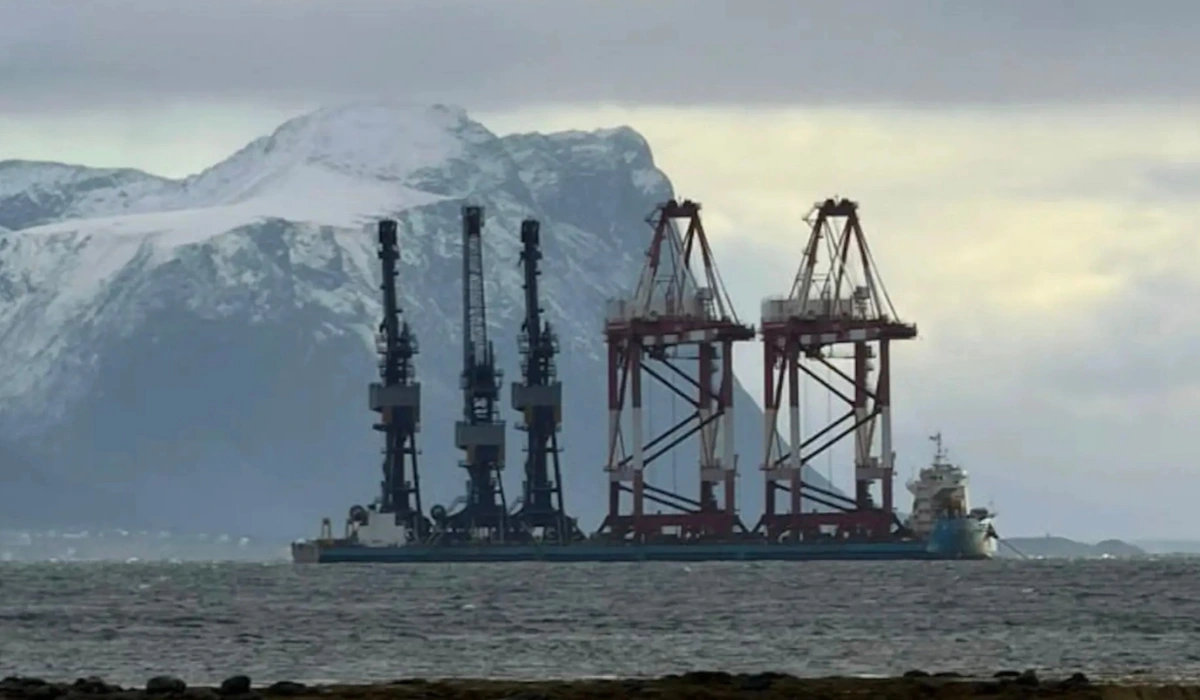
Norway (Norway Post Magazine) October 29, 2026 – Norwegian maritime authorities have taken decisive enforcement action by detaining the Chinese-owned heavy-lift ship Ya Qing Hai Yang in northern waters off the Vesterålen Islands. The vessel, which was previously sanctioned for aiding Russia’s Arctic LNG 2 project, was caught seeking shelter from bad weather while operating under a false flag without valid registration or maritime certificates. Officials simultaneously inspected a second Chinese vessel, finding five deficiencies before allowing it to depart. The crackdown marks Norway’s first reported detention of a falsely flagged shadow fleet ship, bringing international scrutiny to energy sanction enforcement in Arctic seas.
- Key Points
- Why did the Norwegian Maritime Authority detain the Ya Qing Hai Yang in Andfjorden?
- How is the Chinese heavy-lift ship tied to Russia’s sanctioned Arctic LNG 2 project?
- What issues were discovered on the second Chinese vessel inspected in Norwegian waters?
- Background of the particular development
- How this development can affect Arctic shipping lines, maritime regulatory bodies, and shadow fleet operators
Why did the Norwegian Maritime Authority detain the Ya Qing Hai Yang in Andfjorden?
The detention of the Chinese-owned heavy-lift vessel unfolded after the ship sought shelter from adverse weather conditions in Andfjorden, located off the Vesterålen Islands in northern Norway. Inspectors from the Norwegian Maritime Authority boarded the Ya Qing Hai Yang on October 13 to assess its seaworthiness and compliance with international maritime law.
During the routine boarding, inspectors uncovered severe administrative and legal irregularities regarding the vessel’s identity and operational authorization.
As reported by Malte Humpert of High North News, Dag Inge Aarhus, communications director for the Norwegian Maritime Authority, stated: “During the inspection, it was discovered that the vessel did not have a valid flag registration and lacked the required certificates.”
Detailing the immediate enforcement measure taken by state inspectors, as reported by Malte Humpert of High North News, Dag Inge Aarhus stated: “The vessel has therefore been detained until further notice.”
The Norwegian Maritime Authority confirmed that the Ya Qing Hai Yang will remain held in Norwegian waters until its owners regularize its registration with a recognized flag state and obtain valid statutory certificates required for international navigation.
Addressing the historical significance of the enforcement action, Dag Inge Aarhus noted to High North News that while he could not immediately confirm whether this was Norway’s first formal detention of a vessel associated with the shadow fleet or sailing under a fraudulent flag without checking full historical archives, no prior public record of such a detention exists in Norwegian waters.
How is the Chinese heavy-lift ship tied to Russia’s sanctioned Arctic LNG 2 project?
The Ya Qing Hai Yang carries a significant operational history tied directly to Western economic sanctions imposed against Russia’s energy expansion.
In October 2024, operating under its former name Ocean 28, the heavy-lift ship engaged in complex logistics operations to deliver massive, Wison-built power-generation modules from manufacturing hubs in China to the Utrenniy terminal serving the Arctic LNG 2 project in northern Russia.
Following investigations detailing the elaborate transportation routes used to obscure the movement of critical energy equipment to Russian Arctic terminals despite international trade restrictions, the United States Department of the Treasury designated the vessel’s operator and affiliated corporate entities under its sanctions framework in January 2025.
Subsequently, the ship was added to sanctions lists maintained by the European Union and allied international jurisdictions. The vessel’s recent detention off northern Norway brings its history full circle, as a ship involved in bypassing energy restrictions is now immobilized over fundamental flag-state registration violations.
What issues were discovered on the second Chinese vessel inspected in Norwegian waters?
In addition to the detention of the Ya Qing Hai Yang, the Norwegian Maritime Authority conducted an inspection of a second Chinese-owned heavy-lift vessel operating within the same northern maritime area.
Inspectors identified five distinct technical and operational deficiencies aboard the second vessel. However, unlike the Ya Qing Hai Yang, the second ship possessed valid flag-state documentation and safety certificates.
Because the crew and operators resolved the identified technical problems to the satisfaction of the Norwegian inspectors while anchored, the second ship was cleared of maritime safety holds and permitted to proceed on its voyage.
Background of the particular development
The enforcement action off the Vesterålen Islands comes amid heightened international scrutiny surrounding Russia’s use of a “shadow fleet” to bypass Western energy sanctions. Following sanctions imposed on Russian liquefied natural gas (LNG) projects like Arctic LNG 2, non-Western shipping companies and charterers have increasingly utilized re-flagging schemes, obscure ownership structures, and invalid flags to move equipment and energy commodities across northern sea routes.
Coastal states along the Arctic corridor, particularly Norway, face growing political and environmental pressure to enforce international maritime safety standards, such as those governed by the International Maritime Organization (IMO) and the Paris Memorandum of Understanding on Port State Control. Ships operating without valid flag registrations or certified safety management systems pose severe environmental risks to fragile Arctic marine habitats, while creating legal challenges regarding international jurisdiction and maritime security in northern waters.
How this development can affect Arctic shipping lines, maritime regulatory bodies, and shadow fleet operators
The detention of the Ya Qing Hai Yang by Norwegian authorities will likely trigger several long-term impacts across Arctic maritime operations and international trade enforcement:
- For Shadow Fleet Operators and Non-Compliant Shipping Lines: The willingness of Norwegian authorities to detain falsely flagged vessels sets a strict regulatory precedent in northern waters. Operators attempting to bypass Western sanctions using obscure flags or invalid documentation will face heightened risks of ship seizure, operational delays, and severe financial losses when navigating European territorial seas.
- For Coastal States and Maritime Regulatory Authorities: The incident will encourage Arctic nations to increase port state control inspections, offshore surveillance, and flag-verification checks on heavy-lift and cargo vessels operating near critical sea routes. Regulatory agencies will likely coordinate more closely with international sanctions monitoring bodies to identify compromised shipping registries.
- For Insurers, Flag Registries, and Global Supply Chains: Legitimate maritime insurers and international flag registries will tighten verification protocols for heavy-lift vessels operating in Arctic corridors, demanding transparent ownership histories and strict proof of compliance to avoid indirect exposure to sanctioned energy projects like Arctic LNG 2.