Key Points
- Direct High-Level Dialogue: Finnish President Alexander Stubb and Norwegian Prime Minister Jonas Gahr Støre conducted direct, high-level discussions with Russian President Vladimir Putin on Tuesday, 27 October 2026, aimed at establishing a path toward ending the war in Ukraine.
- Consultation with Kyiv: The phone conference was initiated by the Nordic leaders in direct coordination and consultation with Ukrainian President Volodymyr Zelenskyy following high-stakes preparatory meetings in Oslo.
- Multilateral Diplomatic Push: The discussions build upon an international diplomatic initiative held in Oslo on 20 October 2026, which brought together Stubb, Støre, President Zelenskyy, US Special Envoy Steve Witkoff, and senior US representative Jared Kushner.
- Direct Follow-up in St Petersburg: Following the Oslo summit, US Envoy Steve Witkoff travelled directly to Saint Petersburg to engage in personal negotiations with President Vladimir Putin.
- Human and Geopolitical Cost Emphasized: Norwegian Prime Minister Jonas Gahr Støre underscored the severe long-term human and material consequences of the ongoing hostilities, urging immediate de-escalation.
- Post-Call Briefing with Kyiv: Shortly following the conclusion of the discussion with President Putin, the Nordic leaders briefed President Zelenskyy on the outcome, reaffirming unwavering Nordic support for a just peace.
- Friction Over US Sanctions Policy: The diplomatic efforts unfold amidst heightened transatlantic tension triggered by recent US trade announcements involving Russian fuel agreements and sanction waivers.
Norway (Norway Post Magazine) October 27, 2026 – Finnish President Alexander Stubb and Norwegian Prime Minister Jonas Gahr Støre held direct telephonic negotiations with Russian President Vladimir Putin on Tuesday, marking one of the most significant European diplomatic interventions since the expansion of the conflict in Ukraine. The high-level dialogue was arranged in close consultation with Ukrainian President Volodymyr Zelenskyy and follows intensive multi-nation diplomatic sessions held in Oslo alongside senior United States envoys. Both Nordic leaders characterized the discussions as frank, substantive, and vital to the long-term security architecture of the European continent. The diplomatic initiative comes amid widening strategic friction between Western capitals and Washington following recent unexpected US policy shifts regarding Russian sanctions.
- Key Points
- What Was Announced Regarding the Direct Talks Between Nordic Leaders and President Putin?
- How Did the Oslo Summit and US Participation Lay the Groundwork for the Call?
- How Did Kyiv Respond to the Nordic-Russian Engagement?
- Background of the Particular Development
- Prediction: How This Development Can Affect European Security Stakeholders and Policy Makers
What Was Announced Regarding the Direct Talks Between Nordic Leaders and President Putin?
As reported by official government statements released jointly in Helsinki and Oslo on Tuesday, 27 October 2026, Finnish President Alexander Stubb and Norwegian Prime Minister Jonas Gahr Støre initiated a direct telephone conference with Russian President Vladimir Putin to discuss diplomatic frameworks for concluding the war in Ukraine.
As reported in the joint release, President Alexander Stubb stated, “The outcome of this war will have a direct impact on our and the broader European security. Ending the war requires direct discussions”. President Stubb formally described the exchange between the three heads of state as “frank and substantive”.
As reported by official channels, Norwegian Prime Minister Jonas Gahr Støre highlighted the urgent necessity of halting further conflict, stating, “The war comes with enormous human and material costs. The suffering and destruction will impact generations. In the call we stressed the importance of de-escalation”.
The joint release confirmed that the diplomatic call was “held in consultation with Ukraine” and was designed specifically to advance diplomatic efforts to promote peace and stability across Europe.
How Did the Oslo Summit and US Participation Lay the Groundwork for the Call?
What Transpired During the High-Level Oslo Meeting on October 20?
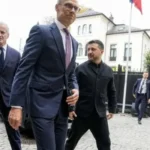
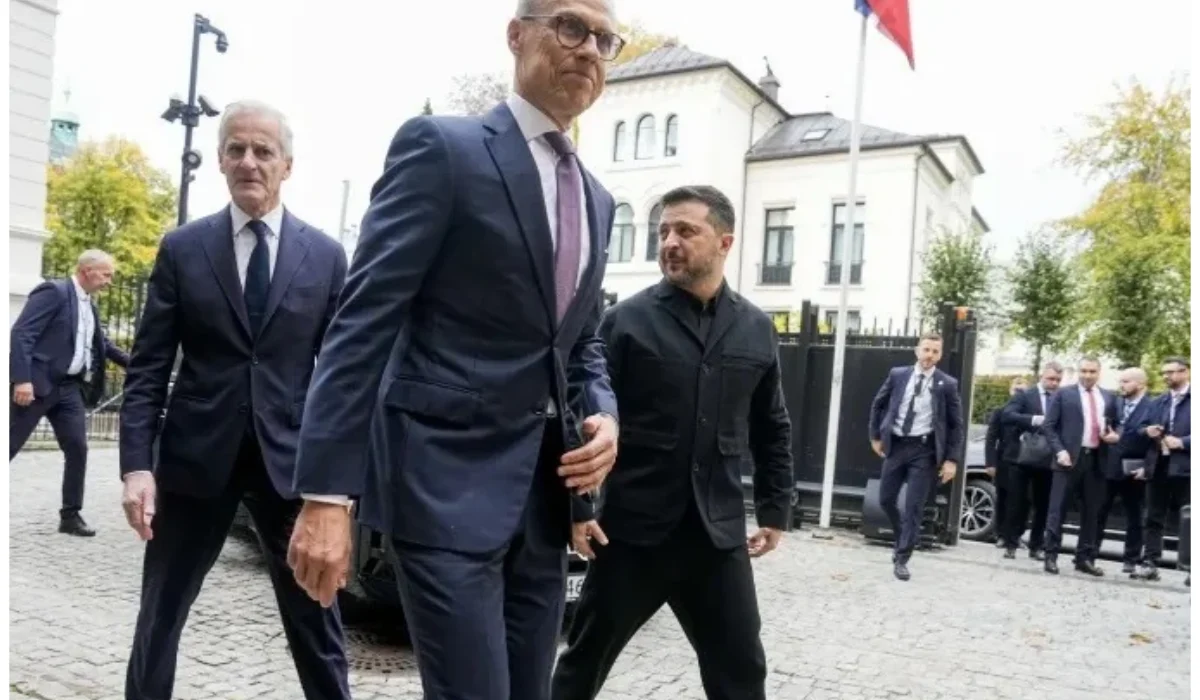
The direct engagement with the Kremlin followed a critical diplomatic gathering hosted in Oslo on 20 October 2026. That summit brought Prime Minister Jonas Gahr Støre and President Alexander Stubb together with Ukrainian President Volodymyr Zelenskyy to formulate joint negotiation principles.
What Role Did US Representatives Steve Witkoff and Jared Kushner Play?
The Oslo deliberations were attended by US Special Envoy Steve Witkoff alongside Jared Kushner, son-in-law to US President Donald Trump, who participated remotely via secure video link. Following the conclusion of the Oslo talks, Envoy Steve Witkoff travelled directly to Saint Petersburg, Russia, to hold face-to-face negotiations with President Vladimir Putin regarding potential peace parameters.
How Did Kyiv Respond to the Nordic-Russian Engagement?
As reported by Ukrainian government spokespersons in Kyiv, President Volodymyr Zelenskyy engaged in a follow-up consultation with President Stubb and Prime Minister Støre immediately after their discussion with President Putin concluded.
As reported by President Alexander Stubb in a public statement on social media confirming the debriefing with Kyiv, the Finnish leader commented: “Finland and Norway will continue to support Ukraine, and the efforts to find a just and lasting peace”.
The close coordination between Nordic capitals and Kyiv stands in contrast to recent diplomatic friction between Ukraine and the United States. Relations between Kyiv and Washington have experienced renewed strain following an unexpected decision by US President Donald Trump to enter into a commercial fuel agreement with Russia for diesel supplies. The measure, introduced by President Trump to curb soaring global oil prices linked to ongoing military actions involving Iran, included waiving certain sanctions against Russian entities, drawing dismay from Ukrainian officials.
Background of the Particular Development
The direct communication between President Vladimir Putin and the leaders of Finland and Norway represents a notable procedural shift in European security diplomacy. Since February 2022, direct bilateral contact between Western European heads of state and the Kremlin has been extremely limited, with most European nations abstaining from direct telephone exchanges with Russian leadership.
However, as direct NATO members sharing physical land and maritime borders with Russia, Finland and Norway occupy a distinct strategic position. Finland’s border with Russia spans over 1,300 kilometres, while Norway maintains critical maritime boundaries and sovereign interests in the High North. Both nations have acted as key regional security contributors while remaining staunch military, financial, and humanitarian supporters of Ukraine.
The initiation of the Oslo diplomatic track on 20 October 2026—combining Nordic leadership, Ukrainian executive participation, US envoy coordination, and subsequent direct outreach to Saint Petersburg and Moscow—reflects a calculated effort by European border states to maintain a structured seat at the negotiating table amid shifting US foreign policy priorities.
Prediction: How This Development Can Affect European Security Stakeholders and Policy Makers
The direct engagement between Nordic leaders and the Kremlin is expected to produce significant impacts across several international constituencies:
- European Union and NATO Policy Makers: The direct dialogue established by President Stubb and Prime Minister Støre establishes a precedent for frontline NATO members engaging in direct negotiation with Moscow under explicit consultation with Kyiv. This step will likely encourage other European capitals to establish coordinated diplomatic channels to ensure European security requirements are represented in any broader peace settlement.
- The Ukrainian Leadership and Military Planning:By relying on Finland and Norway to reinforce core peace terms directly to President Putin, Kyiv maintains a reliable diplomatic buffer in Northern Europe. This alignment helps mitigate risks arising from sudden unilateral trade decisions or sanction waivers enacted by Washington.
- Global Energy Markets and Defence Analysts:As Western capitals navigate diplomatic negotiations alongside volatile energy conditions caused by US fuel policy shifts and Middle Eastern conflicts, formal diplomatic communication between Northern Europe and Moscow provides a necessary framework to prevent miscalculation along NATO’s northern flank.