Key Points
- US President Donald Trump voiced sharp criticism of Norway during a campaign rally in Port Huron, Michigan, declaring that Norwegian immigrants are not welcome in the United States.
- Trump attributed his stance directly to not being awarded the Nobel Peace Prize, describing Norway as a “shit house country”.
- The Norwegian Nobel Committee, based in Oslo, operates independently of the Norwegian government, as clarified by Norwegian Foreign Minister Espen Barth Eide.
- Despite the President’s verbal rhetoric, there is no official administrative policy or executive directive restricting legal immigration from Norway.
- Trump previously characterized the decision not to confer the Nobel Peace Prize upon him as an “indelible stain” on Norway.
- Economic metrics highlight that Norway remains one of the world’s wealthiest nations per capita, backed by a sovereign wealth fund reporting $184.3 billion in first-half profits for 2026.
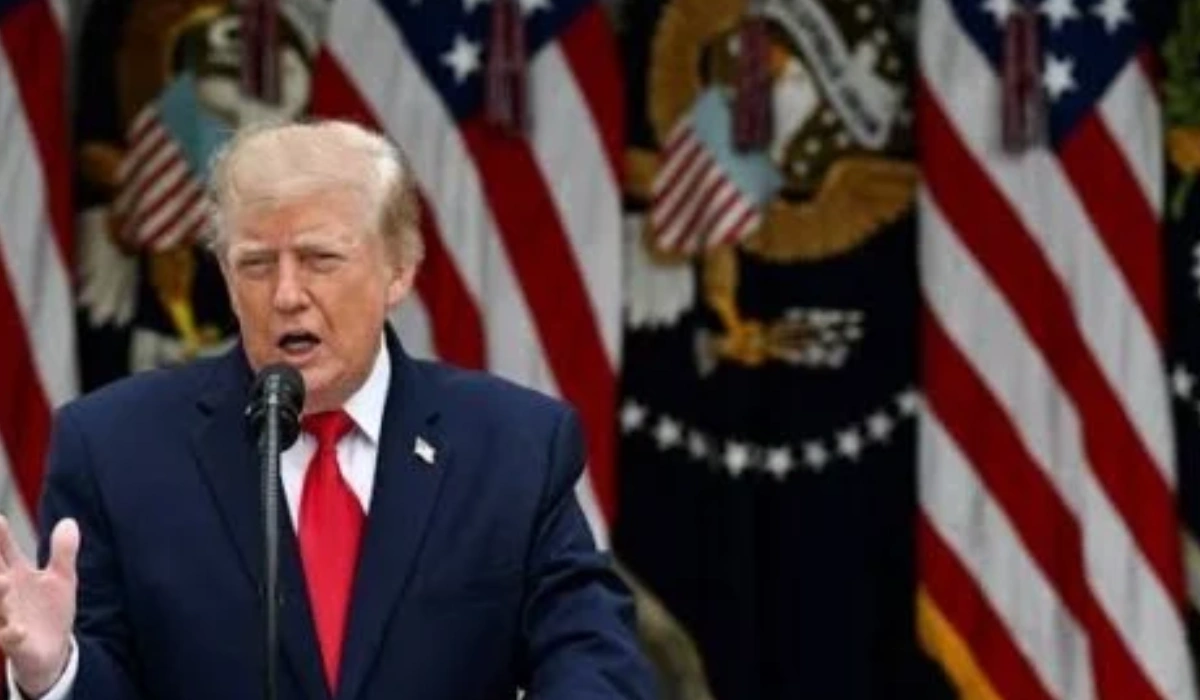
Norway (Norway Post Magazine) October 26, 2026 — US President Donald Trump has escalated his verbal rhetoric against Norway during a political rally in Port Huron, Michigan, asserting that citizens from the Scandinavian nation are no longer welcome to immigrate to the United States. Speaking ahead of the upcoming US midterm elections, Trump cited his frustration over not receiving the Nobel Peace Prize as the explicit reason for his stance. Using derogatory phrasing previously applied to other nations, Trump labeled Norway a “shit house country” while addressing crowd supporters. Norwegian Foreign Minister Espen Barth Eide responded by emphasizing the structural independence of the Norwegian Nobel Committee from government authority. US federal regulatory agencies have indicated no official policy changes regarding Scandinavian entry or visa processing.
- Key Points
- What Did Donald Trump Say Regarding Norway at the Michigan Campaign Rally?
- How Did the Norwegian Government and Officials Respond to Trump’s Statements?
- Are There Official U.S. Policy Changes Restricting Norwegian Immigration?
- Background of the Particular Development
- How This Development Can Affect Diplomatic Relations and the Midterm Electorate
What Did Donald Trump Say Regarding Norway at the Michigan Campaign Rally?
As reported by journalists covering the event in Port Huron, Michigan, US President Donald Trump addressed a crowd of supporters ahead of the midterm elections, focusing extensively on immigration and international affairs. During his address, Trump linked recent civil unrest in France to European immigration policies before turning his focus to Scandinavian immigration into the United States.
According to campaign press pool reports, Trump stated that while he would welcome immigrants from selected foreign territories, he maintained a distinct opposition to individuals originating from Norway. Explaining his position directly to the audience, Trump stated, “Because I didn’t get the Nobel Prize … So I don’t want anybody from Norway”.
As reported by political correspondents at Reuters and international news syndicates, Trump further described the Nordic nation in vulgar terms, asserting, “Norway has become a shit house country, actually”. The terminology mirrors language previously utilized by Trump during his political career when referencing developing countries including Haiti, Libya, Somalia, and Yemen.
How Did the Norwegian Government and Officials Respond to Trump’s Statements?
Following the campaign rally, diplomatic correspondents sought statements from the Norwegian government regarding the American president’s comments. Speaking to Norway’s national public broadcaster NRK on Monday, October 26, 2026, Norwegian Foreign Minister Espen Barth Eide addressed the underlying issue regarding the Nobel Peace Prize selection process.
As reported by NRK and Reuters correspondent networks, Espen Barth Eide stated: “He knows very well that the Nobel Committee is independent. We have reminded them of that, if anyone is wondering, and that is still the case”. Foreign Minister Eide’s ministry declined to offer further official commentary beyond clarifying the committee’s constitutional separation from state leadership. Representatives for the Norwegian Nobel Committee in Oslo similarly did not issue an immediate public response following requests for comment.
Journalists tracking diplomatic communications noted that earlier in the month, Trump had publicly described the committee’s omission to award him the honor as an “indelible stain” on Norway. Under Norwegian law and the historic 1895 will of Alfred Nobel, the Norwegian Nobel Committee functions as an autonomous five-member body appointed by the Storting (the Norwegian Parliament), operating without direction from the sitting cabinet or monarch.
Are There Official U.S. Policy Changes Restricting Norwegian Immigration?
Despite the public statements delivered at the Michigan political rally, legal and diplomatic analysts report that no formal policy adjustments have been introduced within the US Department of Homeland Security or the State Department regarding immigration from Norway.
As reported by political reporters reviewing administration notices, there is no evidence or regulatory documentation indicating that the Trump administration is drafting executive orders or immigration bans targeting Norwegian citizens. Norwegian travelers maintain access to standard entry mechanisms, including the Visa Waiver Program via the Electronic System for Travel Authorization (ESTA) for short-term visits, alongside established immigrant and non-immigrant visa channels.
Financial analysts and economic journalists covering international markets have drawn attention to the disparity between the President’s characterization of Norway and its verified economic status. Data published by the International Monetary Fund (IMF) ranks Norway among the highest-income nations globally in terms of gross domestic product (GDP) per capita. Additionally, Norges Bank Investment Management, which manages Norway’s sovereign wealth fund, disclosed a record first-half net profit of 1.75 trillion Norwegian crowns ($184.3 billion) in 2026, driven by global financial investments.
Background of the Particular Development
The tension between Donald Trump and Norwegian institutions centers on his long-standing ambition to receive the Nobel Peace Prize. During his first and second presidential terms, Trump repeatedly argued that his diplomatic efforts—including the Abraham Accords in the Middle East, high-level summits with North Korea, and bilateral trade renegotiations—warranted international recognition from the Oslo-based committee.
Trump’s repeated public demands for the award frequently conflated the Norwegian state with the independent Nobel Committee. Historically, the Norwegian government has consistently maintained a strict policy of non-interference regarding the committee’s deliberations to safeguard the prize’s global impartiality.
The rhetoric in Port Huron forms part of a broader political strategy in which Trump utilizes immigration as a core messaging tool ahead of the 2026 United States midterm elections. By focusing on foreign nations and international bodies, the administration seeks to rally base voters around domestic immigration enforcement, national sovereignty, and criticisms of international institutions.
How This Development Can Affect Diplomatic Relations and the Midterm Electorate
The escalating public rhetoric between Donald Trump and Norwegian institutions carries measurable implications for international diplomatic relations, bilateral trade, and voter sentiment leading into the US midterm elections.
Impact on Transatlantic Relations and International Diplomacy
From a diplomatic perspective, public characterizations of NATO allies as “shit house countries” risk straining diplomatic protocols between Washington and Oslo. While formal military cooperation and Arctic security partnerships through NATO are unlikely to be structurally altered, diplomatic friction may complicate routine soft-power engagements and bilateral cultural exchanges. Furthermore, persistent conflation of independent international awarding bodies with state governments could prompt Nordic partners to issue joint clarifications regarding institutional autonomy and sovereignty.
Influence on the US Electorate and Midterm Campaign Strategy
For the American electorate, the remarks serve to reinforce immigration as the primary focal point of the midterm election cycle. Conservative base voters who support Trump’s “America First” agenda may view the statements as a symbolic rejection of foreign institutions that fail to honor American executive achievements. Conversely, political opponents and moderate voters may view the comments as unnecessary friction with a stable democratic ally, potentially utilizing the rhetoric to mobilize suburban voters concerned with international standing and executive decorum ahead of congressional balloting.