Key Points
- High-Level Delegation Convenes: The Royal Norwegian Embassy in Manila, together with the Department of Environment and Natural Resources (DENR), Innovation Norway, and the Philippines Norway Business Council, hosted 180 leaders across government, corporate sectors, media, and sustainability fields for a full-day summit on circular economy solutions.
- Re-evaluating Waste Value: Ambassador Kristian Netland of the Royal Norwegian Embassy in Manila urged stakeholders to stop viewing waste as a product’s end of life and instead approach it as the beginning of new material cycles.
- Bilateral Solutions and Context: Norwegian representatives emphasized that while Norway offers advanced technologies—such as bottle-to-bottle recycling, round-baling, and Deposit Return Systems (DRS)—solutions must be tailored specifically to fit the environmental and economic realities of the Philippines.
- Diverse Stakeholder Participation: Key international and local entities present included TOMRA, DNV, ORKEL Holding AS, INFRAMAR, Hoppsann Technology AS, GIZ, PET Value, Nature’s Spring (Philippine Spring Water Resources), Evergreen Labs, and the Metropolitan Manila Development Authority (MMDA).
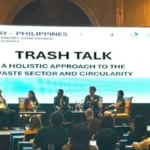
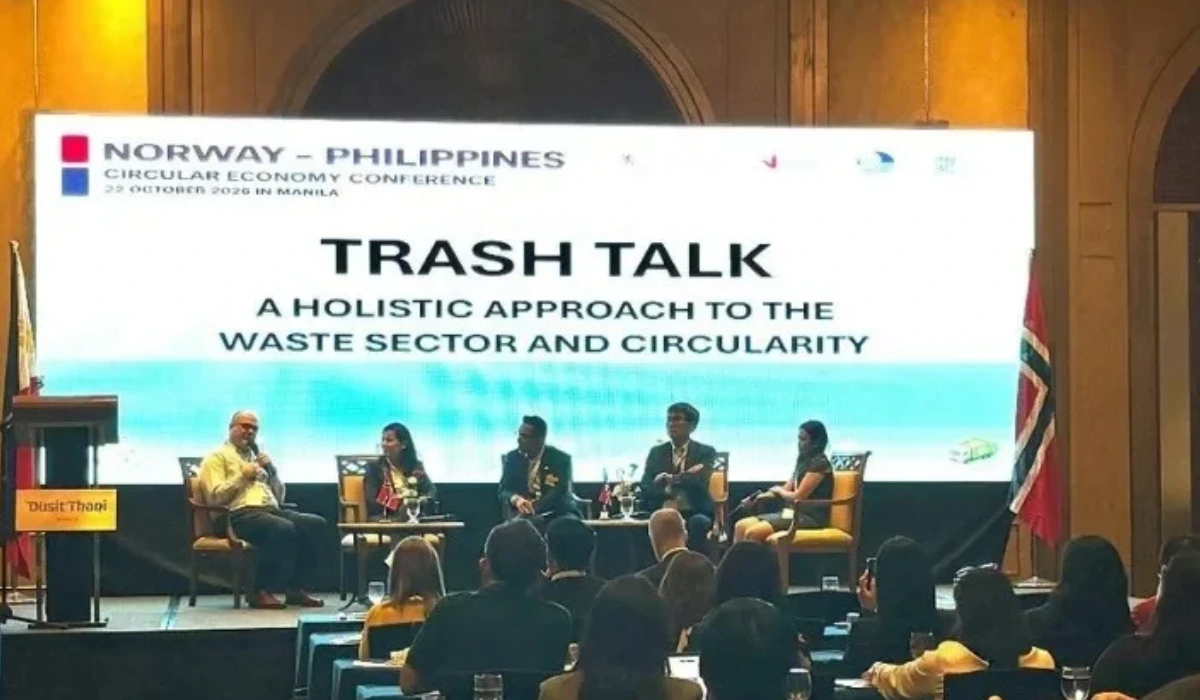
- Multi-Sectoral “Trash Talking”: Dedicated panel sessions examined critical national issues including landfill capacity constraints, Extended Producer Responsibility (EPR) mandates, end-of-life management for renewable energy assets, and island waste logistics.
Norway (Norway Post Magazine) October 24, 2026 — The Royal Norwegian Embassy in Manila and the Department of Environment and Natural Resources (DENR) have convened 180 key delegates at the Norway–Philippines Circular Economy Conference 2026. The full-day event brought together public officials, industry executives, and environmental experts to address the archipelago’s mounting plastic pollution and waste disposal challenges. Featuring technical presentations on Norwegian recycling innovations alongside localized policy discussions on Extended Producer Responsibility (EPR), the conference focused on transforming waste recovery concepts into scalable systems tailored to the Philippine economy.
- Key Points
- What Key Directives Were Highlighted by Ambassador Kristian Netland and DENR Leadership?
- Which Technologies and Companies Were Presented During the Morning Sessions?
- What Issues Were Examined During the “Trash Talking” Panel Discussions?
- Background of the Norway–Philippines Sustainability Partnership
- Prediction: How This Development Will Affect Municipalities, Businesses, and Local Communities
As reported by environmental correspondents covering diplomatic and sustainability developments in Manila, the Royal Norwegian Embassy in Manila, alongside the Department of Environment and Natural Resources (DENR), Innovation Norway, and the Philippines Norway Business Council, convened the Norway–Philippines Circular Economy Conference 2026. The conference gathered 180 representatives from government departments, commercial enterprises, media organizations, and sustainability advisory groups to establish actionable frameworks for overcoming the country’s severe waste management bottlenecks and accelerating the adoption of a circular economy.
As reported by official conference proceedings, the delegation evaluated technological and systemic interventions designed to process solid waste, recover post-consumer plastics, and alleviate landfill pressure across the Philippine archipelago. Grounded in a bilateral partnership established in 2023, the full-day assembly focused on adapting proven Nordic waste management technologies—such as automated Deposit Return Systems (DRS), round-baling, and bottle-to-bottle processing—to align directly with the socio-economic conditions and geographic constraints of the Philippines.
What Key Directives Were Highlighted by Ambassador Kristian Netland and DENR Leadership?
As reported during the opening ceremony, H.E. Kristian Netland, Ambassador of Norway to the Philippines, framed the central principle of the conference by calling for a fundamental shift in how society perceives solid waste and material usage.
Opening the program, Ambassador Kristian Netland stated: “The key is to stop thinking of waste as the end of a product’s life, and start treating it as the beginning of something new. Norway has experience and technologies to share, from bottle-to-bottle recycling and plastic recovery to systems that help keep materials in circulation. But we do not come here claiming that one model can simply be transferred from one country to another. Solutions must reflect Philippine realities, and they must work environmentally as well as economically. That requires cooperation between government, businesses, technology providers and consumers. It also requires the willingness to turn promising ideas into systems that can operate at scale.”
As reported by environmental trade reporters, Juan Miguel T. Cuna, Acting Secretary of the Department of Environment and Natural Resources (DENR), reinforced Ambassador Netland’s call to action. Addressing the assembly, Acting Secretary Juan Miguel T. Cuna highlighted the severe environmental pressures posed by plastic accumulation and overflowing municipal dumpsites across the country, reiterating the urgent necessity for cross-sectoral collaboration to establish sustainable, long-term waste recovery infrastructures.
Which Technologies and Companies Were Presented During the Morning Sessions?
As reported by conference rapporteurs, the morning technical sessions introduced an array of Norwegian circular-economy mechanisms, focusing on material collection, sorting, compaction, and high-grade re-processing.
Commercial and institutional representatives participating in the morning showcases included:
- Innovation Norway & DNV: Presenting policy frameworks, environmental certification standards, and commercial transition roadmaps for industrial waste streams.
- TOMRA: Demonstrating automated reverse vending machines (RVMs) and sensor-based sorting technologies designed for municipal Deposit Return Systems (DRS).
- ORKEL Holding AS & INFRAMAR: Showcasing heavy-duty baling technology designed to compress loose waste into high-density, weatherproof round bales for efficient inter-island transport.
- Hoppsann Technology AS: Providing digital tracking and waste-stream management software platforms.
- Local & International Organizations: Experts from GIZ, PET Value (a partnership between Coca-Cola Beverages Philippines and Indorama Ventures), Philippine Spring Water Resources (Nature’s Spring), Evergreen Labs, and the Metropolitan Manila Development Authority (MMDA) shared localized data on collection logistics and recycled PET (rPET) production.
What Issues Were Examined During the “Trash Talking” Panel Discussions?
As reported by conference organizers, the interactive “Trash Talking” segments convened panel discussions featuring leaders from public ministries, private corporations, and non-profit foundations.
The panels focused on five core operational and policy challenges facing the Philippines:
- Landfill Capacity Constraints: Addressing the rapid depletion of available air space in municipal sanitary landfills across Metro Manila and surrounding urban centers.
- Extended Producer Responsibility (EPR) Compliance: Evaluating corporate progress under the Republic Act No. 11898 (EPR Act of 2022), which obliges large enterprises to recover a growing percentage of their plastic packaging footprint.
- Inter-Island Logistics: Developing economic strategies for collecting, baling, and shipping recyclables from isolated island provinces to centralized processing plants on major mainlands.
- Renewable Asset End-of-Life Strategies: Preparing circular decommission management systems for emerging waste streams, such as solar panels and wind turbine components.
- Holistic Waste Management Integration: Creating inclusive recovery networks that formally integrate informal waste collectors (manggagatas and waste pickers) into municipal recycling value chains.
Background of the Norway–Philippines Sustainability Partnership
The convening of the 2026 conference builds upon a structured bilateral effort initiated in 2023 between the Royal Norwegian Embassy in Manila and Philippine environmental authorities. Recognized globally for achieving high recycling rates through automated collection and reverse logistics, Norway has positioned its environmental technology sector as a collaborative partner for emerging economies in Southeast Asia.
Over the past three years, the joint Norway–Philippines initiative has conducted multi-stakeholder workshops, technical study tours in Scandinavia, and direct policy consultations with the DENR, the Department of Trade and Industry (DTI), and local government units (LGUs). These activities have focused primarily on operationalizing the Philippines’ Extended Producer Responsibility framework, addressing marine plastic litter, and creating economic incentives for private investment in local waste-to-value infrastructure.
Prediction: How This Development Will Affect Municipalities, Businesses, and Local Communities
The outcomes of the Norway–Philippines Circular Economy Conference 2026 create direct, measurable effects across multiple sectors of Philippine society:
1. Fast-Moving Consumer Goods (FMCG) Companies and Obliged Enterprises
With the DENR and international partners pressing for scalable circular systems, consumer goods manufacturers operating in the Philippines face mounting regulatory pressure to meet statutory plastic recovery targets under the EPR law. Businesses will likely accelerate capital investments into bottle-to-bottle recycling joint ventures and participate in national Deposit Return Systems to satisfy compliance mandates and avoid administrative penalties.
2. Local Government Units (LGUs) and Island Municipalities
For island provinces struggling with high maritime freight costs for loose garbage, adopting high-density round-baling technologies offered by Norwegian vendors will allow municipal mayors to compact solid waste efficiently. This will reduce landfill volume pressures, lower inter-island transport overheads, and prevent plastic debris from escaping into marine environments.
3. Informal Waste Collectors and Local Communities
The transition toward structured collection systems and localized recycling hubs will impact grassroots waste pickers across Metro Manila and rural LGUs. If municipalities integrate informal workers into formal Deposit Return Systems and collection networks, local communities stand to benefit from safer working conditions, standardized financial incentives for recovered materials, and cleaner urban environments.