Key Points:
- Expanding International Boycott:11-time world champion Sweden, alongside Norway, Latvia, and Denmark, officially joined Finland on Tuesday in refusing to take the ice against Russia at upcoming International Ice Hockey Federation (IIHF) World Championship tournaments.
- Over a Quarter of Nations Participating:The boycott movement now encompasses more than a quarter of the participating teams set to compete, severely threatening tournament logistics across both senior and junior divisions.
- Pressure from Corporate Sponsors:Finnish tire manufacturer Nokian Tyres announced it would pull its tournament sponsorship if Russia participates, joining Swedish furniture manufacturer AJ Products, which demanded its logo be removed from host venues.
- Potential Disqualification Risk:The Norwegian Ice Hockey Association (NIHA) acknowledged that its men’s junior squad risks being removed from the upcoming World Juniors in Canada to accommodate Russia, as Norway was the final country to qualify.
- Precedent and Opposition: The rift follows a Court of Arbitration for Sport (CAS) ruling ordering Russia’s reinstatement, prompting comparisons to FIFA’s 2022 World Cup qualifying exclusion of Russia; meanwhile, Slovakian Prime Minister Robert Fico publicly criticized the boycott.
Norway (Norway Post Magazine) November 3, 2026 – The rift dividing international ice hockey deepened significantly on Tuesday as Sweden, Norway, Latvia, and Denmark formally joined a growing boycott of World Championship matches against Russia. As reported by sports correspondent James Ellingworth of The Associated Press, the coalition of boycotting nations now accounts for more than 25 per cent of all teams scheduled to compete in upcoming International Ice Hockey Federation (IIHF) flagship events. The coordinated stance follows a ruling by the Court of Arbitration for Sport (CAS) ordering Russia’s reinstatement, which met immediate pushback from national federations citing player safety, mental health, and geopolitical principles.Concurrently, corporate partners Nokian Tyres and AJ Products issued direct ultimatums to the IIHF regarding their commercial sponsorships, while host nations face operational and security dilemmas over hosting matches involving Russian squads.
- Key Points:
- What motivated Sweden, Norway, Latvia, and Denmark to join the IIHF boycott against Russia?
- How are commercial sponsors and host venues responding to Russia’s potential inclusion?
- What legal precedents and political divisions surround the IIHF dispute?
- Background of Russia’s Suspension from International Ice Hockey
- Tournament Viability, IIHF Governing Council, and National Federations
What motivated Sweden, Norway, Latvia, and Denmark to join the IIHF boycott against Russia?
As reported by sports reporter James Ellingworth of The Associated Press, national hockey federations across Northern and Eastern Europe acted in alignment following Finland’s initial declaration on Monday.
The Swedish Ice Hockey Federation’s board voted to enforce a comprehensive ban across all national team categories—encompassing men’s senior, women’s senior, junior, and under-18 levels—declining any fixture where Russia is listed as the opponent.
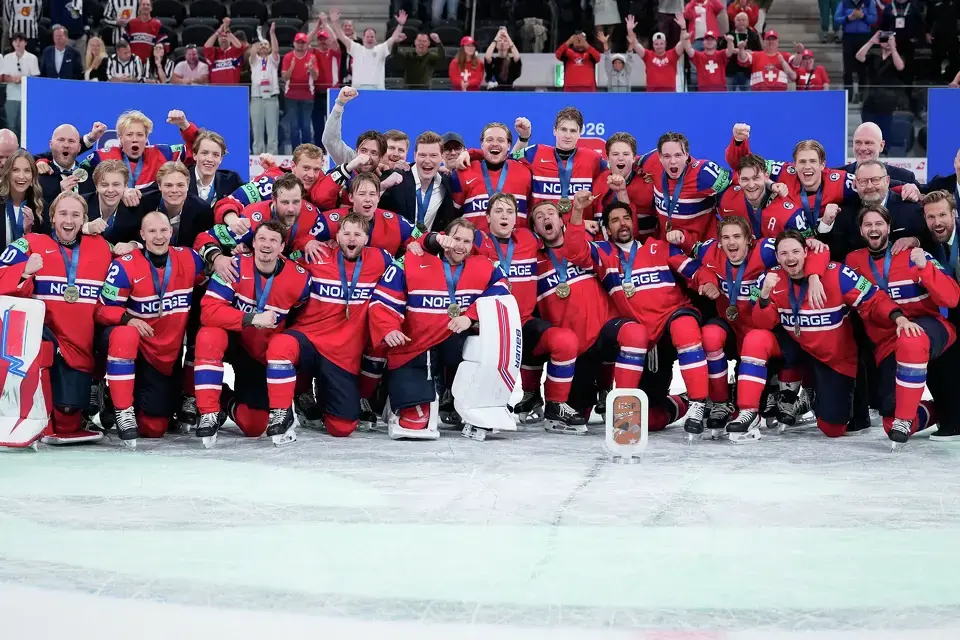
Detailing the position of the Norwegian Ice Hockey Association (NIHA), officials cited both ethical considerations and severe security hazards surrounding international fixtures.
In an official public statement released by the Norwegian Ice Hockey Association, the executive board declared:
“At the same time, this decision is based on our responsibility to protect the safety and wellbeing of our players, team staff and their families. We believe that playing Russia under the current circumstances could expose our players and team staff to significant security risks. Our priority is therefore their mental health, wellbeing and personal safety.”
Similarly, the Danish Hockey Union confirmed via state news agency Ritzau that its national squads would refuse to compete against Russia, while the Latvian Ice Hockey Federation reaffirmed its firm position barring any sporting fixtures against Russia or its regional ally Belarus.
How are commercial sponsors and host venues responding to Russia’s potential inclusion?
As reported by The Associated Press, commercial support for the IIHF World Championships has come under immediate financial threat following public statements from key corporate sponsors.
Finnish tire manufacturer Nokian Tyres officially threatened to terminate its international marketing agreement if Russian teams are allowed to return to the ice.
Outlining the corporate decision, Iina Frazer, Senior Vice President for Brand, Marketing and Communications at Nokian Tyres, stated:
“Under the current circumstances, continuing the sponsorship if Russia participates would not be aligned with our values.”
Nokian Tyres’ declaration follows a separate statement by Swedish commercial office provider AJ Products—a tournament sponsor since 1989—demanding that its branding be removed from all stadium displays and promotional material should Russia participate.
The friction has also spread to venue infrastructure and tournament hosting rights:
- Germany Host Concerns:The chief executive of the German Ice Hockey Federation warned that the country could withdraw from hosting the men’s world championship due to mounting security risks and unmanageable operational costs.
- World Juniors Logistics:The Finnish city of Turku announced it would refuse to co-host the upcoming World Junior Championship if Russian players participate.
- Government Intervention in Czechia:The Czech government signaled it may exercise sovereign entry bans to prevent Russian players from entering the country for the Women’s Under-18 World Championship.
What legal precedents and political divisions surround the IIHF dispute?
As reported by sports legal analysts for The Associated Press, the current standstill closely mirrors the legal crisis faced by world soccer governing body FIFA in 2022 following Russia’s invasion of Ukraine.
During the 2022 World Cup qualifying phase, multiple European opponents declared unilateral boycotts against Russia. FIFA successfully argued before CAS that barring Russia was necessary to prevent “irreparable and chaotic” operational failure for global competitions.
However, the current CAS ruling reinstating Russia in hockey has left the IIHF in legal friction with its primary member federations, as the inclusion of Russia threatens to disrupt group stage draws across both groups in the 16-team tournament layout.
Regarding the impact on junior qualification, NIHA General Secretary Petter Salsten confirmed in an email to The Associated Press that Norway risks administrative exclusion from the upcoming World Juniors in Canada:
“If RUS is added, it is a huge possibility that NOR is out.”
Political reactions across Europe remain divided. While Nordic and Baltic governments strongly back their national federations, Slovakian Prime Minister Robert Fico voiced public opposition to the boycott movement.
Posting on his official social media account, Slovakian Prime Minister Robert Fico stated:
“I’ve also always wondered what the value of a gold medal is, if on the way to it you don’t have to beat the Russian hockey players, who are undoubtedly among the best in the world.”
Despite the escalating dispute across men’s and junior events, the Women’s World Championship in Denmark remains unaffected by the CAS ruling and is proceeding without Russian participation.
Background of Russia’s Suspension from International Ice Hockey
Following the full-scale military invasion of Ukraine in February 2022, the International Ice Hockey Federation (IIHF) Council suspended all Russian and Belarusian national teams and clubs from participating in IIHF-sanctioned international competitions. Ice hockey holds deep political and cultural significance in Russia, where the national program—historically known as the “Red Machine”—serves as a primary source of sporting pride. The IIHF repeatedly extended the suspension through subsequent seasons, citing safety risks for players, officials, and host broadcast operations.
The legal landscape shifted significantly after the Russian Ice Hockey Federation filed a formal appeal with the Court of Arbitration for Sport (CAS) challenging the exclusion. The tribunal’s decision ordering the IIHF to readmit Russian squads created immediate logistical opposition from European member nations, leading to the current multi-nation boycott.
Tournament Viability, IIHF Governing Council, and National Federations
The expansion of the boycott to encompass Sweden, Finland, Norway, Latvia, and Denmark is predicted to force decisive emergency intervention by the IIHF Governing Council and legal arbitration panels before the end of 2026.
For the IIHF Council and executive leadership, maintaining Russian readmission is predicted to become operationally unviable. With boycotting nations representing major media markets, competitive contenders, and key host venues, the governing body is expected to explore emergency legal appeals or administrative bylaws—similar to FIFA’s 2022 precedent—to suspend Russia on the grounds of competition integrity and logistical security. Failure to act risks severe financial loss, venue cancellations, and forfeit-laden tournament schedules.
For national ice hockey federations and corporate sponsors, the standoff is predicted to redefine commercial governance standards. Major European sports brands are expected to insert explicit moral-clause requirements and geopolitical contingency options into future international federation sponsorship contracts, granting corporate sponsors unilateral withdrawal rights whenever governing bodies override member nation boycotts.