Key Points
- Rejection of Media Claims: Norwegian Prime Minister Jonas Gahr Støre has publicly denied a report by the Financial Times claiming that Russian President Vladimir Putin spent almost an entire 90-minute phone call lecturing European leaders on the history of the Slavs.
- Balanced Dialogue Structure: Støre clarified that speaking time during the call—which included Finnish President Alexander Stubb—was distributed roughly equally between all parties, partly due to the necessary reliance on real-time language interpretation.
- Focus on Modern Geopolitics: According to the Norwegian Prime Minister, Putin presented his interpretation of regional events spanning from 2014 to the present day rather than delivering a lecture on medieval history.
- Correction Refused by Publisher: Despite a formal request from Norwegian authorities to correct the article, representatives from the Financial Times confirmed to Norwegian daily VG that the newspaper stands by its original reporting based on three anonymous sources.
- Strategic Diplomatic Goals: Støre outlined that the primary objectives of the extended call were to assess de-escalation opportunities, establish a direct European dialogue channel with Moscow, and analyze the Kremlin’s position ahead of upcoming negotiations in Abu Dhabi.
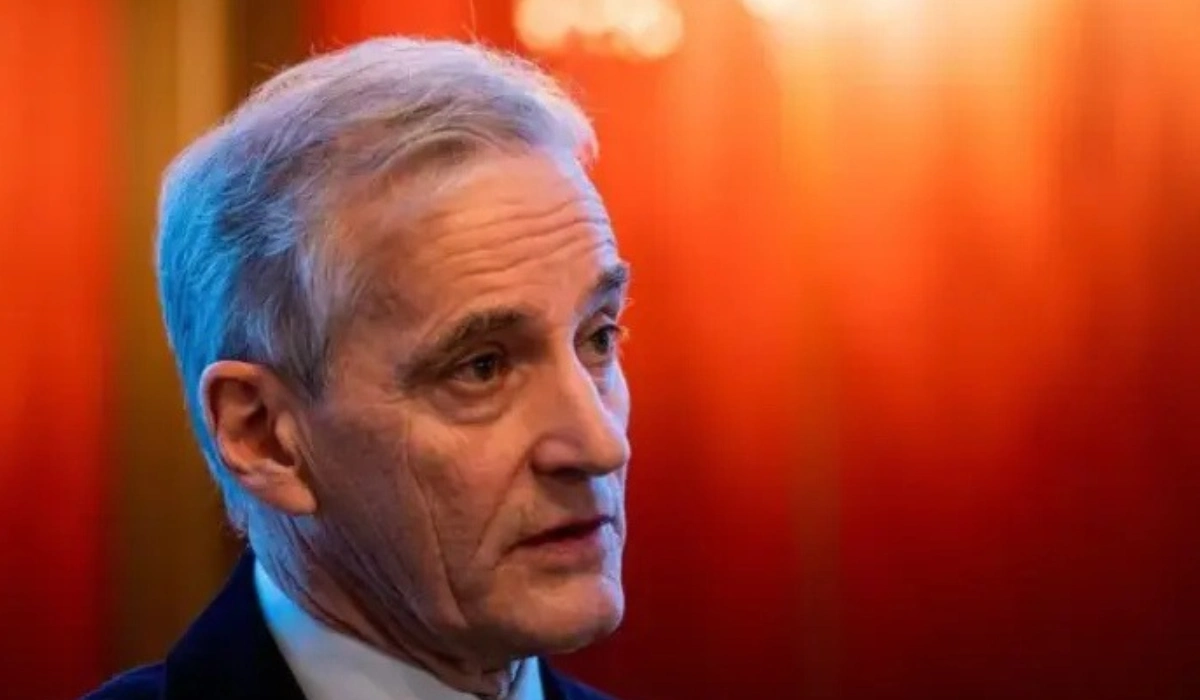
Norway (Norway Post Magazine) October 29, 2026 – Norwegian Prime Minister Jonas Gahr Støre has formally rejected claims published by the Financial Times regarding a recent high-level telephone conversation with Russian President Vladimir Putin. Addressing media reports that Putin dominated the 90-minute discussion—which also included Finnish President Alexander Stubb—with a lengthy lecture on medieval Slavic history, Støre confirmed that the dialogue was balanced and focused on political developments from 2014 onwards. Although Oslo requested a formal correction, the Financial Times announced it stands by its investigative sources, highlighting ongoing diplomatic efforts by Nordic nations to evaluate Moscow’s stance ahead of anticipated peace talks in Abu Dhabi.
- Key Points
- Why did Prime Minister Jonas Gahr Støre refute the Financial Times report on Vladimir Putin?
- How was time allocated during the 90-minute call with the Kremlin?
- What were the primary diplomatic goals of the Nordic leaders’ call with Moscow?
- Background of the particular development
- How this development can affect media-government transparency, Nordic diplomatic channels, and upcoming Abu Dhabi peace talks
Why did Prime Minister Jonas Gahr Støre refute the Financial Times report on Vladimir Putin?
The controversy stems from an article published by the Financial Times citing three anonymous sources, which alleged that Russian President Vladimir Putin spent nearly the entirety of a recent high-level diplomatic call delivering a historical lecture on medieval Slavs rather than engaging in substantive peace negotiations. The telephone consultation, which brought together Putin, Norwegian Prime Minister Jonas Gahr Støre, and Finnish President Alexander Stubb, extended to roughly 90 minutes—significantly surpassing its originally scheduled 30-minute allocation.
Speaking directly to Norwegian national broadcaster TV 2 and reported by UNN, Prime Minister Jonas Gahr Støre firmly dismissed the publication’s narrative.
As reported by UNN, Jonas Gahr Støre stated regarding the alleged historical discourse that “that is not true” and confirmed that “we asked the Financial Times to correct this information because it does not correspond to reality.”
Elaborating on the actual substance of the conversation, as reported by Censor.NET, Jonas Gahr Støre stated: “According to him, Putin asked to be given the opportunity to present his own view of the current situation and, in that context, spoke about events from 2014 to the present.” Consequently, Støre stressed that claims of a broad historical lecture on ancient Slavic roots were inaccurate.
How was time allocated during the 90-minute call with the Kremlin?
Addressing further assertions that the Russian leader monopolized the conversation, Støre clarified the practical dynamics of high-level trilateral communications involving multiple languages.
As reported by Ukrainska Pravda authors Ulyana Krychkovska-Bogdanova and Anastasia Prots, Jonas Gahr Støre stated: “We had an hour and a half. Of course, there was an interpreter, so part of the time went to translation. Therefore, I believe the time was distributed fairly evenly. We probably spent about the same amount of time. But that was also because we set out our positions, on which we requested feedback.”
Despite the formal clarification issued by the Norwegian head of government, the Financial Times maintained its stance. As reported by Norwegian newspaper VG, a spokesperson for the Financial Times responded to inquiries by stating that “we stand by our journalism” and declined to issue a retraction or disclose additional details regarding their confidential sources.
What were the primary diplomatic goals of the Nordic leaders’ call with Moscow?
The direct communication with the Kremlin was initiated as part of a coordinated effort by European nations neighboring Russia to maintain functional diplomatic channels. Støre emphasized that both Norway and Finland share significant geographical borders with Russia, making direct engagement essential for regional security assessment.
As reported by UNN, Støre explained that the purpose of the conversation was to explore practical opportunities for de-escalation and to establish an active European channel for direct dialogue with Moscow. Furthermore, the Norwegian leader noted that gaining a clear understanding of Putin’s current strategic approach was a necessary prerequisite ahead of upcoming technical negotiations scheduled to take place in Abu Dhabi.
Background of the particular development
Direct communications between Western European heads of state and Russian President Vladimir Putin have been exceptionally rare since the escalation of full-scale military conflict in Ukraine in February 2022. While most European Union and NATO members suspended routine bilateral summits with Moscow, neighboring Nordic nations such as Finland and Norway have periodically maintained essential operational lines of communication regarding border management, maritime safety, and diplomatic probing.
President Putin’s public rhetoric frequently incorporates extensive historical narratives—most notably demonstrated during his February 2024 interview with American commentator Tucker Carlson, where he delivered a 30-minute historical overview dating back to the 9th century to justify contemporary territorial claims. This established pattern contributed to the rapid international traction of the Financial Times report, as media observers routinely analyze whether Kremlin diplomatic engagements focus on historical grievances or actionable ceasefire conditions ahead of multi-nation summits.
How this development can affect media-government transparency, Nordic diplomatic channels, and upcoming Abu Dhabi peace talks
The public dispute between the Norwegian government and international media, alongside the ongoing diplomatic contact with Moscow, will likely influence several key political spheres:
- For International Media and Editorial Verification: The firm public denial by Prime Minister Støre against anonymous source reporting by the Financial Times underscores the rising scrutiny on media attribution surrounding closed-door diplomatic calls. News organizations may face stricter demands for multi-sourced confirmation when reporting on sensitive high-level leader communications.
- For Nordic-Kremlin Diplomatic Strategy: By maintaining that the 90-minute exchange was a structured, two-way dialogue rather than a one-sided monologue, Norway and Finland reinforce their position as viable diplomatic bridges between Western alliances and Moscow, potentially encouraging other European states to utilize Nordic channels for exploratory talks.
- For the Upcoming Technical Negotiations in Abu Dhabi: Reestablishing that discussions focused directly on contemporary post-2014 political developments rather than medieval history provides a clearer baseline for technical teams. Delegations preparing for the Abu Dhabi talks can structure negotiations around concrete security guarantees and current territorial realities rather than navigating historical disputes.