Key Points
- Direct Denial: Norwegian Prime Minister Jonas Gahr Støre has publicly denied a report published by the Financial Times which claimed that Russian leader Vladimir Putin spent almost his entire 90-minute phone call lecturing European leaders on medieval Slavic history.
- Equal Time Distribution: According to Jonas Gahr Støre, speaking in an interview with Norwegian broadcaster TV 2 and the NRK program Politisk kvarter, speaking time was distributed fairly evenly between participants, factoring in translation requirements.
- Scope of Discussion: Støre clarified that while Putin requested time to set out his version of current events—reviewing the situation in Europe from 2014 to the present day—he did not deliver a history lecture on medieval Slavs.
- Call Coordination: The October 27 phone call, conducted jointly by Norwegian Prime Minister Jonas Gahr Støre and Finnish President Alexander Stubb with Vladimir Putin, was organized to explore de-escalation opportunities and was coordinated in advance with Ukraine and the United States.
- Media Stance: As reported by the Norwegian newspaper VG, which contacted the publication, the Financial Times refused to issue a correction or alter its reporting, stating through a spokesperson that they “stand by our journalism.”
- Wider Diplomatic Context: European Commission chief spokesperson Paula Pinho confirmed the EU was informed of the call in advance, while Ukrainian President Volodymyr Zelenskyy noted that the dialogue has generated indications of potential seriousness regarding upcoming trilateral negotiations in Abu Dhabi.
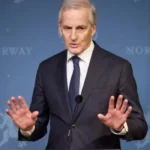
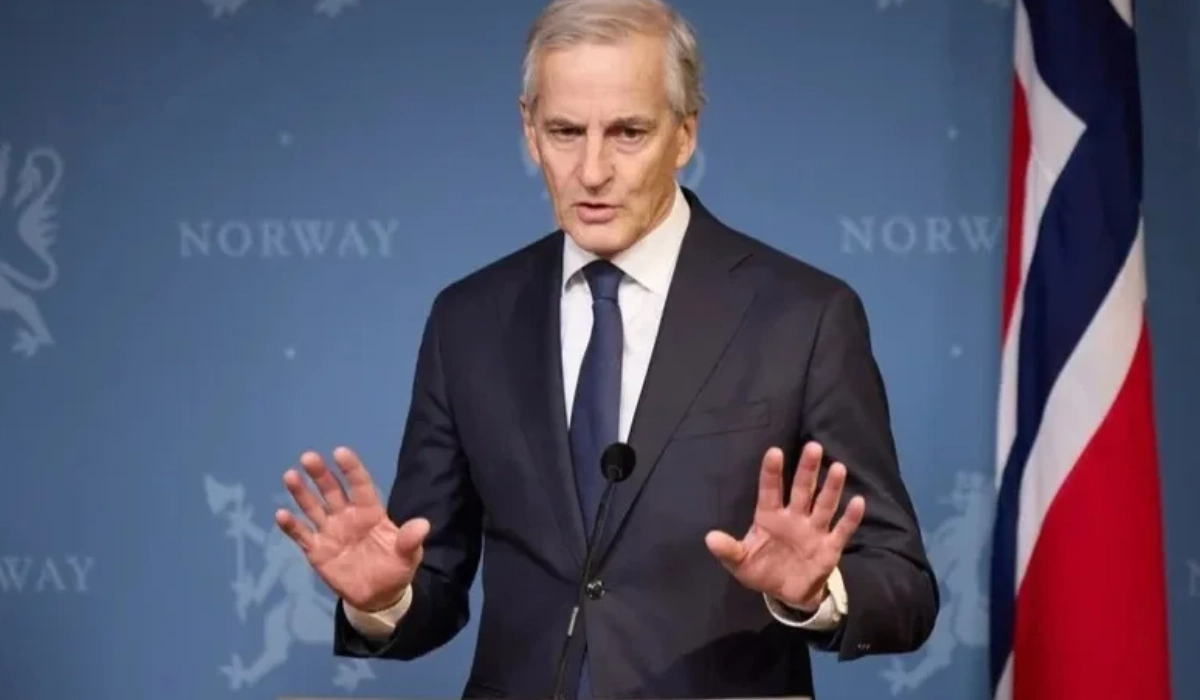
Norway (Norway Post Magazine) October 29, 2026 – Norwegian Prime Minister Jonas Gahr Støre has forcefully rejected claims made in a recent Financial Times report regarding his high-profile 90-minute telephone conversation with Russian President Vladimir Putin. Jointly held on October 27 by Jonas Gahr Støre and Finnish President Alexander Stubb to establish a European channel for de-escalation, the call was characterized by the Financial Times—citing anonymous sources—as being dominated by a lengthy historical lecture from Moscow. Refuting these assertions in interviews with Norwegian media outlets TV 2, NRK, and VG, Støre insisted that conversation time was distributed evenly, that Putin focused primarily on post-2014 geopolitical developments rather than medieval history, and that Oslo has formally requested a correction which the newspaper has declined to make.
- Key Points
- What did Norwegian Prime Minister Jonas Gahr Støre say about the Financial Times report?
- How was conversation time distributed during the 90-minute call with Vladimir Putin?
- What is the broader diplomatic context surrounding the Nordic leaders’ call with Moscow?
- Background of the particular development
- How this development can affect European diplomats, media reporting, and upcoming Abu Dhabi peace talks
What did Norwegian Prime Minister Jonas Gahr Støre say about the Financial Times report?
Norwegian Prime Minister Jonas Gahr Støre has taken direct issue with international press coverage concerning his recent diplomatic outreach to Moscow. Following a high-stakes telephone dialogue held on Tuesday, October 27, 2026, between Norwegian Prime Minister Jonas Gahr Støre, Finnish President Alexander Stubb, and Russian President Vladimir Putin, the Financial Times published an article claiming that Putin used the bulk of the 90-minute session to deliver a historical lecture detailing the “initial reasons for the conflict” with Ukraine rather than engaging in substantive peace discussions.
Speaking out against the media narrative, Jonas Gahr Støre flatly rejected the accuracy of the claims. As reported by European media outlets citing interviews with Norwegian broadcaster TV 2 and newspaper VG, Jonas Gahr Støre stated: “That is not true. And we asked the Financial Times to correct this information, as it does not correspond to reality.”
Støre explained the actual dynamics of the conversation, noting that while Putin asked for the floor to present his perspective on regional security, the exchange remained structured. As reported by European media sources, Jonas Gahr Støre stated: “So the claim that he gave a lecture on Slavic history is simply not true.”
Instead, Støre clarified during an appearance on the NRK program Politisk kvarter that Putin’s historical references were confined to reviewing geopolitical events in Europe from 2014 up to the present day.
How was conversation time distributed during the 90-minute call with Vladimir Putin?
Addressing assertions that the Kremlin leader dominated the dialogue, Jonas Gahr Støre firmly countered claims that European participants were sidelined or subjected to a monologue.
As reported by European media outlets, Jonas Gahr Støre detailed the timing structure of the call: “We had an hour and a half. Of course, there was an interpreter, so part of the time went to translation. Therefore, I believe the time was distributed fairly evenly. We probably spent about the same amount of time.”
Støre emphasized that the conversational balance was maintained because the Nordic leaders actively steered the agenda. As reported by European media sources, Jonas Gahr Støre added: “That was also because we set out our positions, on which we requested feedback.”
Following the publication of Støre’s denial, the Norwegian newspaper VG contacted the Financial Times to seek clarification and request a retraction or adjustment of the disputed details. However, the publication stood firm. As reported by VG and international news summaries, a spokesperson for the Financial Times stated: “We stand by our journalism.” The newspaper declined to offer further commentary or disclose the identities of the three sources familiar with the matter who originally informed their coverage.
What is the broader diplomatic context surrounding the Nordic leaders’ call with Moscow?
The controversial phone call marks the first direct contact between top-level European leaders supporting Kyiv and the Kremlin leader since French President Emmanuel Macron spoke with Vladimir Putin in July 2025.
The diplomatic initiative was undertaken by Finnish President Alexander Stubb and Norwegian Prime Minister Jonas Gahr Støre as an effort to explore pathways toward de-escalation and maintain a direct European line of communication. According to statements from both leaders, the outreach was closely coordinated in advance with international partners. Ukrainian Foreign Minister Andrii Sybiha confirmed that Kyiv had been briefed prior to the call, and European Commission chief spokesperson Paula Pinho stated that the European Commission was similarly informed in advance, emphasizing the importance of maintaining a unified allied stance.
Reaction among European allies has varied. While Danish Prime Minister Mette Frederiksen expressed skepticism regarding the efficacy of engaging Moscow directly without broader consensus, Ukrainian leadership pointed to positive downstream developments. Speaking on October 28, Ukrainian President Volodymyr Zelenskyy noted that following the conversation between European leaders and Vladimir Putin, indications have emerged suggesting that Russia may approach upcoming technical negotiations seriously. Zelenskyy indicated that a planned trilateral meeting involving technical teams from Ukraine, Russia, and the United States in early November in Abu Dhabi now largely depends on confirmation and engagement from the American side.
Background of the particular development
The friction over the media representation of diplomatic channels with Moscow highlights the delicate and highly scrutinized nature of European diplomatic strategy in late 2026. As the war in Ukraine approaches its fifth year of full-scale conflict, European capitals face intense strategic dilemmas regarding how to manage potential peace frameworks, particularly amid shifting political dynamics in Washington and growing pressure for negotiated settlements.
Finland and Norway, sharing immediate borders and long-term security concerns with the Russian Federation, have maintained an active posture in monitoring regional stability. The October 27 phone call between Alexander Stubb, Jonas Gahr Støre, and Vladimir Putin was conceived as a probe to test Moscow’s willingness to engage on core de-escalation terms—specifically regarding energy infrastructure and civilian protection—ahead of expected trilateral talks in Abu Dhabi. Because direct high-level European communication with the Kremlin has been virtually non-existent since mid-2025, any leak or journalistic account regarding the tone and content of such discussions immediately triggers fierce debate across Western policy circles, amplifying sensitivities over whether diplomatic overtures project strength or weakness.
How this development can affect European diplomats, media reporting, and upcoming Abu Dhabi peace talks
The public disagreement between Norwegian Prime Minister Jonas Gahr Støre and the Financial Times carries distinct implications across multiple political and journalistic stakeholders:
- For European Diplomatic Credibility: Prime Minister Støre’s swift and public refutation underscores the political sensitivity surrounding backchannel communications. For European leaders attempting to navigate peace pathways without fracturing allied unity, accurate public perception is vital; any narrative suggesting European leaders passively accepted a one-sided historical lecture risks undermining domestic and regional confidence in their negotiating posture.
- For Media Integrity and Sourcing: The standoff between Norwegian state officials and the Financial Times highlights the persistent friction between anonymous intelligence/diplomatic sourcing and official on-the-record refutations. As preparations for the Abu Dhabi trilateral talks continue, media scrutiny over leaked readouts will remain intense, forcing outlets to balance confidential briefings against direct denials from heads of government.
- For the Upcoming Abu Dhabi Negotiations: Despite the public spat over the phone call’s tone, the underlying diplomatic architecture remains focused on the anticipated November meetings. If Ukrainian and US delegations proceed with technical talks alongside Russian representatives, the ability of European nations to project unified and verified messaging will be critical in ensuring that regional security interests are fully represented in any emergent framework.